PAMPANGA, PHILIPPINES: The defense chiefs of the United States, Japan and South Korea have agreed to work together to increase diplomatic and economic pressure on North Korea.
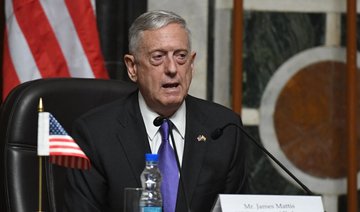
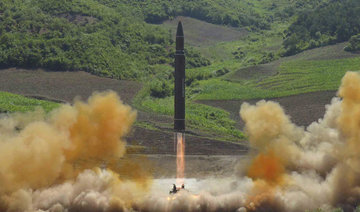
US Defense Secretary James Mattis, Japanese Defense Minister Itsunori Onodera and South Korea’s Minister of National Defense Song Young-moo said Pyongyang’s launch of missiles that flew over Japan, and its Sept. 3 nuclear test, were a threat to their own countries and to the rest of the world.
North Korea’s nuclear ambitions and ballistic missile capabilities, including intercontinental ballistic missile technology, threatened the security and prosperity of the three countries, they said. They pledged to improve information sharing and strengthen responses to North Korean threats, and agreed to continue missile warning and anti-submarine warfare exercises.
They also called for implementation of UN resolution 2375, which imposed sanctions on North Korea, along with an embargo on its textile exports and limiting the supply of oil to Pyongyang.
The three men discussed the issue on Monday at a meeting in the Philippines of defense ministers from ASEAN, the Association for Southeast Asian Nations. The ministers urged North Korea to abandon its illicit nuclear and ballistic missile programs, cease all provocative actions leading to heightened tension in the region, and abide by its international obligations and commitments. All outstanding disputes should be resolved in a peaceful manner according to international law, they said.
Philippine Defense Secretary Delfin Lorenzana said ministers were united in condemning North Korea’s nuclear tests and weapons development program.
“According to a lot of us, and I agree with them, there could be miscalculations and it could hit any of the countries in the region,” he said. “We are just within range.
“Of course the countries that are so very concerned about denuclearization of North Korea are South Korea, the US, China and Russia.”
China had particular concerns, he said. “According to the Chinese defense minister, North Korea was not very sincere in dealing with China and even the US. What I see here is North Korea being isolated by the international community.”
Lorenzana said sanctions had failed to discourage North Korea and were instead strengthening Kim Jong Un, the North Korean leader.
“They also feed on his fears of being invaded. And so he rallies his people to support him. That’s what sanctions have been doing to North Korea, instead of weakening him, they are strengthening his hold on his people.
“The US, China and Russia will have to come up with another approach to reach out to North Korea.”
The Australian Defense Minister Marise Payne said the North Korean weapons development and testing program was illegal, provocative, and a breach of several UN Security Council resolutions.
“We, as an international community, need to make it very clear that their behavior is illegal, it is destabilizing and it is provocative,” she said.


![]()

Defense chiefs ramp up pressure on North Korea
Defense chiefs ramp up pressure on North Korea
Latest updates


© 2026 SAUDI RESEARCH & PUBLISHING COMPANY, All Rights Reserved And subject to Terms of Use Agreement.