CLARK FREEPORT ZONE, Philippines: US Defense Secretary James Mattis on Monday praised the Philippines for its successes in battling Daesh supporters, as he began an Asian trip aimed at reaffirming American support for regional allies.
Mattis echoed Philippine President Rodrigo Duterte’s statement last week that Filipino forces had “liberated” the southern city of Marawi, after five months of bitter urban fighting that had claimed more than 1,000 lives, even though battles have continued.
“One of the first things I’m going to do when I get there is commend the Philippine military for liberating Marawi from the terrorists,” Mattis told reporters on the flight to the Philippines, according to an official transcript.
“It was a very tough fight as you know in southern Mindanao (the local region). And I think the Philippine military sends a very strong message to the terrorists.”
Gunmen who had pledged allegiance to IS occupied parts of Marawi, the Islamic capital of the mainly Catholic Philippines, on May 23 in what Duterte said was a bid to establish a Southeast Asian caliphate there.
Hundreds of insurgents withstood a US-backed military campaign, including near daily air strikes and artillery fire, that displaced more than 400,000 people and left large parts of Marawi in ruins.
Duterte last week travelled to Marawi to declare it had been “liberated”, a day after the Southeast Asian leader for Daesh, Isnilon Hapilon, was shot dead there.
However deadly fighting has continued, with the military reporting dozens of militants are still resisting in a small pocket of the city.
Mattis flew to the Philippines to attend a meeting hosted by Southeast Asian defense ministers at the former American military base of Clark, two hours’ drive north of Manila.
The Philippines is a former American colony and the two nations are bound by a mutual defense treaty.
But relations have soured under Duterte as he has sought to build closer ties with China and Russia.
Defense ministers from Australia, China, India, Japan, New Zealand, South Korea and Russia are also scheduled to attend the two-day Association of Southeast Asian Nations (ASEAN) event.
Mattis’ Asia trip, which will also take him to Thailand and South Korea, comes ahead of US President Donald Trump’s visit to Asia next month.
Some American allies in the region have become wary of Trump’s interest in Asia.
Mattis sought to reassure allies.
“The US remains unambiguously committed to supporting ASEAN,” Mattis said.


![]()
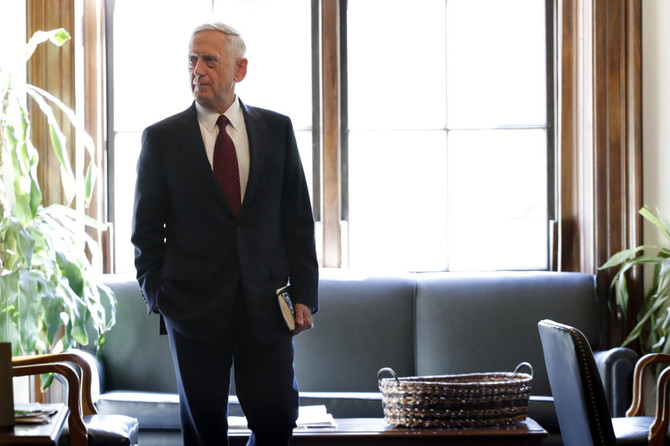
US defense chief Mattis praises Philippines for Daesh battle
US defense chief Mattis praises Philippines for Daesh battle


Latest updates


© 2026 SAUDI RESEARCH & PUBLISHING COMPANY, All Rights Reserved And subject to Terms of Use Agreement.