RIYADH: Saudi Arabia’s Public Investment Fund (PIF) is looking for further international partnerships as part of its ambitious aim to become the largest sovereign wealth fund in the world.
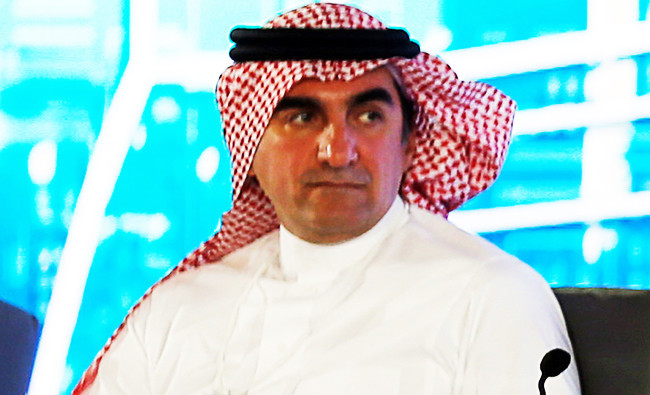
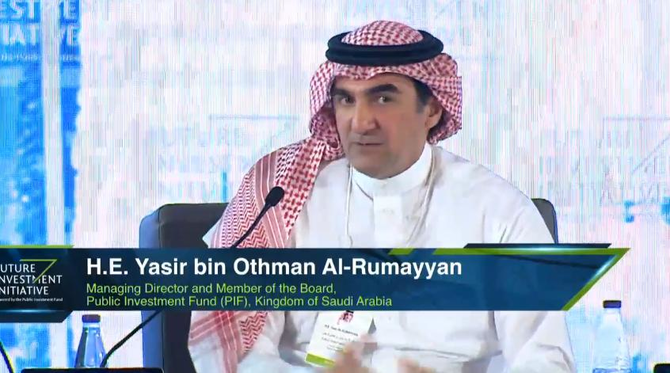
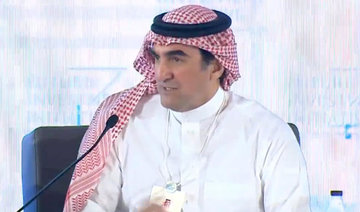
Yasir Al-Rumayyan, PIF managing director, said that global investment alliances would be a central part of a four-legged strategy.
He was speaking as PIF formally announced a $20 billion alliance with the US investment fund BlackRock to put money into what he called “conventional investment” like infrastructure and large-scale construction projects, and on top of the $45 billion agreed with Japan’s SoftBank.
“We will continue to see partnerships with the rest of the world, and conventional investments will not go away,” he said at the opening session of a major conference hosted by the PIF in Riyadh, the Future Investment Initiative.
He added that PIF is targeting annual returns of between 3 and 9 percent across its portfolios in the long term.
“PIF is a long-term fund. We are looking beyond cyclicality,” he said.
Al-Rumayyan spelled out the rest of the strategy. “We want to grow and diversify revenue across all investments. We want to localize the economy of Saudi Arabia for the future employment of citizens, and we want to expand in new sectors, like waste management, real estate and entertainment.”
Panelists included the CEO of Saudi Aramco, Amin Nasser, BlackRock Chairman Larry Fink, IMF Managing Director Christine Lagarde and Victor Chou, CEO of First Eastern Investment Group.
They were quizzed on their outlook for investment returns as individuals and states worldwide grapple with how to ensure sufficient retirement funds during an extended period of low growth across global economies.
Al-Rumayyan said that some assets could reach annual returns in the low teens.
“We don’t want to be a sitting duck to be shot down by only being in conventional investments. We want to go beyond — that is what Vision 2030 is all about,” he said.
He also revealed that he wants the Future Investment Initiative to become an annual event, which would help the Kingdom prepare for the future.
Questioned on the long-term prospects for the oil economy in the face of the renewable and alternative fuels industry, Nasser said it would take decades for the oil and gas industry to be significantly affected by these changes.
BlackRock’s Fink warned: “Long-term growth rates are decelerating quite rapidly and this is going to present pension funds with bigger liability issues — but this is also one of the reasons we have to address this issue of retirement today with expected returns — whether it’s 4, 6 or 8 (percent).
“It means you have to put money away sooner to get to the expected pool of money you want in retirement.”
Asked about his own forecasts for what was possible and realistic as an investment return, he said: “The BlackRock Investor Institute came out with a 10-year forecast of 4 per cent with a balanced portfolio. I tend to think it will be closer to 6 percent. We’re in a world of low inflation.”
Hundreds of the biggest names in global business are attending the event in Riyadh, which concludes tomorrow.


![]()
![]()
Saudi Public Investment Fund looks for more global alliances
Saudi Public Investment Fund looks for more global alliances
Latest updates


Recommended


© 2026 SAUDI RESEARCH & PUBLISHING COMPANY, All Rights Reserved And subject to Terms of Use Agreement.