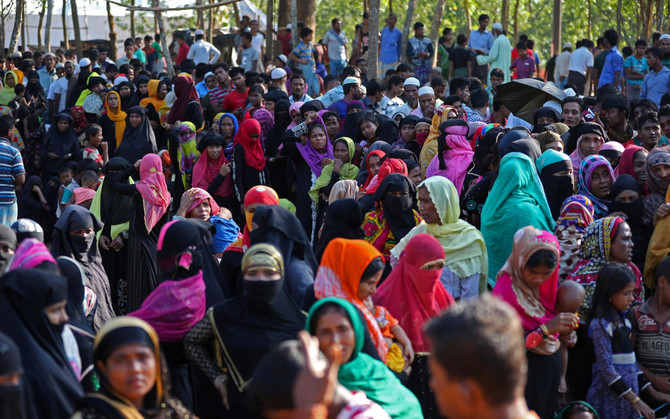
GENEVA: Nearly 1 million Rohingya refugees have fled violence in Myanmar, an “untenable situation” for neighbor Bangladesh, the country’s UN envoy said on Monday, calling on Myanmar to let them return.
About 600,000 people have crossed the border since Aug. 25, when insurgent attacks on security posts were met by a ferocious counter-offensive by the Myanmar army in Rakhine state which the United Nations has called ethnic cleansing.
“This is the biggest exodus from a single country since the Rwandan genocide in 1994,” Shameem Ahsan, Bangladesh’s ambassador to the United Nations in Geneva, told a UN pledging conference.
“Despite claims to the contrary, violence in Rakhine state has not stopped. Thousands still enter on a daily basis,” he said.
Bangladesh’s interior minister was in Yangon on Monday for talks to find a “durable solution,” Ahsan said.
But Myanmar continued to issue “propaganda projecting Rohingyas as illegal immigrants from Bangladesh,” Ahsan said, adding: “This blatant denial of the ethnic identity of Rohingyas remains a stumbling block.”
Myanmar considers the Rohingya to be stateless, although they trace their families’ presence in the country for generations.
Jordan’s Queen Rania visited Rohingya refugee camps on Monday and called for a stronger response from the international community to the plight of the Rohingya who fled to Bangladesh to escape “systematic persecution” in Myanmar.
“One has to ask, why is the plight of this Muslim minority group being ignored? Why has the systematic prosecution been allowed to play out for so long?” she asked after touring the camps.
The United Nations has appealed for $434 million to provide life-saving aid to 1.2 million people for six months.
“We need more money to keep pace with intensifying needs. This is not an isolated crisis, it is the latest round in a decades-long cycle of persecution, violence and displacement,” UN humanitarian chief Mark Lowcock told the talks.
“Children, women and men fleeing Myanmar are streaming into Bangladesh traumatized and destitute,” he added.
“We assess we have pledges of around $340 million,” Lowcock said before the mid-day break in the meeting.
New pledges included 30 million euros announced by the European Union, $15 million by Kuwait, 10 million Australian dollars by Australia and 12 million pounds from Britain.
He reiterated the UN call on Myanmar to allow “full humanitarian access across Rakhine” where aid agencies have been denied entry.
Myanmar must “guarantee the right to safe, voluntary and dignified return so that the Rohingya can live in peace with their human rights upheld in Rakhine,” Lowcock said.


![]()
Bangladesh says Rohingya outflow “untenable,” seeks solution
Bangladesh says Rohingya outflow “untenable,” seeks solution

Latest updates


© 2026 SAUDI RESEARCH & PUBLISHING COMPANY, All Rights Reserved And subject to Terms of Use Agreement.