SVETI STEFAN: Antigua and Barbuda Prime Minister Gaston Browne wants Saudis to visit and invest in his hurricane-battered country.
He is considering bringing halal standards to the islands for the first time in a bid to attract more Arabs visitors.
In an interview with Arab News, he said he had seen increased Middle East interest in real estate and tourism projects in his country which is emerging from the devastating impact of Hurricane Irma.
“We are looking for high net worth individuals. We already have a lot of interest from Saudi Arabia.”
He added: “I want to encourage Saudis to invest in our safe, vibrant country. We are open arms to all cultures and want to please.
“We are open to suggestions and would look to build halal restaurants or hotels if that’s what Muslims want or need.”
Browne rejected claims that the Caribbean islands are being propped up by “passports for sale” initiatives.
He said: “I don’t see it as passports for sale. It’s an incentive for investment – it’s not a new concept. Europe has used it before. This is a competitive market.
“If one country offers citizenship as part of the investment deal – such as the US or Canada – and another country doesn’t, they (investors) won’t invest. It’s just a unique selling point.”
With many countries in the Middle East undergoing political turmoil, citizens of some countries have few visa-free travel options. As former British colonies and members of the Commonwealth, Caribbean island passports grant visa-free access to the UK and the Schengen Area, as well as numerous other countries.
The country’s citizenship by investment program (CIP) has pumped around $500 million into Antigua and Barbuda’s economy since 2014 and has helped pay for social security, cancer treatment and a new hospital, according to Ronald Sanders, Antigua and Barbuda’s ambassador to the US.
On Sept. 6, 2017, when Hurricane Irma swept through Barbuda, Browne saw most of his country’s buildings reduced to — in his own words — “literally a rubble.” At least 60 percent of the island’s residents were left homeless because of the disaster.
Speaking on the sidelines of the Global Citizen Forum, Browne said: “Most of the impact was on Barbuda, so the economic impact on Antigua is minor. However, it’s an economic setback because the country is heavily subsided by Antigua.”
The PM said tourism and real estate are areas that he really wants to push to investors.
“We have some of the most beautiful beaches in the world and the actual climate itself is about 28 degrees all year round, and it hardly rains. It’s a great country for tourism and vacationing, it’s very peaceful and we enjoy a very stable political climate.”


Antigua and Barbuda PM seeks Saudi investment after hurricane
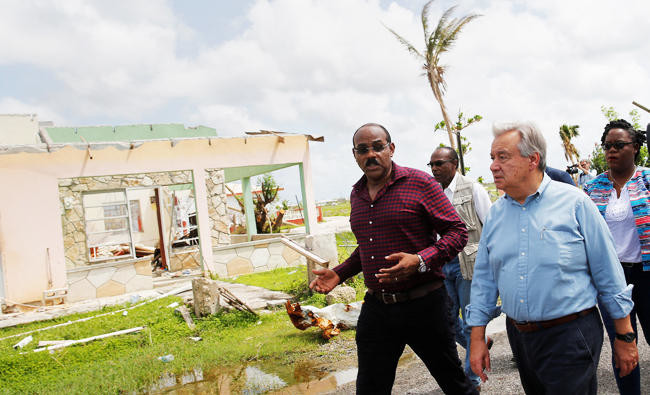
Antigua and Barbuda PM seeks Saudi investment after hurricane



Najran’s camels are embedded in local culture and traditions
- Several distinct camel breeds are found in the region
- Animals permeate Arab consciousness, says expert
RIYADH: In Najran, camels are not only a vital livestock resource but also a cornerstone of local identity and tradition.
According to Hadi Benyan Al-Amer, head of Najran’s Camel Association, the region has several distinct camel breeds.
Principal among them is the Awarik, an ancient Arabian lineage linked to territories where arak trees flourish, the Saudi Press Agency reported on Thursday.
These light-colored, sparsely-haired camels possess remarkable resilience, and are prevalent across southern Arabia.
The Majahim are characterized by dark hues spanning black to brown, and excel in both milk yield and endurance.
The Asayil are prized for their sleek, lean physiques, and dominate in speed-based competitions.
Al-Amer said traditional water sources known as Odood, or traditional water wells and artesian wells, have sustained herders navigating the Empty Quarter’s grazing lands for generations.
These permanent water points, equipped with dedicated drinking basins for camels, showcase the animals’ extraordinary environmental resilience.
Among the principal wells accessible from Najran are Al-Minkhali, Abu Shadid, Hamra Nathil, Tamani, Umm Al-Wahat, and Khujaima.
Countless additional wells dot the Empty Quarter and adjacent territories, forming the backbone of camel owners’ far-reaching pastoral networks.
Dr. Hind bint Dawood Al-Shuqair of Najran University’s Arabic Language Department explained how camels have permeated Arab consciousness through legends and stories spanning thousands of years.
Representing endurance, power, and grace, they have become inseparable from Arab cultural identity.
Archaeological evidence at Al-Ukhdood, Mount Al-Tharwa and Hima, preserves through carvings and ancient artwork the deep bond between people and camels, Al-Shuqair said.
She drew attention to Saudi Arabia’s substantial investment in camel heritage, exemplified by proclaiming 2024 as the Year of the Camel.
This designation emphasizes their importance to national prosperity and cultural heritage while backing global initiatives to promote awareness of camels as valuable economic and cultural assets.
The Kingdom further demonstrates its commitment to protecting the animals through the annual King Abdulaziz Festival, the SPA reported.


