SVETI STEFAN: Antigua and Barbuda Prime Minister Gaston Browne wants Saudis to visit and invest in his hurricane-battered country.
He is considering bringing halal standards to the islands for the first time in a bid to attract more Arabs visitors.
In an interview with Arab News, he said he had seen increased Middle East interest in real estate and tourism projects in his country which is emerging from the devastating impact of Hurricane Irma.
“We are looking for high net worth individuals. We already have a lot of interest from Saudi Arabia.”
He added: “I want to encourage Saudis to invest in our safe, vibrant country. We are open arms to all cultures and want to please.
“We are open to suggestions and would look to build halal restaurants or hotels if that’s what Muslims want or need.”
Browne rejected claims that the Caribbean islands are being propped up by “passports for sale” initiatives.
He said: “I don’t see it as passports for sale. It’s an incentive for investment – it’s not a new concept. Europe has used it before. This is a competitive market.
“If one country offers citizenship as part of the investment deal – such as the US or Canada – and another country doesn’t, they (investors) won’t invest. It’s just a unique selling point.”
With many countries in the Middle East undergoing political turmoil, citizens of some countries have few visa-free travel options. As former British colonies and members of the Commonwealth, Caribbean island passports grant visa-free access to the UK and the Schengen Area, as well as numerous other countries.
The country’s citizenship by investment program (CIP) has pumped around $500 million into Antigua and Barbuda’s economy since 2014 and has helped pay for social security, cancer treatment and a new hospital, according to Ronald Sanders, Antigua and Barbuda’s ambassador to the US.
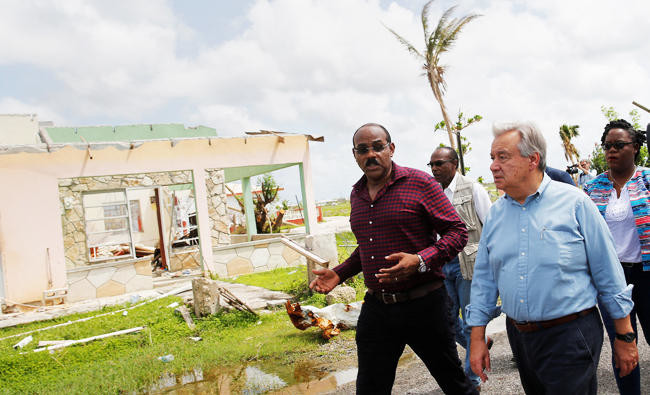
On Sept. 6, 2017, when Hurricane Irma swept through Barbuda, Browne saw most of his country’s buildings reduced to — in his own words — “literally a rubble.” At least 60 percent of the island’s residents were left homeless because of the disaster.
Speaking on the sidelines of the Global Citizen Forum, Browne said: “Most of the impact was on Barbuda, so the economic impact on Antigua is minor. However, it’s an economic setback because the country is heavily subsided by Antigua.”
The PM said tourism and real estate are areas that he really wants to push to investors.
“We have some of the most beautiful beaches in the world and the actual climate itself is about 28 degrees all year round, and it hardly rains. It’s a great country for tourism and vacationing, it’s very peaceful and we enjoy a very stable political climate.”


Antigua and Barbuda PM seeks Saudi investment after hurricane
Antigua and Barbuda PM seeks Saudi investment after hurricane



Makkah’s urban shift enhances the city’s quality of life
- By harmonizing its religious heritage with modern urban development, Makkah is proving that a city can honor its past while vigorously embracing the future
MAKKAH: Islam’s holiest city is currently witnessing a qualitative urban shift, one that seamlessly blends its profound spiritual sanctity with a modern, vibrant lifestyle. By integrating cultural, educational, and entertainment initiatives, Makkah is redefining the visitor experience and significantly enhancing the quality of life for its residents, directly supporting the goals of Saudi Vision 2030.
The city’s transformation was recently highlighted by the success of the Makkah winter season. The event attracted approximately 400,000 visitors — over 60% of whom were locals — demonstrating a strong domestic demand for high-quality public spaces.
The season revitalized community interaction, driving a 35% increase in visits to recreational sites and creating more than 1,200 temporary jobs for the local workforce.
Central to this urban renaissance is the Hira Cultural District. Since opening its doors in January 2023 near the historic Mount Hira, the district has become a definitive landmark that bridges Islamic history with contemporary identity.

Far from being a static monument, the district has cultivated a thriving creative economy. Its craftsmanship program, which features over 100 artisans, has generated up to SAR 3 million in sales and attracted 130,000 visitors to live workshops. These interactive spaces allow visitors to engage directly with the region’s heritage, moving beyond passive observation to active participation.
A living legacy
The shift extends to Makkah’s broader ecosystem of museums and cultural sites, which are now positioned as key pillars of cultural tourism. Facilities like the Revelation Exhibition use cutting-edge technology and multilingual content to narrate the story of the Holy Quran’s revelation, offering an immersive experience that complements the spiritual journey of pilgrims.
These efforts align with the “Makkah: A Living Legacy” campaign, which seeks to document the city’s historical narrative and preserve its collective memory. Recent months have seen a surge in educational workshops for university students and tour guides, ensuring that the human element of Makkah’s history is conveyed with accuracy and depth.

Economic and social impact
The results of this integrated approach are tangible. Specialized museums and restored historic sites now attract up to 1.6 million annual visitors. Crucially, this cultural enrichment is encouraging pilgrims to linger longer, increasing the average duration of stay by 18%.
By harmonizing its religious heritage with modern urban development, Makkah is proving that a city can honor its past while vigorously embracing the future, offering a holistic experience that nourishes both the soul and the community.


