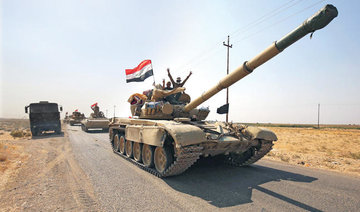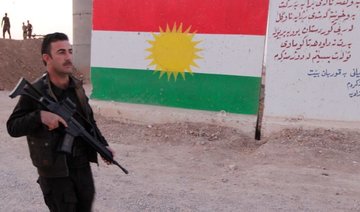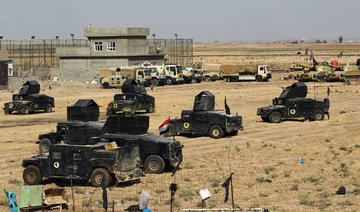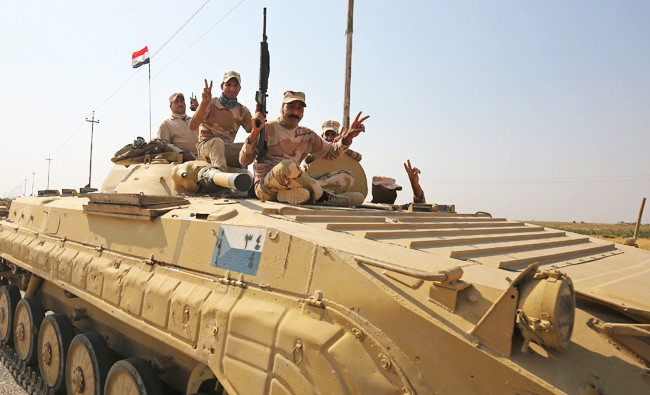

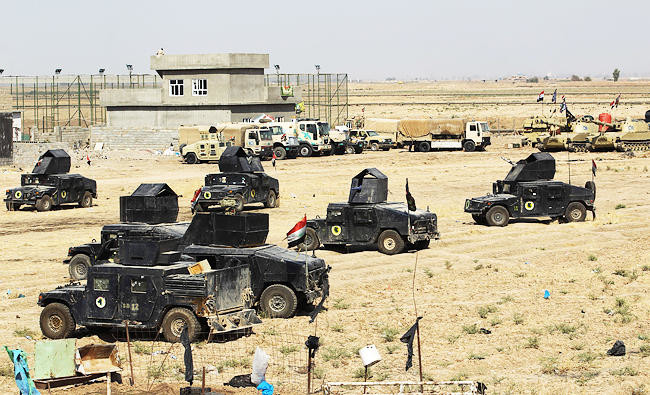
KIRKUK, Iraq: Iraqi and Kurdish forces exchanged artillery fire early Monday south of the city of Kirkuk, after central government forces began a “major operation” to take control of a Kurdish military base and oil fields.
Shortly before, state television announced that government troops had taken “large areas” of the province from Kurdish peshmerga fighters “without fighting,” although military sources on both sides reported exchange of Katyusha rocket fire to the south of the provincial capital.
Iraqi Prime Minister Haider Al-Abadi, who said this week that he was “not going... to make war on our Kurdish citizens,” has “given orders to armed forces to take over security in Kirkuk,” state television said.
Iraqi troops will “secure bases and government facilities in Kirkuk province” the government said. They are aiming to retake military bases and oil fields which Kurdish peshmerga fighters took in 2014 during the fightback against the Islamic State jihadist group.
Multiple peshmergas were injured in the clashes and hospitalized in Kirkuk, a local security source said.
Abadi said that members of the Hashed Al-Shaabi, the paramilitary Popular Mobilization forces, which are dominated by Iran-backed Shiite militias, would stay away from Kirkuk, where there have been multiple demonstrations against their involvement in the dispute.
“Counter terrorism units, the 9th armored division of the army, and the federal police have recovered control of important areas of Kirkuk province without fighting,” a general from the counter terrorism force said.
A counter terrorism force source said that their units had retaken the industrial zone of Kirkuk. At the same time, a local security source said four military vehicles were burned in an explosion.
Further south, two people were killed in artillery exchanges at Tuz Khurmatu, 75 kilometers from Kirkuk, which has been shaken every night since Friday by fighting between the peshmerga and Hashed Al-Shaabi, a doctor at a city hospital said.
An AFP photographer saw columns of Iraqi troops heading north from the town of Taza Khurmatu, which is located south of Kirkuk.
The advance came days after a standoff between Kurdish forces and the Iraqi army and the expiry of a deadline for Kurdish peshmerga fighters to withdraw from the areas they have controlled since 2014.
Iraqi forces are seeking the “K1 base,” just eight kilometers (five miles) north of Kirkuk, which was one of the main Iraqi army bases before it was taken over by the peshmerga in 2014.
It stands near an oil refinery, The Iraqi troops also hope to retake the nearby airport.
Earlier Sunday, Iraq’s National Security Council said it viewed as a “declaration of war” the presence of “fighters not belonging to the regular security forces in Kirkuk,” including fighters from Turkey’s outlawed Kurdistan Workers’ Party (PKK).
Crisis talks on Sunday made little headway in resolving an armed standoff between Kurdish and Iraqi forces in the province.
Tensions have soared between the central government and Iraqi Kurds since they overwhelmingly voted for independence in a September 25 referendum, whose results Baghdad has demanded be nullified.
For their part the Iraqi forces have said that they have no wish to enter Kirkuk but that they wish to retake military positions and infrastructure which were under their control before their troops withdrew in the face of hostility from the jihadists.
On the fringes of the town, they used loudspeakers to call on the peshmerga to give up their positions, local sources said.
Baghdad has demanded the Kurds scrap the results of the September 25 non-binding referendum that produced a resounding “yes” for independence for the autonomous Kurdish region of northern Iraq.
Tensions have soared in the wake of the vote, with the crisis raising fears of fresh chaos just as the country’s forces are on the verge of routing IS from the last territory it controls in Iraq.
Long claimed by the Kurds as part of their historic territory, the province has emerged as the main flashpoint in the dispute.
Polling during the referendum was held not only in the three provinces of the autonomous Kurdish region but also in adjacent Kurdish-held areas, including Kirkuk, that are claimed by both Baghdad and Iraqi Kurdistan.
The referendum was declared illegal by Baghdad and held despite international opposition.
The Kurds control the city of Kirkuk and three major oil fields in the province that produce some 250,000 barrels per day, accounting for 40 percent of Iraqi Kurdistan’s oil exports.
The fields would provide crucial revenue to Baghdad, which has been left cash-strapped from the global fall in oil prices and three years of battle against IS. Iraq is also demanding the return of a military base and a nearby airport, according to the Kurds.