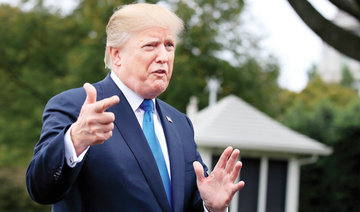
JEDDAH: US President Donald Trump, in consultation with his national security team, has approved a new strategy for Iran.
According to a statement issued by the White House on Friday, it is the culmination of nine months of deliberation with Congress and the US’ allies on how to best protect American security.
The new strategy, the statement said, focuses on neutralizing Iran’s destabilizing influence and constraining its aggression, particularly its support for terrorism and militants.
Under the new strategy, the US seeks to revitalize its traditional alliances and regional partnerships as bulwarks against Iranian subversion and to restore a more stable balance of power in the region.
The statement said the US will work to deny the Iranian regime — and especially the Islamic Revolutionary Guard Corps (IRGC) — funding for its malign activities, and oppose IRGC activities that extort the wealth of the Iranian people.
“We will counter threats to the US and our allies from ballistic missiles and other asymmetric weapons,” the White House statement said.
The new US strategy seeks to rally the international community to condemn the IRGC’s gross violations of human rights and its unjust detention of American citizens and other foreigners on specious charges.
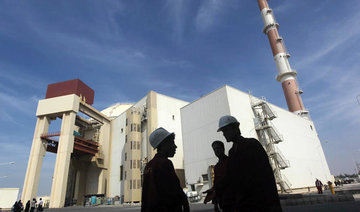
One of the core elements of the US president’s new Iran strategy is to deny Tehran all paths to a nuclear weapon.
The statement said the previous administration’s myopic focus on Iran’s nuclear program, to the exclusion of the regime’s many other malign activities, allowed Iran’s influence in the region to reach a high-water mark.
“Over the last decade and a half, the US policy has also consistently prioritized the immediate threat of Sunni extremist organizations over the longer-term threat of Iranian-backed militancy,” it added.
“In doing so, the US has neglected Iran’s steady expansion of proxy forces and terrorist networks aimed at keeping its neighbors weak and unstable in hopes of dominating the greater Middle East.”
The Trump administration has pledged not to repeat the mistake. According to the statement, the Trump administration’s Iran policy will address the totality of these threats from, and malign activities, by Tehran and will seek to bring about a change in its behavior.
The Trump administration seeks to accomplish these objectives through a strategy that neutralizes and counters Iranian threats, particularly those posed by the IRGC, the statement added.
The IRGC, it said, has sought to undermine the fight against Daesh with the influence of militant groups in Iraq under its control.
“In Yemen, the IRGC has attempted to use the Houthis as puppets to hide Iran’s role in using sophisticated missiles and explosive boats to attack innocent civilians in Saudi Arabia and the UAE, as well as to restrict freedom of navigation in the Red Sea… Senior IRGC commanders plotted the murder of (then) Saudi Ambassador to the US Adel Jubeir, on American soil in 2011…”
“For all these reasons,” the statement said, “we want to work with our partners to constrain this dangerous organization, for the benefit of international peace and security, regional stability and the Iranian people.”