BEIRUT: Ride-sharing apps, carmakers, and driving schools are targeting their newest market — Saudi Arabian women — wasting no time after the Kingdom lifted its ban on women drivers last month.
Ride-hailing service, Uber, told the Thomson Reuters Foundation on Monday it was aiming to recruit female training drivers for Saudi women who want to work for Uber by the end of the year.
The company will open its first ever “female partner support center” to be on hand to support women drivers.
“We want to do a dedicated center for females who want to be on the platform as drivers in Saudi Arabia,” Shaden Abdellatif, Uber spokeswoman for the Middle East and North Africa, said by phone from Cairo.
In a royal decree issued on Sept. 26, Saudi King Salman ordered an end by next year to the ban on women drivers.
The decision is expected to push women into the workforce and boost car sales. Uber said it wanted to be a part of the “progressive changes.”
“Your car can essentially be your small business (which) will be quite appealing for women there — it’s that idea of part-time work opportunity,” said Abdellatif.
Princess Nourah bint Abdulrahman University, an all-female school in Riyadh, announced on Twitter after the news broke that it will set up a driving school for women, a first in the country.
Carmakers were also quick to welcome the royal decree — that ordered new rules allowing women to drive be drawn up within 30 days and implemented by June 2018.
“Congratulations to all Saudi women who will now be able to drive,” Nissan said in a Twitter post depicting a license plate bearing the registration “2018 GRL.” BMW, whose X5 SUV is the group’s Middle East top-seller, also saluted the move.
The arrival of women drivers could lift Saudi car sales by 15-20 percent annually, leading forecaster LMC Automotive predicts, as the Kingdom’s “car density” of 220 vehicles per 1,000 adults rises to about 300 in 2025, closing the gap with the UAE.
However, the rule change could spell bad news for some of the 1.3 million men employed as chauffeurs in the Kingdom, including a large share of its migrant workforce.


![]()
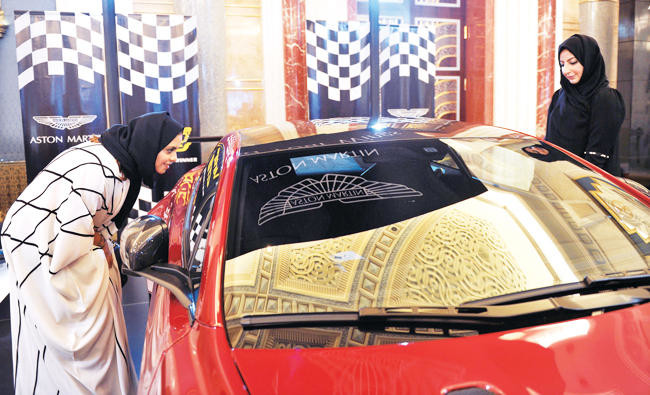
Cars, apps and driving schools — Saudi women drivers targeted as new market
Cars, apps and driving schools — Saudi women drivers targeted as new market

Latest updates


© 2026 SAUDI RESEARCH & PUBLISHING COMPANY, All Rights Reserved And subject to Terms of Use Agreement.