DHAKA: The more than half-a-million Rohingya who have fled Myanmar for Bangladesh in recent weeks represent “the world’s fastest-growing refugee crisis,” UN Emergency Relief Coordinator Mark Lowcock said on Friday.
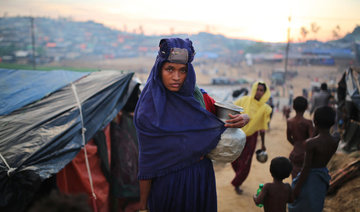
Rohingya refugees in Cox’s Bazar, Bangladesh, are at great risk of water-borne diseases despite relief efforts by the government, and local and international NGOs.
The UN High Commissioner for Refugees (UNHCR) has declared a level-3 emergency — the top level — to tackle the crisis, seeking more funds to support its initiatives.
UNICEF is appealing for $83.7 million in additional funds to deal with the refugee crisis, while the World Health Organization (WHO) is seeking $10.2 million.
UNICEF said it is speeding up efforts to stop the spread of diarrhea and cholera among refugee children, and will begin a vaccination campaign against cholera on Oct. 10.
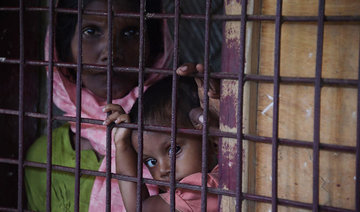
“We’ve been living in Kutupalang refugee camp in Cox’s Bazar for the last 27 days,” said Rahima Khatun, 35, who was waiting at a mobile medical clinic with her two-year-old daughter Farida, who has diarrhea.
“We couldn’t feed the girl properly, and now she’s very thin,” she said, adding that Farida vomits every time she eats something.
Dr. Shariful Huq Rumi, a physician with the NGO Gonoshastho Kendro who is treating refugees in Kutupalang, said: “Children are the most vulnerable and worst hit at this time. Nearly 60 percent of the patients affected by diarrhea are below the age of 10.”
The NGO has launched two specialized diarrhea centers in collaboration with the UNHCR to treat Rohingya refugees.
The centers’ capacity is being increased from 20 beds to 80 to cater for the high number of patients. “We offer round-the-clock treatment for diarrhea patients,” said Rumi.
Surgeon Dr. Abdus Salam told Arab News: “We’re trying our best to cope up with the situation, but demand is huge. Around 50 mobile clinics are working to provide medical support, 20 of them set up by the Bangladesh government. We’re all engaging in herculean efforts to address this humanitarian crisis.”


![]()

UN: Rohingya represent ‘world’s fastest-growing refugee crisis’
UN: Rohingya represent ‘world’s fastest-growing refugee crisis’

Latest updates




© 2026 SAUDI RESEARCH & PUBLISHING COMPANY, All Rights Reserved And subject to Terms of Use Agreement.