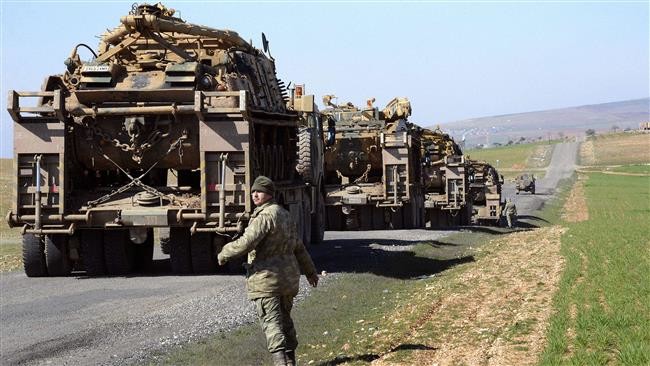
ANKARA: Turkey has beefed up its border security, primarily due to threats posed by the outlawed Kurdistan Workers’ Party (PKK) and Daesh.
PKK militants have infiltrated popular touristic Turkish cities such as Mugla, Fethiye and Koycegiz via the Syrian port city of Latakia, Interior Minister Suleyman Soylu said Thursday.
Security forces killed five PKK militants in Mugla earlier that day, with two militants reportedly at large in the same area.
Security forces are also continuing counterterror operations and airstrikes in eastern Turkey and northern Iraq against PKK hideouts, ammunition depots and militants preparing for possible attacks.
Meanwhile, Turkish police carried out raids against suspected Daesh cells in big cities such as Istanbul, Konya and Izmir.
Turkey recently completed a 688-km-long security wall along its border with Syria. Twenty-one high-security, bulletproof and portable watchtowers are being built in the area, and 10 military officers will reside in each of them.
In order to intervene along the border in emergency situations, passenger routes will be built at 10-km intervals, especially in areas where Daesh is believed to have placed handmade explosive traps.
Sertac Canalp Korkmaz, a researcher in security studies at ORSAM, a think tank in Ankara, said it is not the first time PKK militants have tried to attack coastal tourist hotspots.
“However, recent security measures at the Syria border, and cross-border operations against PKK hideouts in northern Iraq, have pushed terror organizations to infiltrate Turkey via different routes, or by using proxy cells inside the country,” Korkmaz told Arab News.
“But the latest security measures in the coastal zones show that Turkey’s intelligence capacity in counterterrorism efforts has greatly increased.”
He said the high-tech border security measures have led to the PKK changing tactics, such as using armed drones.
“The security void in Iraq and Syria, due to geopolitical tectonic changes and the lack of a common counterterrorism approach by the international community, is being filled by terror groups and increasing security threats in the region,” he added.
Turkey’s military recently placed anti-drone systems at some border posts against possible attacks by terror groups.
Metin Gurcan, a former military officer and security analyst at the Istanbul Policy Center, said he thinks the PKK’s presence in the western coastal cities may not be heavily armed.
“This might be an intentional strategy by the terror group to divert the military from the south-eastern provinces toward western cities,” Gurcan told Arab News.
“Military zones in Turkey are vulnerable to vertical assaults from the air. Anti-drone defense systems should be integrated into all military levels, until the squadron,” he said.
“Walls and security towers can contribute to security to a great extent, but it would be naive to expect that they’d stop all illegal crossings at once.”


![]()
Turkey beefs up border security against Daesh, PKK
Turkey beefs up border security against Daesh, PKK

Latest updates


© 2026 SAUDI RESEARCH & PUBLISHING COMPANY, All Rights Reserved And subject to Terms of Use Agreement.