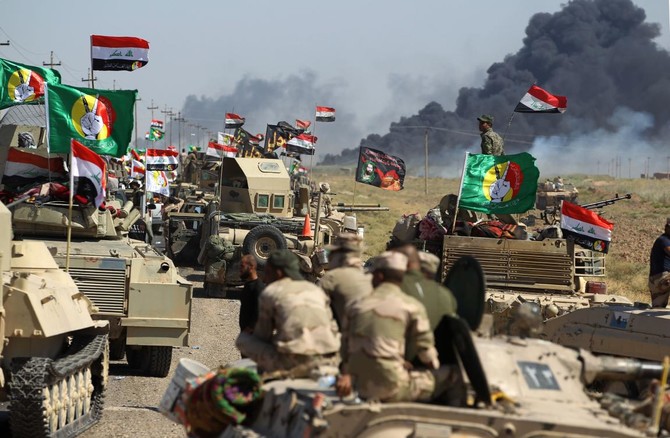
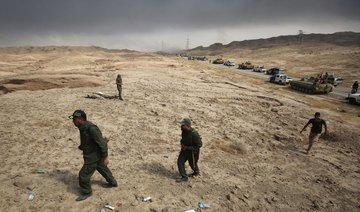
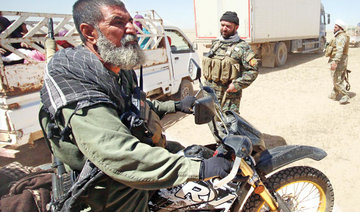
BAGHDAD: Iraqi forces said Thursday they had retaken the center of Daesh’s stronghold Hawija and were pushing forward in their assault on one of the last Daesh enclaves in the country.
Troops, police and paramilitaries “liberated the whole of the center of Hawija and are continuing their advance,” the operation’s commander, Lt. Gen. Abdel Amir Yarallah, said.
Government and allied forces backed by a US-led coalition launched an offensive last month to oust Daesh from Hawija, a longtime insurgent bastion.
The town is among the final holdouts from the territory seized by the jihadists in 2014 and its recapture would leave only a handful of remote outposts in Daesh hands.
The UN said on Tuesday that an estimated 12,500 people had fled the town since the launch of the offensive to retake Hawija and surrounding areas last month.
The UN’s humanitarian affairs office said the number of people still in the town was unknown but could be as high as 78,000.
It said humanitarian agencies have set up checkpoints, camps and emergency sites capable of receiving more than 70,000 people who could flee.
Hawija, 230 kilometers north of Baghdad, is one of just two significant areas of Iraq still held by Daesh, along with a stretch of the Euphrates Valley near the Syrian border which is also under attack.

Iraq forces retake center of Daesh bastion Hawija
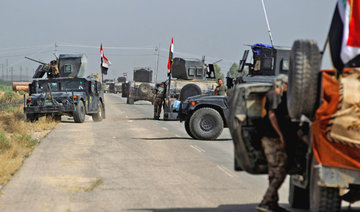
Iraq’s parliament delays presidential vote
- Iraq’s two main Kurdish parties, who ususally put forward a candidate for president, asked to postpone the vote
- Once elected, the president will then have 15 days to appoint a prime minister
BAGHDAD: Iraq’s parliament postponed the election of the country’s president on Tuesday to allow Kurdish rivals time to agree on a candidate.
The parliament delayed the session, the official INA press agency reported, without saying whether a new date had been agreed.
The agency reported earlier that speaker Haibat Al-Halbussi received requests from Iraq’s two main Kurdish parties, the Kurdistan Democratic Party (KDP) and the Patriotic Union of Kurdistan (PUK), to postpone the vote to “allow both parties more time” to reach a deal.
By convention, a Shiite Muslim holds the powerful post of prime minister, the parliament speaker is a Sunni and the largely ceremonial presidency goes to a Kurd.
Under a tacit agreement between the two main Kurdish parties, a PUK member holds the Iraqi presidency, while the president and regional premier of the semi-autonomous Kurdish region is selected from the KDP.
But this time the KDP named its own candidate for Iraq’s presidency: Iraqi Foreign Minister Fuad Hussein.
Once elected, the president will then have 15 days to appoint a prime minister, expected to be former premier Nouri Al-Maliki.
On Saturday, the Coordination Framework, an alliance of Shiite parties with varying ties to Iran that holds a parliamentary majority, endorsed Maliki.
But his nomination appeared to stoke concern in Washington.
The 75-year-old shrewd politician is Iraq’s only two-term premier (2006-2014) since the 2003 US invasion.
Seen as close to Iran, Al-Maliki left power in 2014 following heated pressure from Washington.
US Secretary of State Marco Rubio warned on Sunday against a pro-Iranian government in Iraq.
An Iraqi source close to the Coordination Framework told AFP that Washington had conveyed that it “holds a negative view of previous governments led by former prime minister Maliki.”
In a letter, US representatives said that while the selection of the prime minister is an Iraqi decision, “the United States will make its own sovereign decisions regarding the next government in line with American interests.”
Another Iraqi source confirmed the letter, adding that the Shiite alliance had still moved forward with its choice, confident that Al-Maliki could allay Washington’s concerns.
Iraq has long been a proxy battleground between the US and Iran, with successive governments negotiating a delicate balance between the two foes.
Iraq’s new premier will be expected to address Washington’s longstanding demand that Baghdad disarm Tehran-backed factions, many of which are designated terrorist groups by the US.
The parliament delayed the session, the official INA press agency reported, without saying whether a new date had been agreed.
The agency reported earlier that speaker Haibat Al-Halbussi received requests from Iraq’s two main Kurdish parties, the Kurdistan Democratic Party (KDP) and the Patriotic Union of Kurdistan (PUK), to postpone the vote to “allow both parties more time” to reach a deal.
By convention, a Shiite Muslim holds the powerful post of prime minister, the parliament speaker is a Sunni and the largely ceremonial presidency goes to a Kurd.
Under a tacit agreement between the two main Kurdish parties, a PUK member holds the Iraqi presidency, while the president and regional premier of the semi-autonomous Kurdish region is selected from the KDP.
But this time the KDP named its own candidate for Iraq’s presidency: Iraqi Foreign Minister Fuad Hussein.
Once elected, the president will then have 15 days to appoint a prime minister, expected to be former premier Nouri Al-Maliki.
On Saturday, the Coordination Framework, an alliance of Shiite parties with varying ties to Iran that holds a parliamentary majority, endorsed Maliki.
But his nomination appeared to stoke concern in Washington.
The 75-year-old shrewd politician is Iraq’s only two-term premier (2006-2014) since the 2003 US invasion.
Seen as close to Iran, Al-Maliki left power in 2014 following heated pressure from Washington.
US Secretary of State Marco Rubio warned on Sunday against a pro-Iranian government in Iraq.
An Iraqi source close to the Coordination Framework told AFP that Washington had conveyed that it “holds a negative view of previous governments led by former prime minister Maliki.”
In a letter, US representatives said that while the selection of the prime minister is an Iraqi decision, “the United States will make its own sovereign decisions regarding the next government in line with American interests.”
Another Iraqi source confirmed the letter, adding that the Shiite alliance had still moved forward with its choice, confident that Al-Maliki could allay Washington’s concerns.
Iraq has long been a proxy battleground between the US and Iran, with successive governments negotiating a delicate balance between the two foes.
Iraq’s new premier will be expected to address Washington’s longstanding demand that Baghdad disarm Tehran-backed factions, many of which are designated terrorist groups by the US.
© 2026 SAUDI RESEARCH & PUBLISHING COMPANY, All Rights Reserved And subject to Terms of Use Agreement.