

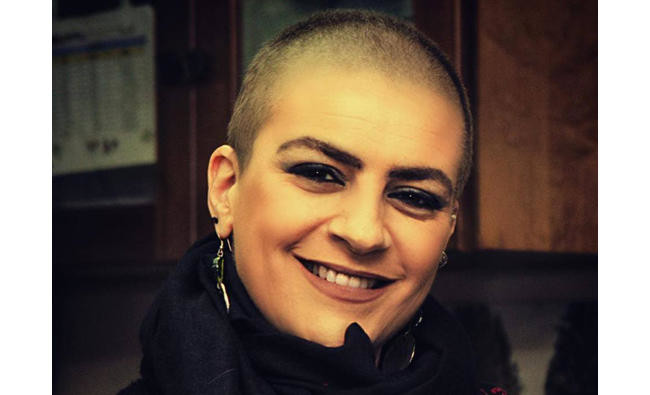
Arab stars who fought Breast cancer and won

Rim Banna
Updated 05 October 2017
Follow

Arab stars who fought Breast cancer and won

As part of Breast Cancer Awareness Month Sayidaty magazine is telling the stories of Arab stars who have fought breast cancer and won, as well as those who are still undergoing treatment for the disease.

Who are they?
The artist Nora Rahal, whose determination got her through the fight as she underwent her treatment, suffered immense difficulties along the way. For Rahal the healing stage was actually the hardest, as she underwent two-and-a-half years of difficult breast reconstruction operations after her mastectomy.

The Palestinian singer Rim Banna discovered she had breast cancer in 2009, but after a long period of treatment was completely cured. However last year Banna found she had cancer again, but determined - she announced she would keep fighting and resisting the disease until she won.

She received a large amount of support from her fans that praised her for her show of strength and positivity.

Kuwaiti actress, Zahrah al-Kharji, was diagnosed with cancer in 2005. She underwent two years of treatment before she eventually won her very private battle with cancer. She had kept her story a secret until last year, when she shaved her head and talked about her fight with breast cancer.


Makkah museum displays world’s largest Qur’an

Updated 04 February 2026
Follow

Makkah museum displays world’s largest Qur’an

MAKKAH: The Holy Qur’an Museum at the Hira Cultural District in Makkah is showcasing a monumental handwritten copy of the Holy Qur’an, recognized as the largest Qur’an of its kind in the world.

The manuscript measures 312 cm by 220 cm and comprises 700 pages, earning the museum recognition from Guinness World Records for displaying the world’s largest Qur’an, the Saudi Press Agency reported.

The manuscript is a magnified reproduction of a historic Qur’an dating back to the 16th century, the SPA stated.

The original copy measures 45 cm by 30 cm, with the chapters written primarily in Thuluth script, while Surah Al-Fatiha was penned in Naskh, reflecting the refined artistic choices and calligraphic diversity of the era.

The Qur’an is a unique example of Arabic calligraphy, gilding and bookbinding, showcasing Islamic art through intricate decorations, sun-shaped motifs on the opening folio, and elaborately designed frontispiece and title pages that reflect a high level of artistic mastery.

The manuscript was endowed as a waqf in 1883. Its original version is currently preserved at the King Abdulaziz Complex for Endowment Libraries, serving as a lasting testament to Muslims’ enduring reverence for the Qur’an and the richness of Islamic arts across the centuries.