THE HAGUE: Sarin nerve agent was used in an ‘incident’ at a northern Syrian village in late March, five days before the deadly attack on Khan Sheikhun, the world’s chemical watchdog said Wednesday.
“Analysis of samples collected (by the OPCW)... relates to an incident that took place again in the northern part of Syria on the 30th of March this year,” the head of the Organization for the Prohibition of Chemical Weapons told AFP in an interview.
“The results prove the existence of sarin,” Ahmet Uzumcu said.
The Khan Sheikhun attack on April 4 was previously believed to have been the first use of sarin since the deadly August 2013 attack in and around Damascus which killed hundreds of people.
Two days after Khan Sheikhun incident, the United States fired 59 Tomahawk missiles at a Syrian air base from which it said the attack was launched.
At least 87 people including 30 children died in the attack on Khan Sheikhun, a town in the opposition-held province of Idlib.
But Uzumcu said Wednesday sarin had also been used the opposition-held village called Latamneh, some 25 kilometers (15 miles) south of Khan Sheikhun on March 30.
“What we know at the moment is not much. Fifty people were reportedly injured. There were no deaths reported,” he said.
He said the OPCW’s fact-finding mission had retrieved soil samples, clothing and metal parts “which were sent to our laboratories and we received the results a few days ago.”
It is “worrying that there is some sarin use or exposure even before the April 4 incident,” he said.
Uzumcu pointed out that the OPCW’s fact-finding mission team was unlikely to visit the area, where fighting is still ongoing between Syrian government forces and armed opposition groups.
“The (fact-finding team) is making every effort to contact the victims,” Uzumcu said.
Syria’s government has denied involvement and claims it no longer possesses chemical weapons after a 2013 agreement under which it pledged to surrender its chemical arsenal.
The OPCW earlier this year presented a report confirming sarin gas was used in the attack at Khan Sheikhun, but did not assign blame.
But UN war crimes investigators last month said they had evidence that Syrian forces were behind the attacks, the first UN report to officially blame the Assad regime.
Damascus has vehemently refuted the claims saying “Syria has not and will not use toxic gases against its people because it does not have them.”
In total, the OPCW is studying as many as 45 suspected chemical attacks in Syria since mid-2016, the watchdog said in April.
The JIM, a joint OPCW-United Nations panel which reports to the UN Security Council, is now probing the question of responsibility and its report on the attack is due within the next few weeks.
The JIM has already determined that Syrian government forces were responsible for chlorine attacks on three villages in 2014 and 2015, and that Daesh terrorists used mustard gas in 2015.
Uzumcu told AFP he did not believe there would be any difference between the JIM’s findings on Khan Sheikhun and those of the OPCW’s fact-finding mission about the use of sarin.
“The challenge is of course to identify the actors of these attacks. They should certainly be held accountable, prosecuted and punished,” Uzumcu said.
“That’s the only way to keep strong the international norm against the use of chemical weapons,” he said.


![]()
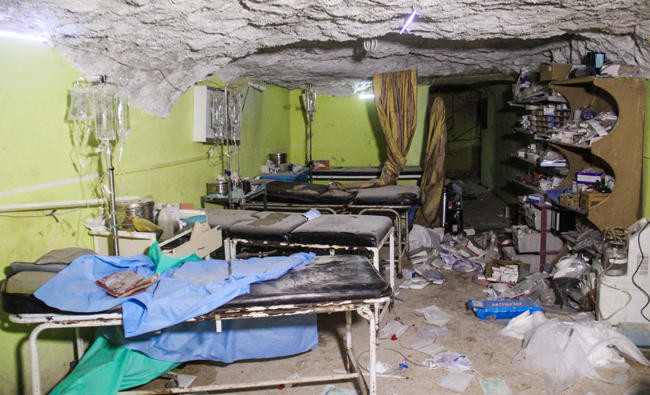
Sarin used in Syria 5 days before Khan Sheikhun: OPCW
Sarin used in Syria 5 days before Khan Sheikhun: OPCW
Latest updates


© 2026 SAUDI RESEARCH & PUBLISHING COMPANY, All Rights Reserved And subject to Terms of Use Agreement.