ANKARA: Turkey opened its largest overseas military training camp on Saturday on a 400-hectare seafront site in Mogadishu, the capital of Somalia.
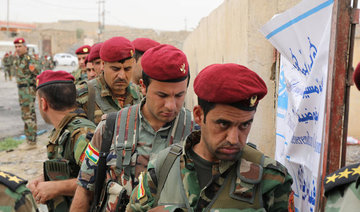
The $50 million camp, which has been under construction since March 2015, was inaugurated by Somali Prime Minister Hassan Ali Khaire and Gen. Hulusi Akar, Turkey’s military chief of staff. About 200 Turkish soldiers will train 10,000 troops from the Somali Army, in squads of 1,500 at a time.
“Somalia needs the help of professional trainers such as Turkey’s, and there is a close relationship between the two countries, so this could be hugely beneficial to Somalia and a morale booster for the Somali people,” Abdirashid Hashi, director of the Heritage Institute for Policy Studies in Mogadishu, told Arab News. “It also strengthens the Turkish government’s presence and influence in Somalia.”
Ibrahim Nassir, an Africa expert at ANKASAM, a think tank in Ankara, said the camp was a concrete reflection of Turkey’s historical responsibilities in the region since Ottoman times. “The insecurity of Somalia has a spill-over effect on the general instability in the region. Therefore, with the restructuring of the Somali National Army, Turkey will contribute to the regional security,” he said.
“I don’t see any security risk for Turkish military officers who will be stationed there. Security conditions have improved in the capital, and Turkey also has a good image there. It has constantly been offering help in capacity building, and does not have a colonialist footstep in the country.”
Turkey also has experience in providing military training to officers of some African Union countries, including Somalia, in their fight against the terrorist group Al-Shabab.
Nassir also underlined the long experience of the Turkish military in counter-terrorism efforts against the outlawed Kurdistan Workers’ Party (PKK) and Daesh.
Pinar Akpinar, a scholar at the Conflict Resolution and Mediation Stream of the Istanbul Policy Center, said establishing a military camp in Somalia was a way for Turkey to secure a long-term role thereby balancing soft and hard power capabilities, and was part of a broader policy of establishing a military stronghold in the Gulf of Aden.
“This is a trend among regional powers due to the diminishing US interest in the region and their aspirations to increase their leverage in the region by undertaking security provider roles,” she told Arab News.
However, the training camp was not without its risks, she said. “Somalia is a post-conflict country that still faces problems with Al-Shabab, and regional authorities such as Somaliland that are seeking their independence from Somalia, or with neighbors such as Ethiopia or Eritrea. They could see a militarily stronger Somali government as a threat.”


![]()

Turkey opens $50m training camp for Somali Army
Turkey opens $50m training camp for Somali Army

Latest updates


© 2026 SAUDI RESEARCH & PUBLISHING COMPANY, All Rights Reserved And subject to Terms of Use Agreement.