GAZA CITY: Ties between Palestinian rivals Fatah, a secular party, and the Islamist Hamas have been tense for a decade, at times erupting into deadly conflict.
Hamas controls the narrow Mediterranean Gaza enclave of the Palestinian territories, while Fatah is based in larger landlocked West Bank.
With Palestinian prime minister Rami Hamdallah due in the Gaza Strip on Monday, here is a look at the relationship between the groups.
Hamas takes part for the first time in 2006 in legislative elections for the Palestinian National Authority and beats out Fatah, which has been in control for 10 years.
A unity government is installed with Hamas taking key posts.
Simmering tensions between the two erupt into bloody clashes early 2007.
After a week of violence in Gaza in June, Palestinian president Mahmud Abbas fires the unity government and declares a state of emergency in the territory.
But Hamas routs forces loyal to Fatah and takes control of the strip, a move Abbas calls a coup.
In April 2011, Fatah and Hamas say they have reached an understanding to create an interim government of independents to prepare for elections.
Implementation of the deal is repeatedly delayed, however.
The rivals strike a prisoner-exchange accord in January 2012. The following month they agree that Abbas should lead an interim government, but the decision is disputed within Hamas and never applied.
In April 2014, the Fatah-dominated Palestine Liberation Organization (PLO) and Hamas finally agree on a unity government.
It is sworn in on June 2 but fails to exercise authority over Gaza where Abbas charges Hamas has set up a parallel administration to his own internationally recognized government.
In July-August 2014, though, the parties show a united response after Israel launches a 50-day blitz against Gaza in response to rocket fire.
The unity government falls apart months later.
In a stark revision of its founding charter, Hamas eases its stance on Israel in May 2017, after having long called for its destruction.
The Islamist group also pronounces that its struggle is not against Jews but against Israel as an occupier, and accepts the idea of a Palestinian state in territories occupied by Israel.
Hamas — considered a terrorist organization by Israel, the United States and the European Union — is seen as seeking to ease its international isolation while not marginalizing hard-liners within its ranks.
However, tensions remain between the rivals over the creation by Hamas months earlier of an “administrative committee” seen as a rival Palestinian government.
Abbas puts the squeeze on Hamas including by cutting electricity supplies to Gaza.
Under pressure, Hamas agrees on September 17 to the dissolution of the committee and says it is ready for talks on a new unity government and elections.
It calls on the Palestinian Authority government “to come to Gaza to exercise its functions and carry out its duties immediately.”


![]()
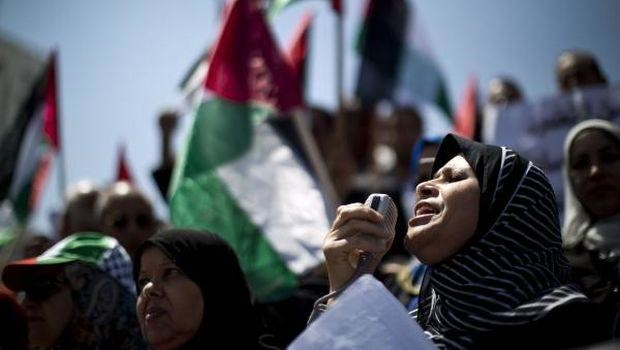
Fatah and Hamas: a decade of strained relations
Fatah and Hamas: a decade of strained relations
Latest updates


Recommended


© 2026 SAUDI RESEARCH & PUBLISHING COMPANY, All Rights Reserved And subject to Terms of Use Agreement.