LONDON: The number of millionaires in the Middle East rose by 4.8 percent last year as it rained dollars for high net worth individuals globally, research shows.
The World Wealth Report by global consultancy firm Capgemini revealed that there are now 642,800 high net worth individuals (HNWI) — people with assets of $1 million, excluding their primary residence, collectibles and consumables — across the Middle East.
The rise, however, was the smallest of any region in the world, with the number of millionaires globally having leapt to an all-time high of 16.5 million.
Africa saw an 8.1 percent increase in the number of millionaires, North America an 7.8 percent jump, with Europe, Latin America and Asia-Pacific all seeing a rise of between 7 and 8 percent.
The wealth of Middle Eastern millionaires rose by 5 percent to $2.42 trillion; that increase was however also the lowest of any global region.
Saudi Arabia has the most millionaires of all Middle Eastern countries, with 176,000 living in the Kingdom, up from 167,000 in 2015. That figure puts it in at 16th in the table of countries hosting HNWIs, a drop from 15th place in 2015.
Kuwait is the only other country from the region to make the top 25, in at 17th with 159,000 millionaires, 13,000 more than the year before.
The reason for the increase in Middle Eastern millionaires, at a time when the oil price fell, was the strong performance of equity markets in 2016, after declines in the previous year, as well as the growth in gross domestic product (GDP).
Globally it was a good year for those with stacks of cash, as some 1.15 million people joined the ranks of the rich, helping the number of millionaires reach an all-time high of around 16.5 million, a jump of 8 percent, with a record total wealth of $63.5 trillion
The US, Japan, Germany and China boast the highest numbers and together make up for almost two-thirds of the total.
In the US alone there are as many as 4.8 million millionaires, up from 4.46 million, while the number of millionaires in China rose to 1.13 million from just over 1 million.
The Asia-Pacific, Europe and North America contributed equally to the rise in wealth, with Russia, Brazil and Canada reversing course from declines a year ago, the report showed.
Russia, helped by a rebound in its stock market, saw both the number of its millionaires and their wealth grow by about 20 percent, pushing Saudi Arabia back a spot in the top-25 table.
France overtook the UK in the top five in terms of the number of millionaires, helped by a recovery in real estate, while Sweden knocked Singapore — which saw a decline in its equity markets — out of top 25.


![]()
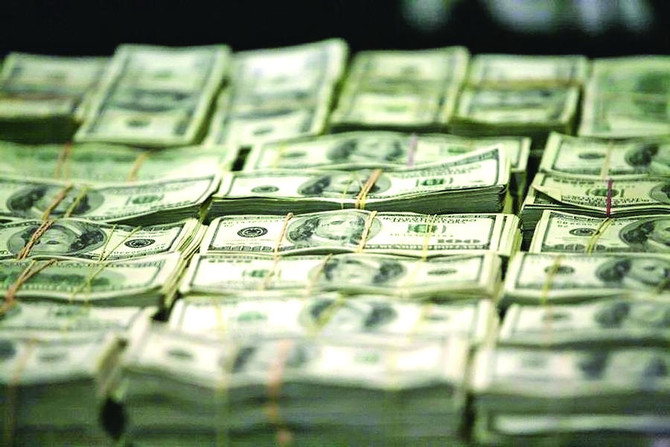
Middle East millionaire club grows as combined riches top $2.42 trillion
Middle East millionaire club grows as combined riches top $2.42 trillion

Latest updates




Recommended


© 2026 SAUDI RESEARCH & PUBLISHING COMPANY, All Rights Reserved And subject to Terms of Use Agreement.