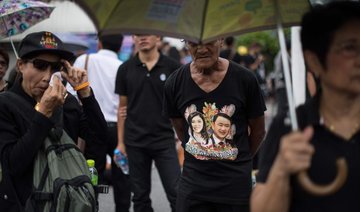
BANGKOK/DUBAI: Former Thai Prime Minister Yingluck Shinawatra was in Dubai but left for London on September 11, a Reuters source in the UAE said on Thursday.
The source spoke after Prayut Chan-O-Cha’s, the leader of Thailand’s military junta said that Yingluck was in Dubai, having fled there last month to avoid being jailed over a rice subsidy scheme that lost billions of dollars.
Prayut’s clear comments on Yingluck’s whereabouts came a month after she ghosted out off Thailand, ducking a court ruling over charges she failed to stop graft and losses in a costly rice subsidy policy by her government.
On Wednesday Thailand’s top court sentenced her in absentia to five years’ jail, pulling the plug on her political career.
She maintained her innocence throughout the case, which she said was a political fit-up sculpted by her family’s enemies among the arch-royalist army and elite.
“I learned from the foreign ministry that now she is in Dubai,” said Prayut, who toppled Yingluck’s government from office in a 2014 coup.
Once a fresh arrest warrant is issued, Thai authorities may proceed with extradition efforts, he told reporters.
Yingluck’s older brother Thaksin, also a former premier, has a home in Dubai.
The 2001 rise of Thaksin, a billionaire former cop with a magic touch at the polls, rattled Thailand’s establishment and the country has since seesawed between elected governments and coups.
He fled Thailand in 2008 to avoid jail on a graft conviction he says was politically motivated.
Defence Minister Prawit Wongsuwan, a key architect of the coup that took down Yingluck’s government, said “it’s good she is in Dubai.”
“Although don’t have extradition treaty … Dubai officials informed our foreign ministry that they will not allow Yingluck to make any political move.”
The 50-year-old, who still has the right to appeal, has not appeared in public since pulling the vanishing act on August 25, her initial ruling date.
The Shinawatra siblings lie at the center of a political battle that has chewed at Thailand for more than a decade.
Shinawatra-backed parties have dominated electoral politics since 2001, enraging Bangkok’s military-allied elite.
Unable to beat the Shinawatras at the polls, their rivals have turned to court rulings and coups to repeatedly knock their governments from power.

Fugitive former Thai PM Yingluck Shinawatra has fled Dubai
From round fruits to lucky charms: How Filipinos invite prosperous New Year
- Lights are lit, doors and windows open to allow good spirits in
- Sticky rice dishes are served to keep family sticking together
MANILA: With the dining table set with symbolic foods, a bit of noise and rituals to invite good luck, Filipinos are ready to welcome the New Year, carefully observing every tradition and superstition to bring prosperity.
Media noche or the midnight dinner on New Year’s Eve is central to the celebration. Besides traditional meats, there will be sticky rice dishes to keep the family sticking together, and pancit or long rice noodles to represent long life.
There should also be 13 round fruits prepared specifically for the occasion, with 12 representing each month of the year, and the 13th adding extra luck. Because they are round like coins, they are believed to invite abundance, wealth and prosperity.
“We cook bilo-bilo (sticky rice balls) with coconut milk and palitaw (sweet rice cakes). It’s something we simply grew up with,” said Cel Reyes from Mabini in Batangas province, south of Manila.
“It’s sticky, so it symbolizes togetherness, and it is also round. Anything that’s round is prepared also as a symbol of prosperity.”
In Malabon, a coastal city in the northern part of Metro Manila, Priam Nepomuceno’s 86-year-old mother-in-law sets unhulled rice on the table.
“Because of the gold color, it’s believed to bring luck and abundance,” he said. “Grapes are also hung on the door. They’re not meant to be eaten and are kept hanging for the whole year as a symbol of prosperity.”
Some people also jump when the clock strikes 12, believing it will help them grow taller.
In many households, all lights are lit before midnight, with doors and windows open to allow good spirits to enter, while noise from firecrackers and party horns keeps the bad ones at bay.
“By nature, Filipinos are superstitious. We believe in good luck, deities. We give in to faith and luck, and it’s tied to deep spirituality,” said Juanita Galang-Trinidad, an 80-year-old editor from Bulacan province north of Manila.
“We also put 12 coins in varying amounts in our pockets and wear polka dot clothing. Rice, cereal, and salt containers should be full.”
New Year’s celebrations, like Christmas, bring families together, but with extra traditions for good luck. Beyond the midnight feast and keeping round objects on the table and at hand, Filipinos try to pay off debts to avoid financial trouble in the coming year.
On New Year’s Eve, they also avoid serving chicken, as chickens are believed to scratch backward when they eat, symbolically scratching away good fortune.
“We hold on to our traditions despite these growing changes, modernity, in our environment,” Trinidad said.
“We still hold on to our traditions and customs because they identify us as a people, as Filipinos.”