BEIRUT: Lebanon experienced a nationwide strike involving all public sector institutions as well as both public and private schools on Monday, with those on strike demanding a public sector pay rise.
A new salary scale was approved by Parliament only for the constitutional council to revoke it on Friday. The government then failed in its emergency session on Sunday night to agree on a plan to fund the salary scale law.
The one-day strike affected key sectors across the country such as courts, government hospitals’ administration, educational institutions and official government departments.
The cabinet held another session late last night in an effort to work out a way to fund $917 million public sector pay rise. The majority of ministers have agreed that the salaries should be paid according to the new law.
Economic expert, Ghazi Wazni said: “If September’s salaries are not paid in accordance with the salary scale law, the resulting unpaid additions will be considered as debt.”
He said that the government had three choices.
“(It could) issue a new law revoking the old salary scale law; issue a new law to suspend the old law; or postpone it with a ministerial decree,” Wazni added.
The salaries for the first month according to the salary scale law amount to more than 110 billion Lebanese lira ($73.3 million). Wazni said that the government could cope with that amount, adding that “the government can present a draft law within a month, with new tax items that can be added to the draft budget of 2017.”
Lebanese President Michel Aoun, who is in Paris on a state visit, said that he “had personally highlighted the reasons why the constitutional council revoked the law of financing the salary scale law.”
He confirmed that the salary scale law “will be implemented and in the event of any technical delay it will be recovered later through the Ministry of Finance’s available funds.”
Ali Hassan Khalil, the minister of finance, said: “The ministry has prepared the payment of salaries according to the new law in force; however, it is still to be confirmed during Tuesday’s cabinet meeting.”
He also pointed that the ministry had amended taxes, “as referred to by the constitutional council’s decision.”
Melhem Riachi, the information minister, stressed that taxes were of vital importance if the country was going to responsibly finance the public sector pay rise.
“The implementation of the salary scale law without taxes will turn Lebanon into (another) Greece,” he warned.
The Association of Public Administration Employees and other unions called for a rally on Tuesday in Riad al-Solh Square in Beirut, near the Grand Serail, where the cabinet session will take place.
Beshara Asmar, president of the Confederation of Lebanese Workers, said that the salary scale must be immediately implemented, condemning the tax hikes on employees with limited incomes, especially the VAT increase.
The MPs who signed the tax law appeal said that the government proposes very expensive projects without controlling the spread of corruption in state institutions.
In a statement read out by MP Boutros Harb following a meeting, the MPs stressed the beneficiaries’ right to the pay scale approved by Parliament.
He added that the MPs will suggest “amendments to the budget by increasing taxes on banks, increasing fines on maritime violations, as well as proposing other reforms.”


Lebanese Cabinet to look at ways to fund public sector pay rise
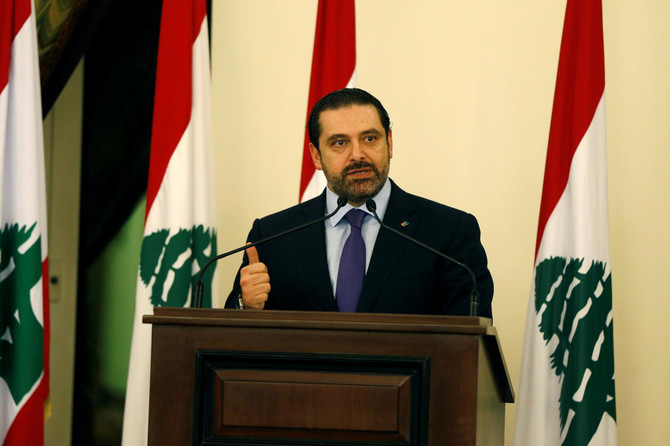
Lebanese Cabinet to look at ways to fund public sector pay rise

Real Estate Registry signs 10 agreements at forum in Riyadh
RIYADH: The Real Estate Registry concluded its participation in the Real Estate Future 2026, as a partner of the forum, with a distinguished presence that included the launch of its business portal, the signing of 10 agreements and memoranda of understanding with entities from the public and private sectors, the organization of specialized workshops, and the awarding of the Gold Award at the Real Estate Excellence Awards.
During his participation in the forum, the CEO of the firm, Mohammed Al-Sulaiman, reviewed the latest developments in real estate registration in the Kingdom in a keynote speech, highlighting the pivotal role of the Real Estate Registry in building a unified and reliable system for data. He also announced the launch of the national blockchain infrastructure, which aims to enable the microcoding of real estate assets, enhance transparency, expand investment opportunities, and support innovative ownership models within a reliable regulatory framework.
On the sidelines of the forum, Al-Sulaiman met with Nigeria’s Minister of Housing and Urban Development, Ahmed Dangiwa. During the meeting, they discussed areas of joint cooperation, exchanged experiences and advice on shaping the future of the real estate sector, and reviewed best practices in implementing real estate registration systems that enhance reliability and improve the efficiency of property registration.
efficiency of property registration systems.
The Real Estate Registry’s participation included organizing three specialized workshops that focused on the role of geospatial technologies in identifying ownership, enhancing transparency, and improving the quality of real estate data.
The workshop “Empowering the Real Estate Registry for the Business Sector” reviewed digital solutions that enable the business sector to manage its real estate assets more efficiently and enhance governance and technical integration. The workshop “From Off-Plan Sales to Title Deed” focused on the journey of documenting real estate ownership and the role of the registry in linking the stages of development and documentation within an integrated digital system.
On the sidelines of the forum, the Real Estate Registry signed 10 agreements and memorandums of understanding, including a deal with Yasmina Information Technology Co. to utilize real estate data in developing smarter insurance solutions that support the real estate sector and enhance service reliability.
Partnerships were also signed with Haseel, NewTech, and Sahl, as well as HissaTech and Droub, to develop innovative digital solutions in property ownership, fractional ownership, and asset tokenization, as well as real estate finance and investment within a trusted regulatory framework.
Further collaborations included an MoU with ROSHN Group, an agreement with the Saudi Water Authority to enable data integration and quality enhancement, an agreement with the Saudi National Bank, and a partnership with Saudi Post to link the national address with the property registry as a unified geospatial identifier supporting data accuracy and integration.
The registry’s participation was crowned with the Golden Award at the Real Estate Excellence Awards in the category of Excellence in Property Documentation, in recognition of its role in building a model based on transparency, accuracy, and speed, as well as advanced digital technologies and specialized legal expertise, contributing to rights protection and increasing the sector’s attractiveness.
The Real Estate Registry emphasized that its participation reflects its continued role as a key enabler of the real estate sector, a trusted data source, and an active partner in driving digital transformation, enhancing market efficiency, and building investor and financier confidence, in line with Saudi Arabia’s Vision 2030 objectives for a fully integrated and sustainable digital real estate ecosystem.


