IRBIL/SULAIMANIYA, Iraq: Kurds voted in large numbers in an independence referendum in northern Iraq on Monday, ignoring pressure from Baghdad, threats from Turkey and Iran, and international warnings that the vote may ignite yet more regional conflict.
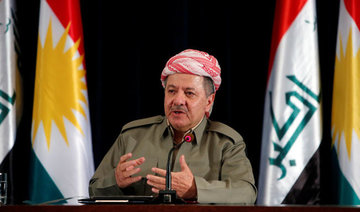
The vote organized by Kurdish authorities is expected to deliver a comfortable “yes” for independence, but is not binding. However, it is designed to give Masoud Barzani, who heads the Kurdistan Regional Government (KRG), a mandate to negotiate the secession of the oil-producing region.
Turnout was 76 percent an hour before voting closed, the Kurdish Rudaw TV station said.
For Iraqi Kurds — the largest ethnic group left stateless when the Ottoman empire collapsed a century ago — the referendum offers a historic opportunity despite intense international pressure to call it off.
“We have seen worse, we have seen injustice, killings and blockades,” said Talat, waiting to vote in the regional capital of Irbil, as a group of smiling women, in colorful Kurdish dress, emerged from the school showing their fingers stained with ink, a sign that they voted.
At Sheikh Amir village, near the Peshmerga front lines west of Irbil, long lines of Kurdish fighters waited to vote at a former school. Most emerged smiling, holding up ink-marked fingers.
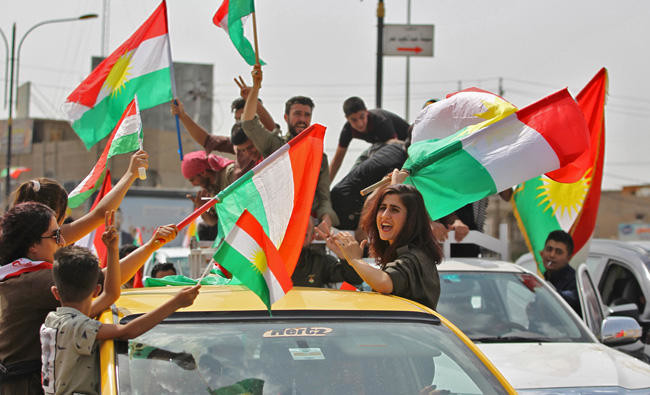
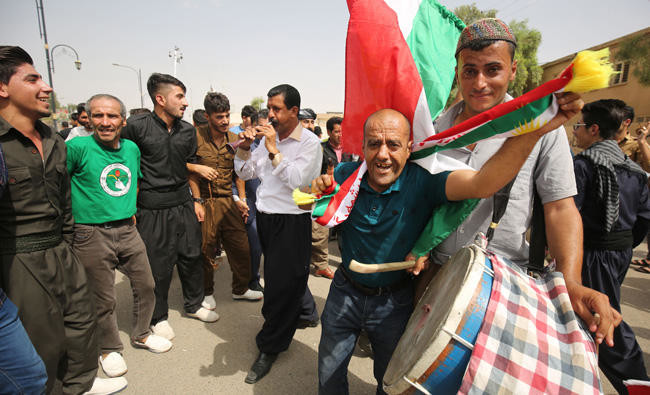
In the ethnically mixed city of Kirkuk, Kurds sang and danced as they flocked to polling stations.
Opposition to the vote has been simmering among the Arabs and Turkmen who live alongside the Kurds in the northern Iraqi city and there had been rumors that the vote would not take place in mixed areas. Officials later ordered an overnight curfew.
Iraqi Prime Minister Haider Al-Abadi ordered security services “to protect citizens being threatened and coerced” in the Kurdish region, after unconfirmed reports that Arabs in a small town in eastern Iraq were compelled to vote yes. Kurdish officials say no such coercion happened.
In Baghdad, lawyer Adil Salman said the referendum resulted from the weakness of the Iraqi government. “The scenario we’re seeing now is of state disintegration,” he said.
The Kurds also say the vote acknowledges their contribution in confronting Islamic State after it overwhelmed the Iraqi army in 2014 and seized control of a third of Iraq.
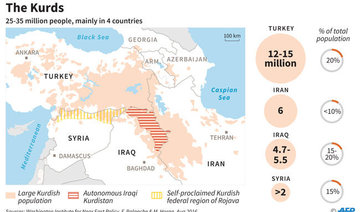
But with 30 million ethnic Kurds scattered over international borders across the region, Tehran and Ankara fear the spread of separatism to their own Kurdish populations.
President Tayyip Erdogan said Turkey could cut off the pipeline that carries oil from northern Iraq to the outside world, piling more pressure on the Kurds.
“After this, let’s see through which channels the northern Iraqi regional government will send its oil, or where it will sell it,” Erdogan said in Istanbul. “We have the tap. The moment we close the tap, then it’s done.”
Turkey later took the Rudaw television channel off its satellite service TurkSat, a Turkish broadcasting official told Reuters.
The US State Department warned the Kurds last week that “holding the referendum in disputed areas is particularly provocative and destabilising.”
The referendum is taking place not only in the Kurdish autonomous region of Iraq, but also in areas in the north of the country where Kurdish forces have advanced against Islamic State. These areas also have large non-Kurdish populations.
Turkey said it did not recognize the referendum and would view its outcome as null and void, adding that the Iraqi Kurdish government was threatening the peace and stability of Iraq and the whole region.
Prime Minister Binali Yildirim said his government was evaluating possible punitive steps regarding its border with northern Iraq and air space in response to the vote.
Erdogan said traffic was only being allowed to cross from the Turkish side of the border into Kurdishh areas of Iraq.
Ankara’s forces are again fighting a Kurdish insurgency in Turkey following the collapse of a peace process.
Flight ban
Iran announced a ban on direct flights to and from Kurdistan on Sunday, while Baghdad asked foreign countries to stop direct oil trading with the Kurdish region and demanded that the KRG hands over control of its international airports and border posts with Iran, Turkey and Syria.
Major General Yahya Rahim Safavi, a top military adviser to the Supreme Leader Ayatollah Seyed Ali Khamenei, said Iran regarded the referendum as “treason” against the Iraqi Kurds.
“Iran has blocked air traffic to this region but we are hopeful that the four neighboring countries will block the land borders with Iraq too,” he was quoted as saying by state news agency IRNA.
Tehran supports Shiite groups who have been ruling or holding security and government positions in Iraq since the US-led invasion which toppled Saddam Hussein in 2003.
Syria, embroiled in a devastating civil war and whose Kurds are pressing ahead with their own self-determination, rejected the referendum.
Iraqi Kurdish prime Minister Nechirvan Barxani said he hoped to maintain good relations with Turkey and the referendum was not a threat to Ankara.
“The referendum does not mean independence will happen tomorrow, nor are we redrawing borders,” he said in Irbil. “If the ‘Yes’ vote wins, we will resolve our issues with Baghdad peacefully.”
Opposition
Opposition to the vote has emerged among non-Kurdish populations in areas disputed by the KRG and Baghdad, mainly the oil-rich region of Kirkuk.
“Iraq is against the Kurds, so are the Turks, the Iranians, the whole Arab region and Europe. They are going to live in a cage,” said Mohammed Mahdi Al-Bayati, a Shiite Turkmen and a local leader of the Iranian-backed Badr Organization paramilitary group in Tuz Khurmato, south of Kirkuk.
In Sulaimaniya, a center for political groups opposed to Barzani, queues at polling stations were shorter than in Irbil. There were fewer billboards celebrating the referendum, reflecting resentment that a yes vote could be seen as a plebiscite for the Kurdish leader.
“I will not vote, the referendum is not good, and it could be dangerous because of the threat from Turkey and Iran,” said a shop owner in Sulaimaniya, Ali Ahmed.
After World War I, Britain and France carved up the Ottoman empire, leaving the Kurds scattered mainly over four countries: Iraq, Iran, Turkey and Syria.
All of them suffered persecution and were often denied the right to speak their language. Those in Iraq were uprooted under Saddam and suffered an attack using chemical weapons.
Polling stations
Polling stations opened at 8:00 a.m. (0500 GMT) and were supposed to close at 6:00 p.m., although voting continued in some areas. Final results were expected within 72 hours.
Voting is open to all registered residents, Kurds and non-Kurds, in the Kurdish-held areas of northern Iraq aged 18 and over, according to the referendum commission.
There are about 5.2 million eligible voters, including those living abroad who began voting two days ago.
Voters should tick yes or no on the ballot asking them just one question in Kurdish, Turkish, Arabic and Assyrian: “do you want the Kurdistan Region and Kurdistani areas outside the (Kurdistan) Region to become an independent country?"