Humanitarian work puts Saudi Arabia at forefront of philanthropy

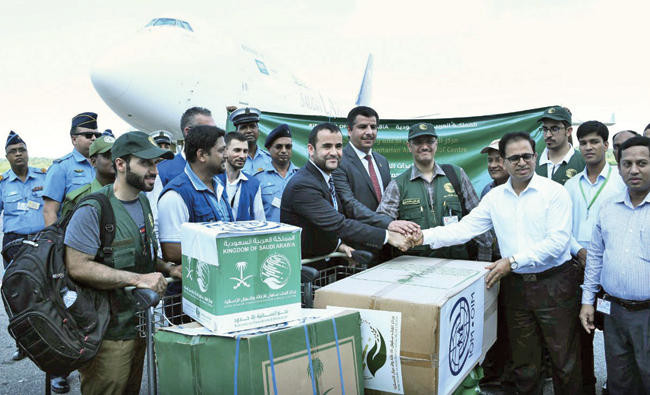
The King Salman Humanitarian Aid and Relief Center (KSRelief) has improved the lives of people in need in numerous countries including Yemen and Syria.
Updated 23 September 2017
Follow

Humanitarian work puts Saudi Arabia at forefront of philanthropy

RIYADH: The King Salman Humanitarian Aid and Relief Center (KSRelief), launched by King Salman in 2015, has saved “millions of people,” said its General Supervisor Abdullah Al-Rabeeah.
KSRelief has improved the lives of people in need in numerous countries, including Yemen and Syria.
King Salman on Tuesday ordered the payment of $15 million in aid for Rohingya refugees fleeing genocide in Myanmar.
The announcement came following a meeting of the Saudi Cabinet, which renewed a call for the international community to take urgent action to end the organized violence and allow Myanmar’s Muslim minority their basic human rights.
“The Kingdom, represented by KSRelief, has saved millions of people, victims of conflicts and crises worldwide, without discrimination in terms of their religion, race or color,” said Al-Rabeeah.
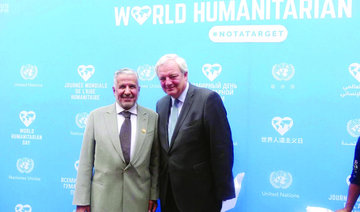
He added that the level of development and humanitarian assistance provided by the Kingdom, as a percentage of gross domestic product (GDP), exceeds the target set by the UN.
Al-Rabeeah was speaking in Washington at a symposium hosted by the National Council on US-Arab Relations and a committee for US-Gulf partnerships.
He said KSRelief, despite its recent establishment, has implemented 231 projects in 38 countries via 108 partnerships with the UN, international and local organizations.
Al-Rabeeah added that war-torn Yemen is suffering from poor infrastructure and poor health services, and is in dire need of humanitarian aid in the areas of food, health care and child malnutrition.
He cited the situation regarding humanitarian funding for Yemen by the international community, with only 42 percent of the UN’s target for 2017 — $976.5 million of $2.3 billion — met so far.
Al-Rabeeah said the Kingdom is one of the most active countries in the world in responding to the UN appeal for 2017, with its funding amounting to $221.9 million. The Kingdom gave Yemen a total of $8.27 billion between 2015 and 2017, he added.
Al-Rabeeah said the Kingdom responded to appeals by the World Health Organization (WHO) and UNICEF to fight cholera in Yemen by providing $66.7 million upon the directives of Crown Prince Mohammed bin Salman.
KSRelief implemented 103 projects benefiting almost 32 million women, with total funding of more than $157 million, he added.
These projects included 68 initiatives in the fields of education, protection, food security, health, water and environmental sanitation for Yemeni women.
Projects for children in Yemen focused on protection, rehabilitation, food, nutrition, health and environmental sanitation.
KSRelief implemented 116 projects for children worldwide, benefiting more than 60 million of them.
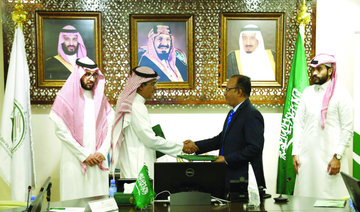
The center last week signed contracts with hospitals in Yemen to treat about 700 victims of the conflict.
It also freed and rehabilitated 40 Yemeni children who had previously been conscripted by Houthi militias. The children were returned to school and reintroduced to their peers.
For one month, they will receive psychological, educational, social and sports courses supervised by qualified psychologists, according to international standards for reintegration programs.
These children were forced by Houthi militias to take part in fighting and supply them with ammunition and food.
According to Yemeni government estimates, more than 10,000 children have been conscripted by the Houthis.
KSRelief is also supporting the Syrian people by coordinating with the Saudi National Campaign (SNC), which is offering humanitarian support including providing medical services via specialized clinics at Zaatari refugee camp in Jordan.
A Kingdom-wide fundraising campaign for people displaced by the war in Syria, including those evacuated from east Aleppo, was launched last December, and has received an overwhelming response.
Saudi Arabia is one of the biggest donors to UN relief campaigns for Syria, and has an ongoing aid program for refugees and those internally displaced.


Hayy Matsuri returns to Jeddah

Updated 7 sec ago
Follow

Hayy Matsuri returns to Jeddah

  • Festival brings together program that spans music, food, films, crafts

JEDDAH: Hayy Matsuri has returned to Hayy Jameel Jeddah, and continues until Jan. 10, providing a key platform for cultural exchange between Japan and Saudi Arabia.

Open to the public, the festival brings together more than 35 contributors in an immersive program that spans music, food, films, crafts and community-driven experiences.

This year’s edition is inspired by the Japanese philosophy of Shu Ha Ri, a concept rooted in the progression of learning through imitation, innovation and invention.

The theme is explored across multiple art forms, offering visitors an understanding of how traditions are learned, challenged and ultimately reimagined.

The festival features live performances, food and beverage concepts, retail experiences, an open market, film screenings, cultural demonstrations, board games and interactive activities designed for all ages.

Among the highlights has been the debut in Saudi Arabia of the Tokyo Riddim Band, a genre-blending group known for fusing Japanese music with reggae rhythms, funky basslines and jazz influences.

Frank Chickens, a cult-favorite band led by artist Kazuko Hohki, have also made their first appearance in the Kingdom. Their performances are known for combining punk-pop, traditional Japanese folk music, theatrical movement and humor.

Hohki explained the fluid nature of the group’s lineup, telling Arab News: “We are a community-based group, so each performance depends on who is available.”

Seven female members took to the stage at Hayy Matsuri, marking a unique moment for the band.

Hohki noted the configuration, and added: “It’s a first in our history to have this group performing together.”

Despite the shifting lineup, the band’s adaptability remains central to its identity.

Hohki said: “We know the songs and routines, but we always adapt depending on who’s performing. That keeps it exciting and fresh.”

Frank Chickens began in 1982 as a duo performing Okinawan songs before evolving into a larger collective. Their independent 1980s hit “We Are Ninja” propelled them onto international stages, leading to tours across Asia, the release of two albums and a period as full-time musicians.

However, as the group expanded, their relationship with the commercial music industry changed.

Hohki added: “As more people joined, we moved away from the commercial music industry. I didn’t enjoy the business side; it focused too much on profit rather than creativity.”

Over time, Frank Chickens transformed into a community-oriented artistic collective rather than a conventional band, and Hohki described the shift as deeply personal and creatively liberating.

She said: “It became like having a tribe. I also began working more in theater and community art, which helped me realize how powerful community creativity can be. Frank Chickens grew naturally from that idea.”

The band curated a setlist for Jeddah that emphasized participation and cultural fusion. They performed “We Are Ninja,” she said, “because it is interactive and perfect for involving the audience.”

The performance also included “Island Inside Island,” which blends Japanese and Okinawan musical traditions with Western influences, as well as a karaoke-style rendition of “Ame no Bojo” (Loving Rainy Days).

At the core of Hohki’s artistic approach is a simple guiding principle, and she said: “Having fun: it is the most important thing.”

The festival has received strong diplomatic support, and Yamamoto Daisuke, consul general of Japan in Jeddah, told Arab News: “This event is a wonderful opportunity for us, as we do not always realize how deeply people are connected to or interested in Japan and its culture.

“Matsuri, by nature, is a festival traditionally celebrated in Japan, usually during the summer, and seeing it recreated here, with so many activities and strong engagement, feels very much like an authentic Japanese festival.”

He added that the diversity of its participants reflected the festival’s growing cultural reach, and said: “We are delighted to see that many of the participants are Saudis, as well as non-Saudis living in the region, who share a strong interest in Japanese culture.”

He added: “We sincerely appreciate the support of Hayy Jameel in making this event possible. We are honored to contribute to and participate in such an initiative, and hope this festival becomes a central platform for celebrating Japanese culture in the region.”

Hands-on workshops are also a key feature of the festival. Mona Sanbal, a Jeddah-based ceramic artist, led a workshop titled “A Journey from Mending to Breaking,” using the Japanese art of kintsugi, which focuses on repairing broken objects with gold.

She told Arab News: “The idea is based on using artistic pieces of coffee cups made of clay and ceramic, which we intentionally break and then repair using different fragments. Some of these pieces carry Japanese heritage, while others reflect Saudi heritage connected to coffee. We aim to merge them together to create a unique and visually striking artistic piece.”

Family programming has been a central component of Hayy Matsuri and it includes a dedicated children’s zone. Activities on the opening day of the festival included memory card games, origami, printing and coloring sessions. Famous Japanese characters took center stage.

Children also took part in group activities such as puzzle assembly and badge making, with completed badges forming a stand. A tie-dye workshop, in which children dyed fabric using the traditional Japanese technique, was also featured, and Saturday’s program will feature a workshop in which children can decorate Japanese fans.

New to the edition has been an interactive listening room, inspired by Japan’s deep-listening cafes known as Ongaku Kissa. The space has featured curated vinyl selections by Kay Suzuki, founder of Time Capsule, alongside listening sessions and DJ sets by Samee3 Lamee3.

Complementing the experience has been a photographic exploration of jazz cafe culture by Katsumasa Kusunose, highlighting the shared sonic evolution of Japanese and Arabic music over the past century.

The festival has also included an open market showcasing both local and Japanese creatives; an expanded film lineup at Hayy Cinema; children’s activities at Hayy Explorers; origami sessions; and language and board game zones.