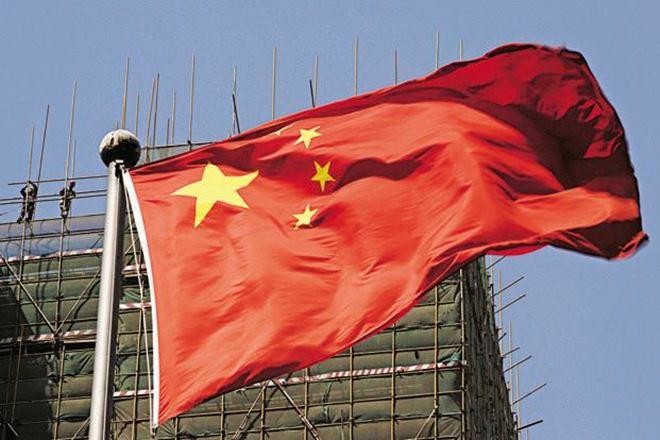
BEIJING: S&P Global Ratings downgraded China’s long-term sovereign credit rating by one notch on Thursday to A+ from AA-, citing increasing risks from the country’s rapid build-up of credit.
“The downgrade reflects our assessment that a prolonged period of strong credit growth has increased China’s economic and financial risks,” S&P said in a statement, adding that the ratings outlook was stable.
S&P’s downgrade follows a similar demotion by Moody’s Investors Service in May and comes as the government grapples with the challenges of containing financial risks stemming from years of credit-fuelled stimulus spurred by the need to meet official growth targets.
It also comes less than a month ahead of a highly sensitive twice-a-decade Communist Party Congress which will see a key leadership reshuffle.
Concerns about China’s sustained strong credit growth appear to be increasing, even as first-half economic growth beat expectations.
China’s stock markets were already closed Thursday when the downgrade was published, and there was little reaction from the yuan.
S&P said that recent efforts by the government to reduce corporate leverage could stabilize financial risks in the medium-term.
“However, we foresee that credit growth in the next two to three years will remain at levels that will increase financial risks gradually,” S&P said.
S&P also lowered China’s short-term rating to A-1 from A-1+.
“The improved outlook for trade is welcome news, but substantial risks that threaten the world economy remain in place and could easily undermine any trade recovery,” WTO Director-General Roberto Azevedo said in a statement.
“These risks include the possibility that protectionist rhetoric translates into trade restrictive actions, a worrying rise in global geopolitical tensions and a rising economic toll from natural disasters.”
However, trade growth was becoming more synchronized across regions than it had been for many years, which could make the current trend self-reinforcing, he said.
The fast pace of 2017, which followed a very weak year, is unlikely to be sustained in 2018, with US and euro zone monetary policy expected to tighten and China likely to rein in easy credit to stop its economy from overheating, the WTO said.
“All of these factors should contribute to a moderation of trade growth in 2018 to around 3.2 percent (the full range of the estimate being from 1.4 percent to 4.4 percent),” it said.
The ratio of trade growth to GDP growth, which traditionally ran at about 2:1 but has slumped to about 1:1 in the decade since the financial crisis, should rise this year, with trade growing 1.3 times faster than the global economy, it said.

S&P downgrades China’s credit rating, cites rising debt
Reforms target sustained growth in Saudi real estate sector, says Al-Hogail
RIYADH: The Real Estate Future Forum opened its doors for its first day at the Four Seasons Riyadh, with prominent global and local figures coming together to engage with one of the Kingdom’s most prospering sectors.
With new regulations, laws, and investments underway, 2026 is expected to be a year of momentous progress for the real estate sector in the Kingdom.
The forum opened with a video highlighting the sector’s progress in the Kingdom, during which an emphasis was placed on the forum’s ability to create global reach, representation, as well as agreements worth a cumulative $50 billion
With the Kingdom now opening up real estate ownership to foreigners, this year’s Real Estate Future Forum is placing a great deal of importance on this new milestone and its desired outcomes and impact on the market.
Aside from this year’s forum’s unique discussions surrounding those developments, it will also be the first of its kind to launch the Real Estate Excellence Award and announce its finalist during the three-day summit.
Minister of Municipalities and Housing and Chairman of the Real Estate General Authority Majed Al-Hogail took to stage to address the diverse audience on the real estate market’s achievements thus far and its milestones to come.
Of those important milestones, he underscored “real estate balance” as a key pillar of the sector’s decisions to implement regulatory tools “with the aim of constant growth which can maintain the vitality of this sector.” He pointed to examples of those regulatory measures, such as the White Land Tax.
On 2025’s progress, the minister highlighted the jump in Saudi family home ownership, which went from 47 percent in 2016 to 66 percent in 2025, keeping the Kingdom’s Vision 2030 goal of 70 percent by the end of the decade on track.
He said the opening of the real estate market to foreigners is an indicator of the sector’s maturity under the leadership of Crown Prince Mohammed bin Salman. He said his ministry plans to build over 300,000 housing units in Riyadh over the next three years.
Speaking to Arab News, Al-Hogail elaborated on these achievements, stating: “Today, demand, especially local demand, has grown significantly. The mortgage market has reached record levels, exceeding SR900 billion ($240 billion) in mortgage financing, we are now seeing SRC (Saudi Real Estate Refinance Co.) injecting both local and foreign liquidity on a large scale, reaching more than SR54 billion”
Al-Hogail described Makkah and Madinah as unique and special points in the Kingdom’s real estate market as he spoke of the sector’s attractiveness.
“Today, the Kingdom of Saudi Arabia has become, in international investment indices, one that takes a good share of the Middle East, and based on this, many real estate investment portfolios have begun to come in,” he said.
Al-Ahsa Gov. Prince Saud bin Talal bin Badr Al-Saud told Arab News the Kingdom’s ability to balance both heritage sites with real estate is one of its strengths.
He said: “Actually the real estate market supports the whole infrastructure … the whole ecosystem goes back together in the foundation of the real estate; if we have the right infrastructure we can leverage more on tourism plus we can leverage more on the quality of life … we’re looking at 2030, this is the vision … to have the right infrastructure the time for more investors to come in real estate, entertainment, plus tourism and culture.”