JERUSALEM: Israel has become the only country to openly support an independent Kurdish state, a result of good ties between Kurds and Jews and expectations it would be a front against Iran and extremism, experts say.
Iraq’s Kurdish region plans to hold a non-binding referendum on statehood on Sept. 25 despite the objections of Baghdad and neighboring Iran and Turkey, as well as the US.
On Monday, Iraq’s Supreme Court ordered the suspension of the referendum as legal and political pressure mounted on the Kurds to call off the vote.
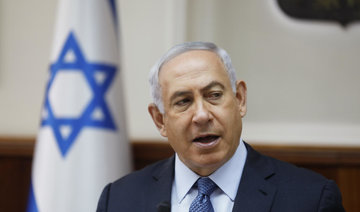
Israel became the first and so far only country to openly voice support for “the legitimate efforts of the Kurdish people to attain a state of its own,” as Prime Minister Benjamin Netanyahu said last week, without specifying where and how.
Netanyahu’s statement came after remarks made earlier in the month by former general Yair Golan, who said he liked the “idea of independent Kurdistan.”
“Basically, looking at Iran in the east, looking at the instability (in) the region, a solid, stable, cohesive Kurdish entity in the midst of this quagmire — it’s not a bad idea,” Golan said at the Washington Institute for Near East Policy.
He also noted Israel’s “good cooperation with the Kurd people since the early 1960s.”
To Gideon Saar, a former Israeli minister, the Kurds are a minority group in the Middle East that, unlike the Jews, have yet to achieve statehood.
“The Kurds have been and will continue to be reliable and long-term allies of Israel since they are, like us, a minority group in the region,” he said.
“We need to encourage independence of minorities that were wronged by regional arrangements since Sykes-Picot over the past 100 years and have been repressed under authoritarian regimes, like Saddam Hussein’s in Iraq and the Assads in Syria,” Saar said.
The Sykes-Picot agreement was a World War I-era deal between Britain and France laying out boundaries in the Middle East.
Saar too noted Kurdistan’s efforts in pushing back Islamist forces.
“Looking at the Kurds’ location on a map you realize they can be a dam blocking the spread of radical Islam in the region, and in practice we’ve seen them exclusively fighting IS,” he said.
“Throughout the years the Kurds were never drawn to anti-Israeli or anti-Zionist perceptions and maintained good ties with the Jewish people and Israel.”
Ofra Bengio, who heads a Kurdish studies program at Tel Aviv University, noted that Israel supplied covert military, intelligence and humanitarian aid to Kurdistan in the years 1965-1975.
When Jews living in Iraqi cities were subject to harassment under Baath rule in the early 1970s, Kurds smuggled them out of the country to safety, she said.
Former Kurdish leader Mustafa Barzani visited Israel, as did his son, current president of the Iraqi Kurdistan region Massud Barzani, and many Israeli officials have visited Kurdistan, Bengio said.
“I don’t know to what extent (Kurdistan) could be an ally since it would be pressed by all kinds of Arab factors, but at least it won’t be hostile toward Israel. That’s certain,” said Bengio, author of the book “The Kurds of Iraq: Building a State Within a State.”
“What’s more important, it would be a buffer against extremist elements — not just Iran, but also others,” she said, noting IS and Iraqi Shiite militias.
A Kurdistan which emphasises “secularity, democracy, moderation and acceptance of the other” would be “a positive element in a region that is becoming increasingly extremist and unstable,” Bengio said.
The US supports the current Kurdish autonomy in northern Iraq and relies on its forces in the war against Daesh, but has urged the Kurds to call off the potentially “provocative and destabilising” independence referendum.
To Saar, the former minister, Israeli leader Netanyahu should “use our leverage in the US to strengthen the Kurds in a very crucial moment of their national struggle.”


![]()
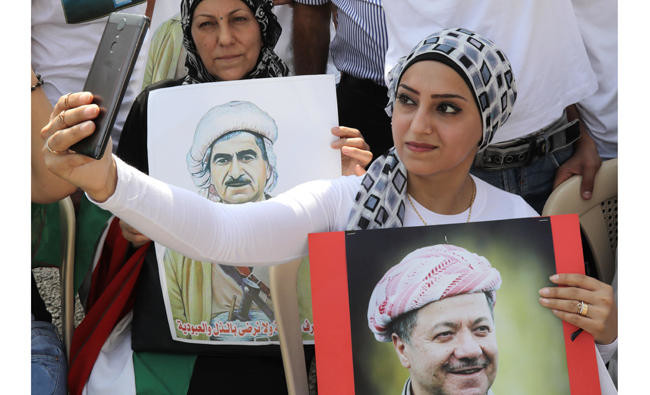
Israel sees benefits in independent Kurdistan: Experts
Israel sees benefits in independent Kurdistan: Experts

Latest updates








© 2026 SAUDI RESEARCH & PUBLISHING COMPANY, All Rights Reserved And subject to Terms of Use Agreement.