ANKARA: A new agreement to establish more de-escalation zones in Syria will prevent the formation of a Kurdish enclave threatening Turkey’s southern border, analysts told Arab News on Saturday.
The new zones will also preclude any US military intervention through its Kurdish militia proxy, the Democratic Union Party (PYD), and therefore prevent a flow of refugees north into Turkey, the analysts said.
The deal was agreed on Friday after talks in Astana, the Kazakhstan capital, between representatives of Russia, Iran and Turkey, who will jointly guarantee the de-escalation zones. Russia and Iran are the key backers of the Assad regime in Syria, while Turkey supports the opposition.
The new zones will be established in Latakia, Aleppo, Hama, Homs, Eastern Ghouta and Idlib, initially for six months, which will be automatically extended if the guarantor countries agree.
The three countries “emphasize the need for the conflicting parties to take confidence-building measures, including the release of detainees/abductees and the handover of the bodies as well as identification of missing persons, to create better conditions for the political process and lasting cease-fire,” a joint statement said.
“Under no circumstances does the creation of the de-escalation areas undermine the sovereignty, independence, unity and territorial integrity of the Syrian Arab Republic,” it said.
Russia, Iran and Turkey will each allocate 500 observers at checkpoints and observation posts in the security zones to oversee the implementation of the deal and prevent any cease-fire violations in areas where intense fighting continues between opposition groups and the pro-Assad troops.
The next round of talks aimed at ending the six-year conflict will take place at th end of next month.
Nursin Atesoglu Guney, dean of the faculty of economics, administrative and social sciences at Bahcesehir Cyprus University, said the deal was a great success, for several reasons.
“Firstly, it is a great achievement because the three guarantor states now have prevented any likely US military intervention through its proxy, the PYD.
Second, she said, with the stationing of Turkish troops in Idlib, the PYD, an offshoot of Turkey’s outlawed Kurdistan Workers’ Party (PKK), would be encircled and this would stop the formation of a likely terrorist belt along Turkey’s southern borders. “With Turkish troops in Idlib, Ankara can now think of launching an Afrin assault more easily, and it would be more operationally acceptable.”
Guney said the de-escalation zone at Idlib would also prevent any flow of refugees to Turkey’s southern borders that would be created by an American/PYD military intervention.
Most important of all, she said, with the implementation of de-escalation at Idlib, people who had long been held hostage without food and basic needs would now have access to humanitarian aid.
The de-escalation deal is partly a consequence of changing international dynamics with more US pressure on Iran and political competition in the region, she said.
“This idea of de-escalation is not a new one. But geopolitical and geo-economic pressures on Iran and Russia from US efforts in the Middle East and beyond are forcing Moscow and Tehran into strong issue-based cooperation with Ankara.”
A possible impediment to the deal could be some opposition groups who have already rejected Iran’s participation, Guney said.
“But from a Turkish standpoint, this new deal is a great success. Turkey has really seen the net benefits of diversification of its relations with its neighbors,” and such diplomatic success was also a result of Ankara’s preventive military action, such as last year’s Operation Euphrates Shield.
Dr. Bora Bayraktar of the International Relations Department at Istanbul Kultur University said a power vacuum in Idlib had resulted in a common stance by Russia, Iran and Turkey to prevent the US from intervening through the PYD.
“Russia, Turkey and Iran are not concerned about whether the US will approve this deal or not,” Bayraktar told Arab News. “The US will not be happy, but will not try to counter it either as it is now concentrated on Raqqa.
“The de-escalation zones will not help to eradicate Al-Qaeda elements in Idlib in the very short term, but only in the medium term.
Without this deal there was a danger of further conflict initiated by Al-Qaeda offshoots and 2 million refugees would have lined up on the Turkish border, Bayraktar said.


![]()
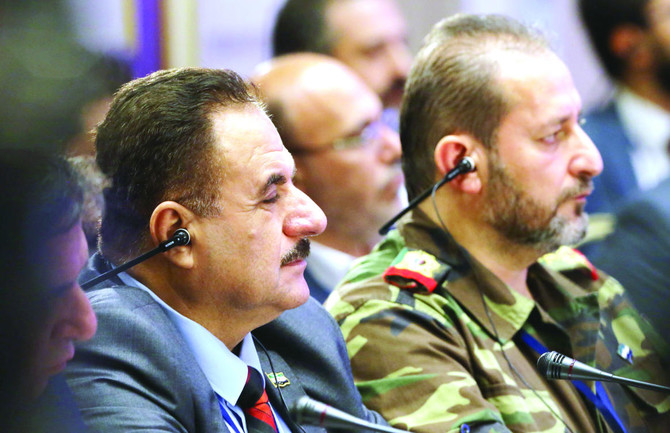
New Syrian cease-fire zones ‘a success for Turkey’
New Syrian cease-fire zones ‘a success for Turkey’

Latest updates


© 2026 SAUDI RESEARCH & PUBLISHING COMPANY, All Rights Reserved And subject to Terms of Use Agreement.