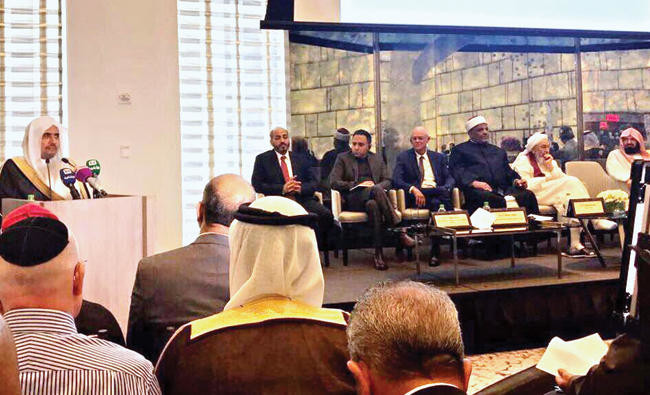
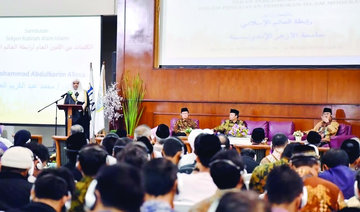
NEW YORK: The vast majority of Muslims are interested in cultural communication with the non-Muslim world and extremism is an abnormal and isolated occurrence, Mohammed Al-Issa, secretary-general of the Muslim World League, (MWL) told a conference in New York on Saturday.
“Cultural communication generates understanding among nations … and this leads to the alliance of civilizations,” Al-Issa said.
Extremism “has little foothold in the Muslim world,” he said, and according to the latest estimates, the term could be applied to only one in 200,000 people. “The impact of intellectual and military terrorism and extremism is shrinking, in a clear and tangible way.”
Al-Issa said extremism was a general and comprehensive concept, and to attribute it only to Islam was false since it also had intellectual, political and racial aspects.
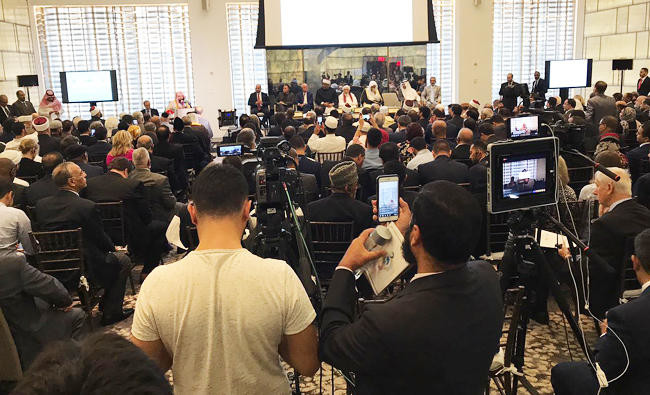
He was speaking on the opening day of the International Muslim World League Conference, attended by more than 450 representatives of Islamic institutions and scientific, intellectual and political organizations from around the world.
The two-day conference will discuss issues including cultural contributions from the US and the Islamic world, the Islamic contribution to the promotion of world peace, Muslims in the US, integration and citizenship, and the relationship between the US and the Islamic world.
Yousef bin Ahmad Al-Othaimeen, secretary-general of the Organization of Islamic Cooperation, told delegates at the conference that cultural communication enhanced linkage between cultures and helped to close the cultural gap. “We look forward to living in dignity and security and protecting our families and Muslims,” he said.
Al-Othaimeen said more than 1.8 billion Muslims around the world lived in peace and reflected moderate Muslim ideologies.
Abdul Rahman ibn Abdul Aziz Al-Sudais, general president for the Affairs of the Two Holy Mosques, said cultural communication between nations was important, especially between the US and the Muslim world, and essential to Islamic civilization. Confronting terrorism was one of the main objectives of cultural communication, he said.


![]()
![]()
![]()
![]()
![]()
![]()
MWL: Extremism has little foothold in Muslim world


Short Url
https://arab.news/mqsya
MWL: Extremism has little foothold in Muslim world

Latest updates


© 2026 SAUDI RESEARCH & PUBLISHING COMPANY, All Rights Reserved And subject to Terms of Use Agreement.