MEXICO CITY: Trade between the US and Mexico would not end if the North American Free Trade Agreement (NAFTA) was terminated, Mexico’s foreign minister said on Friday, after a new US plan emerged to build a five-year sunset provision into the treaty.
In the shadow of repeated threats to scrap the deal by US President Donald Trump and his officials, Mexico, Canada and the United States have set an ambitious goal to renegotiate the 23-year-old trade pact within the next few months.
Foreign Minister Luis Videgaray said currently about half of Mexico’s trade with the US did not use NAFTA channels, and that if the deal were to end the tariffs it would face would average 3 percent – not enough to halt trading.
“Mexico is much bigger than NAFTA,” Videgaray said in an interview with Reuters.
“If the negotiation does not go well, it would not be the end of trade between Mexico and the United States … There would be no leap into the abyss,” he said, arguing that World Trade Organization tariffs would govern trade post-NAFTA.
He also mentioned that Mexico could put higher tariffs on US products, noting that apples from Arizona could face a 50 percent tariff to enter Mexico without NAFTA.
Videgaray has said that Mexico would walk away from the talks if Trump followed through on a threat to trigger a 180-day countdown to scrap NAFTA as a negotiating tactic.
The three countries are due to sit down for a third round of talks in Ottawa, Canada on September 23.
US Commerce Secretary Wilbur Ross Thursday said the United States was seeking to add a five-year sunset provision to NAFTA to provide a regular, “systematic re-examination” of the pact.
Ross argued it was needed because forecasts for US export and job growth when NAFTA took effect in 1994 were “wildly optimistic” and failed to live up to expectations.
Such a clause means NAFTA would automatically end after five years unless renewed.
Videgaray said the idea of a sunset clause was unnecessary, since the pact’s members can already trigger a renegotiation or leave it at any time, and noted that neither Mexico nor Canada had formally received such a proposal.
“There is no strict need to have this exit mechanism since the treaty already has a much more flexible exit mechanism,” he said. “It seems redundant, or strange to add a date of every five years.”
In an attempt to reduce its dependence on US trade, Mexico has been doubling down on its open trade model, and is currently trying to secure more access to the European Union, Brazil, Israel, Singapore, Australia and New Zealand, among others.
Despite the tensions over trade and repeated barbs by Trump, some aspects of the US-Mexico relationship have been blossoming, including defense cooperation.
On Friday, US Defense Secretary Jim Mattis visited Mexico to take part in Independence Day celebrations.
Both Videgaray and Mattis said the two countries shared common concerns about issues that include drug trafficking in Mexico but also drug consumption in the United States that fuels the illicit industry.


![]()
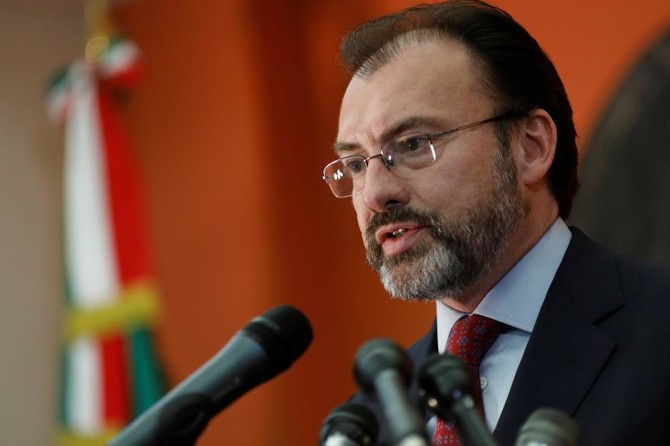
Mexico-US trade would survive any NAFTA rupture, Mexico foreign minister says
Mexico-US trade would survive any NAFTA rupture, Mexico foreign minister says



Latest updates


Recommended


© 2026 SAUDI RESEARCH & PUBLISHING COMPANY, All Rights Reserved And subject to Terms of Use Agreement.