JEDDAH: As Saudi Arabia accelerates its Vision 2030 economic diversification strategy, the Saudi Export-Import Bank is emerging as a key driver in boosting non-oil exports, supporting small and medium enterprises, and mitigating the inherent risks of international trade.
Launched in 2020 under the National Development Fund, Saudi EXIM aims to strengthen non-oil exports and enhance global competitiveness through financing, guarantees, and credit insurance across diverse sectors.
By enabling businesses to expand internationally, the bank reinforces the Kingdom’s trade position in line with Vision 2030’s goal of diversifying the economy and increasing the non-oil exports’ share of gross domestic product.
Financing growth
Marking 5 years since its founding, Saudi EXIM has provided credit facilities totaling SR67 billion ($18.1 billion), combining financing and insurance to expand Saudi non-oil exports into global markets.
In the first half of 2025 alone, the bank increased credit facilities to SR23.61 billion, a 44 percent rise from SR16.31 billion a year earlier.
This growth aligns with the bank’s mission to double Saudi industrial exports from SR254 billion in 2022 to SR557 billion by 2030 and SR892 billion by 2035, bridging financing gaps and mitigating export risks.
In May, Fitch Ratings assigned Saudi EXIM Bank its first-ever credit rating, giving it a long-term issuer default rating of ‘A+’ with a stable outlook and a short-term IDR of ‘F1+’. This reflects strong government ownership and support through the National Development Fund, as well as the bank’s central role in advancing export financing, guarantees, and insurance.
Driving global impact
Saudi EXIM’s support for Advanced Communications and Electronics Systems, or ACES, illustrates its strategic role.
Through financing and export guarantees, ACES secured a 12-year contract with Mumbai Metro Rail to deploy advanced 4G and 5G infrastructure across 33.5 km of underground line, covering 27 stations and serving over 625 million passengers annually — demonstrating how Saudi EXIM enables SMEs to compete globally while advancing Vision 2030’s non-oil export goals.
Empowering exports
Khaled Ramadan, economist and head of the International Center for Strategic Studies in Cairo, told Arab News that Saudi EXIM is “a pivotal tool in reducing reliance on oil and a major contributor to raising non-oil exports’ share to 50 percent of non-oil GDP by 2030.”
He noted the bank’s effectiveness in empowering non-oil sectors such as manufacturing, mining, agriculture, and technology by offering flexible financing solutions, “including direct loans, working capital financing and export guarantees covering up to 80 percent of transaction value.”
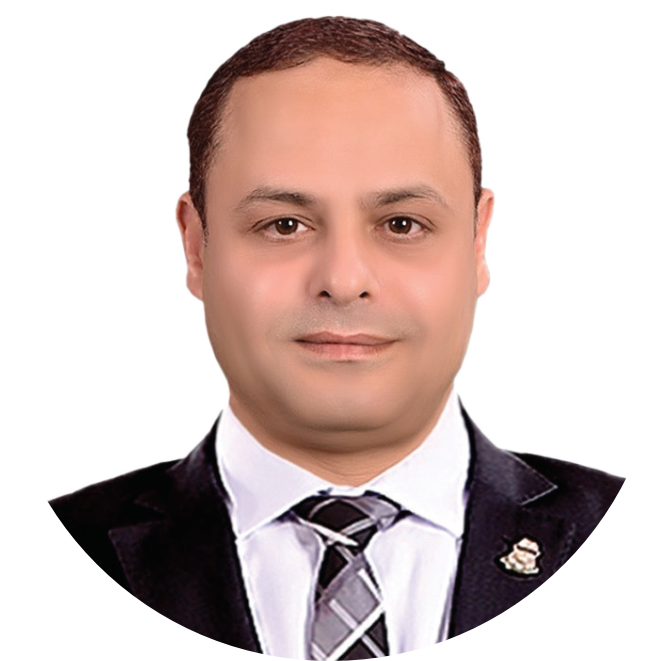
Khaled Ramadan
Ramadan explained that Saudi EXIM aligns its programs with Vision 2030 through integration with national initiatives such as the National Industrial Clusters Development Program and special economic zones, thereby strengthening export infrastructure.
“For instance, in 2023 the bank approved SR5 billion in financing to support exporters across diverse sectors, contributing to a 3.3 percent rise in non-oil exports during the first quarter of 2024,” he said.
He added that the bank’s focus on international markets reflects a proactive approach to expanding market reach and reducing dependence on volatile oil revenues. However, he noted, the bank still faces challenges, including limited awareness of its programs among SMEs, which can hinder full utilization of its services.
Ramadan stressed that SMEs form the backbone of Saudi Arabia’s non-oil economy, contributing around 33 percent of GDP.
“The bank supports these companies by allocating 40 percent of its financing portfolio to them, with tailored products such as subsidized working capital loans and export guarantees covering up to 80 percent of commercial risks.”
In 2023 alone, he said, the bank provided SR2 billion in financing for SMEs, enabling them to access new markets in East Asia and Africa.
To further enhance SME support, Ramadan suggested “expanding partnerships with commercial banks including HSBC and Saudi Fransi Bank to create indirect financing channels that ease administrative burdens for SMEs.”
He also mentioned offering intensive training programs on international market requirements, certifications, and standards to boost product quality, along with developing a simplified digital platform for financing and guarantees to lower costs and accelerate processes.
“Moreover, targeting markets with rising demand for Saudi products — such as halal food and processed petrochemicals — backed by tailored market intelligence, could help address key barriers like limited capital and global experience,” he added.
He stressed the need for broader outreach campaigns, particularly beyond major cities, to raise awareness of the bank’s offerings.
Supporting SMEs
Echoing Ramadan, Maria Cristina Calil, Brazil-based economist and Editor-in-Chief of the Agro Arabia column at Pensar Agro Magazine, told Arab News that Saudi EXIM can significantly boost Saudi exporters, especially SMEs, in global competition through targeted strategies.
She noted that Saudi EXIM can support and expand Saudi exporters by conducting market studies, offering business qualification programs, connecting companies with global partners, promoting sectors abroad, opening branches internationally, and attracting foreign investments.

Maria Cristina Calil
She added that these steps will help build export capabilities while mitigating political, commercial, and logistical risks through supplier validation, appropriate contracts, insurance, and careful financial and logistical planning.
Calil, who is also a specialist in new business development between Arab and Brazilian companies, said such a multi-pronged approach “would not only enhance export competitiveness but also foster a stronger export culture within the Kingdom, aligning with Vision 2030’s goals of economic diversification and global integration.”
Managing risks
Ramadan warned that the export sector faces complex risks, including political instability in target markets, buyer defaults, and supply chain disruptions.
“The Saudi EXIM Bank, however, has strong capacities to mitigate these risks. This includes export credit insurance covering up to 90 percent of political and commercial risks such as wars, government expropriation or buyer insolvency, which enhances exporters’ confidence in dealing with volatile markets,” he said.
He added that the bank offers guarantees to cover logistical risks such as shipment delays or rising transport costs through supply chain financing.
“The bank has also signed memorandums of understanding with global financial institutions such as HSBC and the International Finance Corporation, which allow it to share market risk intelligence and improve risk management practices,” said Ramadan.
Calil added that export risks can be reduced by conducting supplier research and validation, as well as by using appropriate contracts, insurance, and payment formats. Logistics cargo monitoring, financial planning for exchange rate fluctuations, and customs and tax regulations, stressing the importance of advice from dispatchers, freight forwarders, insurance, and contingency plans.
Commenting on Saudi EXIM’s role in mitigating challenges, Calil said the bank “is a financial institution with a robust and organized structure and clear strategic goals to support its clients’ development.”
She added: “These mechanisms not only increase competitiveness and financial security but also improve cash flow and facilitate expansion into new markets.”
Looking ahead, Calil concluded: “I believe that Saudi EXIM will consolidate itself as a bank that will play a fundamental role with its projects, offering a viable alternative to the traditional financial model, positioning itself on the international stage, driving a more fair, representative, inclusive, and sustainable economic development system, aligned with the Kingdom’s priorities and Vision 2030.