MARAWI CITY, Philippines: Some Daesh-linked militants besieging the southern Philippines city of Marawi have sent “feelers” they are prepared to surrender after three and a half months of fighting, the military said on Monday.
Philippine forces have used loudspeakers urging militants to give themselves up, telling the estimated 50 to 60 fighters left in the city their lives would be spared if they disarm, change out of their black clothes and walk to a designated location.
“Hopefully, we will have surrenders within the next days,” spokesman Col. Romeo Brawner told a news conference.
“There are feelers. Definitely, there are feelers,” he added, declining to elaborate.
The surrender offer came after a renewed, if short-lived, effort by Philippine President Rodrigo Duterte to start back-channel talks with militants, with a former Marawi mayor Omar Solitario Ali to have acted as an intermediary.
Duterte on Saturday ruled out the possibility of allowing rebels to flee in exchange for the release of dozens of hostages.
Two troops were killed at the weekend, taking to 147 the number of security forces killed in the Marawi conflict. Some 655 militants and 45 civilians have been killed, according to the army.
Troops were engaged in running battles with the militant alliance, led by Abdullah and Omarkhayam Maute of the Maute group, and Isnilon Hapilon, a factional head of the Abu Sayyaf group, and Daesh’s so-called “emir” in Southeast Asia.
More than 20 structures were captured, many laden with booby traps. Some were commercial high-rise buildings that have been used as sniper positions to thwart government forces.
Brawner described the operations as “a big accomplishment considering the enemy established very strong defensive positions.”
While some areas of Marawi are seeing citizens return and shops and schools re-open, most of the city remains deserted. Its center is a wasteland, pummelled by daily air strikes and ground battles.
The resistance of the militants has frustrated the more than 400,000 residents displaced from the area and raised questions about how relatively few Islamists took control of the lakeside town and held significant parts of it.
“We are receiving a lot of questions: why is it taking too long for the government to recover this area?” said Brawner.
“It is really difficult to do urban fighting.”
The United States has been giving technical and logistics support to the Philippine military and on Monday announced it had deployed a Gray Eagle unmanned surveillance aircraft over Marawi.
Australia has also provided two P3-Orion surveillance planes and last week announced it would send more defense personnel to train Philippine troops.


![]()
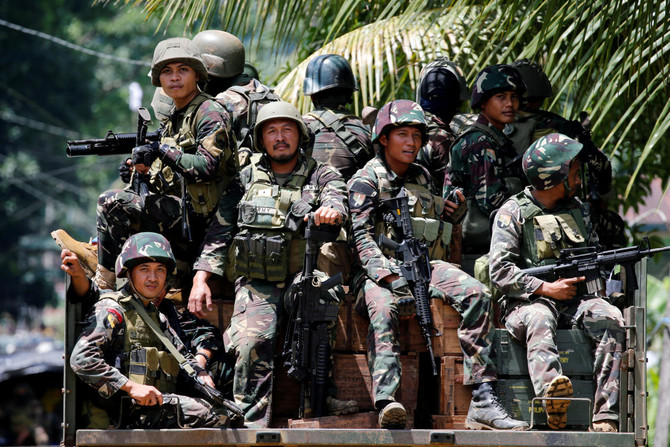
Philippines says some rebels ready to surrender as troops advance in Marawi
Philippines says some rebels ready to surrender as troops advance in Marawi

Latest updates


© 2026 SAUDI RESEARCH & PUBLISHING COMPANY, All Rights Reserved And subject to Terms of Use Agreement.