DUBAI: Abu Dhabi National Oil Co. (ADNOC) could list more than 10 percent of its fuel retail business by early 2018 and one or two more businesses later as part of a major shake-up, sources familiar with the matter said.
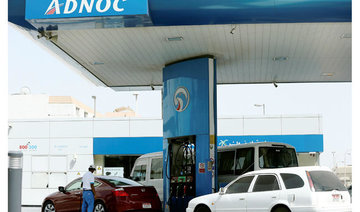
The listing for ADNOC Distribution, which manages petrol stations and convenience stores across the UAE as well as bunkering facilities and a lubricant plant, comes as Abu Dhabi and other Gulf states are privatizing energy assets in an era of cheap crude.
ADNOC said in July it planned to float stakes in some of its services businesses, but did not give details.
For ADNOC Distribution, Reuters reported in late July that banks had been mandated for the initial public offering (IPO), citing sources familiar with the matter.
“They are still working on it, there may be other services (to be listed) but it will not be that fast,” said one source.
ADNOC may in future choose to float one or maximum two more businesses such as its drilling arm, National Drilling Company, or energy infrastructure if the IPO of ADNOC Distribution proves successful, several sources familiar with the firm’s plans said.
The partial privatization plan aims to make ADNOC a more competitive and commercially-focused firm, the sources said.
“The value of this is when you take a company through the IPO process you make it efficient, you optimize it, it becomes a better company as a whole,” one said.
The listing of the fuel-retailer business is likely to be on the Abu Dhabi stock exchange and could happen early next year, several sources told Reuters.
An ADNOC spokesman said: “As announced on July 10, ADNOC is expanding its partnership model and creating new investment opportunities across all areas of its value chain.”
“Central to ADNOC’s new approach will be the more active management of its portfolio of assets and businesses. ADNOC is therefore considering the potential IPO of minority stakes of some of its services businesses which have attractive investment and growth profiles,” the spokesman said.
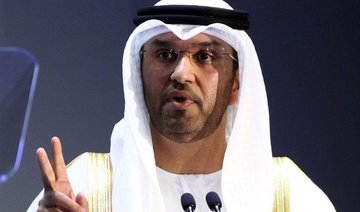
Since the appointment of Sultan Al-Jaber as ADNOC’s chief executive last year, ADNOC — dubbed “a sleeping energy giant” by one source — has launched a major shake-up.
A sharp drop in crude prices since mid-2014 has forced the oil industry to cut costs and look for ways to boost efficiency.
The transformation of ADNOC, a traditionally conservative firm, is also seen as part of an economic reform drive led by Abu Dhabi’s Crown Prince Sheikh Mohammed bin Zayed Al-Nahyan.
“With (oil) prices not expected to increase much and production constrained by OPEC, Abu Dhabi needs to find alternative ways to get value out of its NOC (national oil company),” said Robin Mills, chief executive of UAE-based consultancy Qamar Energy.
“The approach is rather different from Aramco’s, with more focus on subsidiary IPOs, JVs (joint ventures), and bringing in outside financing into select assets. ADNOC has of course always had more attention on partnerships than most other NOCs via the upstream JVs.”
Saudi Arabia plans to list 5 percent of its national oil company Aramco by next year.
ADNOC has already begun consolidating the operations of two oil companies into a new entity, and a merger of three of its shipping and marine services businesses is expected to be completed by the end of the year. It is looking to set up its own trading unit.
ADNOC produces some 3 million barrels of oil per day, or around 3 percent of global production. It also produces more than 9.8 billion cubic feet of raw gas per day, placing it among the largest energy producers in the world.
— Reuters


![]()

ADNOC ‘could list stake in fuel retail business in early 2018’
ADNOC ‘could list stake in fuel retail business in early 2018’
Latest updates


© 2026 SAUDI RESEARCH & PUBLISHING COMPANY, All Rights Reserved And subject to Terms of Use Agreement.