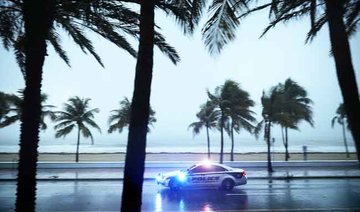
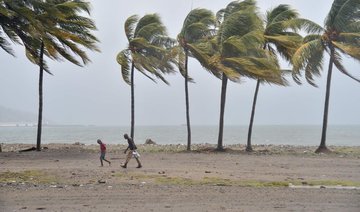
JAVANA: Hurricane Irma battered central Cuba on Saturday, knocking down power lines, uprooting trees and ripping off roofs as it headed toward Florida, authorities and witnesses said.
After leaving at least 19 people dead on its path across the Caribbean, Irma was “seriously” damaging the center of the island with winds up to 256 km per hour, Cuban state media said.
Irma weakened slightly to Category 4 early Saturday after making landfall in Cuba, according to the US National Hurricane Center (NHC).
There were no confirmed casualties in Cuba.
The state meteorological service INSMET reported waves of up to 7 meters on the northern coast.
“It has now stopped raining, but all night there was a terrible wind” which ripped up trees, knocked down power lines and damaged roofs, said Gisela Fernandez, a 42-year-old nurse in central Villa Clara province.
In the province’s main city Caibarien, an AFP reporter said deafening gusts of wind were sweeping the area and 6,250 people had been evacuated to state refuges or other peoples’ homes.
Others were shut up in their houses.
A large part of the center and east of the island was without power, television reports said.
The governor of the central Camaguey province, Isabel Gonzalez, speaking on national television, reported “major damage,” without giving further details.
Irma is expected to strike the Florida Keys late Saturday and Sunday before moving inland.
“Some fluctuations in intensity are likely during the next day or two, but Irma is expected to remain a powerful hurricane as it approaches Florida,” the NHC said in a public advisory.
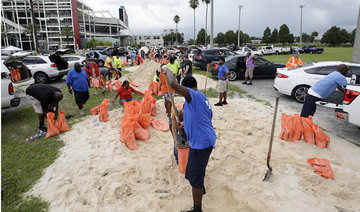
Some 5.6 million people there faced orders to evacuate.
In Cuba, more than a million people were evacuated as a precaution, authorities said.
Another Category 4 hurricane, Jose, was also swirling in the Atlantic with winds of up to 150 miles per hour.
It was heading toward the same string of Caribbean islands Irma had pummeled in the days before.
And Hurricane Katia struck the eastern coast of Mexico late Friday as a Category One storm, but was downgraded to a tropical storm after making landfall.
Katia was “beginning to stall” near the Sierra Madre mountains — though heavy rainfall would still “likely cause life-threatening flash floods and mudslides, especially in areas of mountainous terrain,” the NHC said.


![]()


Hurricane Irma batters Cuba on way to Florida
Hurricane Irma batters Cuba on way to Florida
US allows oil majors to broadly operate in Venezuela, new energy investments
- Treasury Department issues general license allowing Chevron, BP, Eni, Shell and Repsol to operate oil and gas operations in Venezuela
- Move is the most significant relaxation of sanctions on Venezuela since US forces captured and removed President Nicolas Maduro
WASHINGTON: The US eased sanctions on Venezuela’s energy sector on Friday, issuing two general licenses that allow global energy companies to operate oil and gas projects in the OPEC member and for other companies to negotiate contracts to bring in fresh investments. The move was the most significant relaxation of sanctions on Venezuela since US forces captured and removed President Nicolas Maduro last month.
The Treasury Department’s Office of Foreign Assets Control issued a general license allowing Chevron, BP, Eni, Shell and Repsol to operate oil and gas operations in Venezuela. Those companies still have offices in the country and stakes in projects, and are among the main partners of state-run company PDVSA.
The authorization for the oil majors’ operations requires payments for royalties and Venezuelan taxes to go through the US-controlled Foreign Government Deposit Fund.
The other license allows companies around the world to enter contracts with PDVSA for new investments in Venezuelan oil and gas. The contracts are contingent on separate permits from OFAC.
The authorization does not allow transactions with companies in Russia, Iran, or China or entities owned or controlled by joint ventures with people in those countries.
The licenses “invite American and other aligned companies to play a constructive role in supporting economic recovery and responsible investment, ” the US State Department said in a release. Additional authorizations may be issued “as necessary,” it said.
A spokesperson for Chevron, the only US oil firm currently operating in Venezuela, said the company welcomed the new licenses.
“The new General Licenses, coupled with recent changes in Venezuela’s Hydrocarbons Law, are important steps toward enabling the further development of Venezuela’s resources for its people and for advancing regional energy security,” the spokesperson said in a statement.
Eni said it is assessing the opportunities in Venezuela that the authorization opens up.
Oil law reform
The US licenses follow a sweeping reform of Venezuela’s main oil law approved last month, which grants autonomy for foreign oil and gas producers to operate, export and cash sale proceeds under existing joint ventures with PDVSA or through a new production-sharing contract model.
The US has had sanctions on Venezuela since 2019 when President Donald Trump imposed them during his first administration. Trump is now seeking $100 billion in investments by energy companies in Venezuela’s oil and gas sector. US Energy Secretary Chris Wright said on Thursday, during his second day of a trip to Venezuela, that oil sales from the country since Maduro’s capture have hit $1 billion and would hit another $5 billion in months.
Wright said the US will control the proceeds from the sales until Venezuela stands up a “representative government.” Since last month, the Treasury issued several other general licenses to facilitate oil exports, storage, imports and sales from Venezuela. It also authorized the provision of US goods, technology, software or services for the exploration, development or production of oil and gas in Venezuela.
The Venezuelan government expropriated assets of Exxon Mobil and ConocoPhillips in 2007 under then-President Hugo Chavez. The Trump administration is trying to get those companies to invest in Venezuela as well. At a meeting at the White House with Trump last month, Exxon Mobil CEO Darren Woods said Venezuela was “uninvestable” at the moment.
Wright said on Thursday that Exxon, which no longer has an office in Venezuela, is in talks with the government there and gathering data about the oil sector. Exxon did not immediately comment.
The Treasury Department’s Office of Foreign Assets Control issued a general license allowing Chevron, BP, Eni, Shell and Repsol to operate oil and gas operations in Venezuela. Those companies still have offices in the country and stakes in projects, and are among the main partners of state-run company PDVSA.
The authorization for the oil majors’ operations requires payments for royalties and Venezuelan taxes to go through the US-controlled Foreign Government Deposit Fund.
The other license allows companies around the world to enter contracts with PDVSA for new investments in Venezuelan oil and gas. The contracts are contingent on separate permits from OFAC.
The authorization does not allow transactions with companies in Russia, Iran, or China or entities owned or controlled by joint ventures with people in those countries.
The licenses “invite American and other aligned companies to play a constructive role in supporting economic recovery and responsible investment, ” the US State Department said in a release. Additional authorizations may be issued “as necessary,” it said.
A spokesperson for Chevron, the only US oil firm currently operating in Venezuela, said the company welcomed the new licenses.
“The new General Licenses, coupled with recent changes in Venezuela’s Hydrocarbons Law, are important steps toward enabling the further development of Venezuela’s resources for its people and for advancing regional energy security,” the spokesperson said in a statement.
Eni said it is assessing the opportunities in Venezuela that the authorization opens up.
Oil law reform
The US licenses follow a sweeping reform of Venezuela’s main oil law approved last month, which grants autonomy for foreign oil and gas producers to operate, export and cash sale proceeds under existing joint ventures with PDVSA or through a new production-sharing contract model.
The US has had sanctions on Venezuela since 2019 when President Donald Trump imposed them during his first administration. Trump is now seeking $100 billion in investments by energy companies in Venezuela’s oil and gas sector. US Energy Secretary Chris Wright said on Thursday, during his second day of a trip to Venezuela, that oil sales from the country since Maduro’s capture have hit $1 billion and would hit another $5 billion in months.
Wright said the US will control the proceeds from the sales until Venezuela stands up a “representative government.” Since last month, the Treasury issued several other general licenses to facilitate oil exports, storage, imports and sales from Venezuela. It also authorized the provision of US goods, technology, software or services for the exploration, development or production of oil and gas in Venezuela.
The Venezuelan government expropriated assets of Exxon Mobil and ConocoPhillips in 2007 under then-President Hugo Chavez. The Trump administration is trying to get those companies to invest in Venezuela as well. At a meeting at the White House with Trump last month, Exxon Mobil CEO Darren Woods said Venezuela was “uninvestable” at the moment.
Wright said on Thursday that Exxon, which no longer has an office in Venezuela, is in talks with the government there and gathering data about the oil sector. Exxon did not immediately comment.
Latest updates




Recommended


© 2026 SAUDI RESEARCH & PUBLISHING COMPANY, All Rights Reserved And subject to Terms of Use Agreement.