NEW DELHI: Thursday’s verdict on the 1993 bomb blasts in Mumbai brought a sense of closure for many families who suffered.
But many victims of the 1992 Mumbai riots, sparked by the demolition of Babri Mosque, feel they have been denied justice.
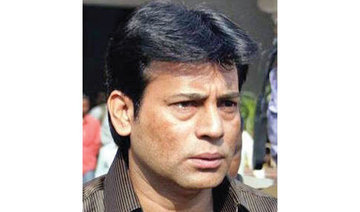
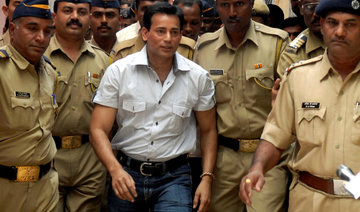
The judgment, which came 24 years after a special court was set up immediately after the terror attack in March 1993, sentenced two convicts to death. Another two were given life imprisonment, including international gangster Abu Salem.
He was spared capital punishment due to Indian assurances to the government of Portugal, from where he was extradited in 2002.
Sunil Swant, who lost his sister in the 1993 Mumbai blast, told one of India’s English-language dailies: “It has taken too long; 25 years is half a life time. But this is the way our country is run and this is the way it’s going to be… The wheels of justice take years to turn.”
So far, the court has convicted 106 people, among them Yakub Memon, who was hanged two years ago.
A series of 12 blasts rocked Mumbai in the spring of 1993, claiming more than 250 lives and injuring more than 700.
The terror attack on India’s financial capital shook the country, forcing the government to immediately set up a high-profile special court to bring the culprits to book.
The blasts were a reaction to the largescale killing of Muslims in religious violence that erupted between December 2012 and January 2013, immediately after the demolition by Hindu extremists of the 16th-century Babri Mosque in the eastern city of Ayodhya.
The communal riots claimed more than 900 lives and injured more than 2,000, most of them Muslims.
The government set up a committee to identify and apprehend the culprits of the riots. The committee’s report in 1998 blamed the then-ruling Hindu party in Mumbai, Shiv Sena, and its leadership.
It also blamed high-profile leaders of the Bharatiya Janata Party (BJP), India’s current ruling party, for inciting Hindus to attack Muslims. It is almost two decades since the report was submitted, and no Hindu leader has yet been tried for murder.
“Many have been given severe punishments in connection with the 1993 blasts, but no one has been punished for the riots. Clearly, there are two systems of justice in India,” human rights activist Ram Puniyani told Arab News.
Abdul Ansari, who lost his meat shop and lifetime earnings in December 2012, told Arab News: “I lost everything in the riots. It feels bad that the men who committed a crime against me and my society are still at large.”
Tahir Wagle, 56, who lost his son in the riots, told the Hindustan Times: “I have been running around courts, government offices and police stations all these years. Last year, I had a slipped disc, which restricted my movement. I am now even contemplating to withdraw the case as we cannot go on fighting the legal battle.”
Aarefa Johri of the news website Scroll.in wrote that Shiv Sena chief Bal Thackeray, whose recorded speeches from 1992 openly incited violence against Muslims, was arrested briefly, but the court eventually dismissed the charges against him, saying the statute of limitations had expired. When Thackeray died in 2012, he was given a state funeral.
The frustration of the riot victims is amplified by the fact that the same group that perpetrated the communal pogrom is again in power in Mumbai, in alliance with the BJP.


![]()

Court ruling on 1993 Mumbai blasts elicits mixed feelings
Court ruling on 1993 Mumbai blasts elicits mixed feelings
Latest updates




© 2026 SAUDI RESEARCH & PUBLISHING COMPANY, All Rights Reserved And subject to Terms of Use Agreement.