ANKARA: Tensions have risen further between Ankara and Berlin after Turkey’s detention of two more Germans.
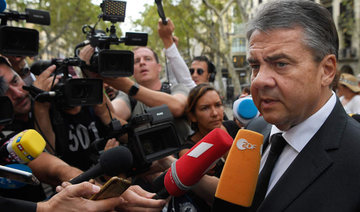
On Friday, Chancellor Angela Merkel said Germany should react resolutely. Meanwhile, her government is under increasing pressure to issue a formal travel warning over Turkey.
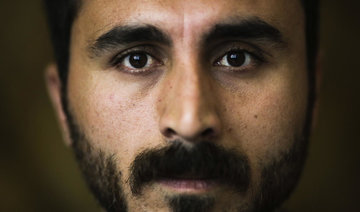
While Ankara accuses Berlin of harboring terrorists, there is German anger over the arrest of 12 Germans in Turkey on political charges.
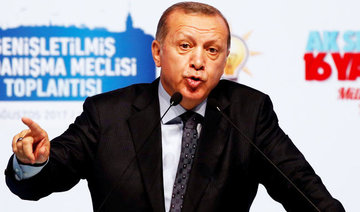
Last month, President Recep Tayyip Erdogan urged Turks in Germany to vote against Merkel’s ruling coalition and other major parties in the Sept. 24 elections, saying they are treating Turkey in a hostile way. Some 3 million Turks live in Germany.
Merkel said the customs union deal between Turkey and the EU would not be updated in the foreseeable future due to the political tensions.
Germany’s Spiegel magazine reported on Saturday that the Foreign Ministry turned down a request by Ankara in June to freeze the assets of 80 members of the Gulen movement, which is accused of being behind the failed coup attempt in Turkey last year.
The report said the number of Turkish extradition requests sent to Germany increased to 53 since the start of this year.
Dr. Magdalena Kirchner, Mercator-IPC fellow at the Istanbul Policy Center, said she does not think there will be an immediate political follow-up to Merkel’s announcement that Berlin might “rethink” its policy toward Turkey.
“But public de-escalatory moves from the German side can also hardly be expected without visible concessions from Ankara on the diplomatic or political level,” she told Arab News.
“And there’s a consensus in the outgoing Merkel Cabinet on the need for such a policy renewal, most likely with regard to economic cooperation.”
Kirchner said the ongoing election campaign is about to enter a critical phase, with two televised debates featuring the heads of the six largest competing parties.
“All of them have harshly criticized the Turkish government in recent weeks, and are likely to continue doing so,” she added.
“Most observers expect Merkel to stay in power, and all her potential coalition partners — Social Democrats, Liberals or Greens — have a recent record of tough talk toward Ankara. While Germany’s political elite agrees on the necessity and value of good bilateral relations, it’s unclear to many how they can be restored anytime soon, and if the actors involved have the political will to do so.”
Kirchner said to contain the crisis, both sides could find ways to cooperate over the Kurdistan Workers’ Party (PKK) and the Gulen movement.
“Last Saturday, for instance, police in the east German town of Magdeburg dispersed a demonstration of PKK sympathizers and seized their material. This is a small measure that should be taken nevertheless as a signal that German authorities aren’t turning a complete blind eye to the group,” she said.
Constructive dialogue on these issues between Ankara and Berlin could help inform public debate, develop coordinated policy responses and reduce tensions, she added.
Huseyin Bagci, a German-educated professor from the Middle East Technical University in Ankara, said bilateral tensions have become chronic and are likely to increase.
“So long as Erdogan doesn’t backtrack, we’re moving toward a structural problem with Germany,” he told Arab News.
Bagci said the crisis will not only harm Turkey economically, but also both parties politically.
“Germany made a mistake by allowing pro-PKK sympathy on its soil for decades, while it seems Berlin won’t extradite anyone as long as emergency rule continues in Turkey because it’s contrary to domestic laws in Germany,” he added.