MOSCOW: Russian Foreign Minister Sergei Lavrov has urged Washington not to use force against North Korea, as tensions surged after the latest missile test by Pyongyang.
In a phone call late Wednesday with US Secretary of State Rex Tillerson, Lavrov “underscored... the need to refrain from any military steps that could have unpredictable consequences,” the foreign ministry in Moscow said.
Russia’s lead diplomat said any attempts to toughen sanctions against North Korea would be “counterproductive and dangerous” while condemning Pyongyang’s firing of a missile over Japan as a “gross violation” of United Nations resolutions.
Russian foreign ministry spokeswoman Maria Zakharova at a briefing on Thursday warned that “the contest of force that is now being demonstrated, will only lead the region to the brink of a military conflict.”
She pushed for holding peace talks to cool down the situation, saying that “at the moment only Russia and China have put forward a realistic initiative.”
“Once again we call all the involved sides to urgently start establishing dialogue without preconditions, based on the proposals on the Russian and Chinese road map,” Zakharova said.
Early on Tuesday, the reclusive state fired an intermediate-range Hwasong-12 over Japan, prompting US President Donald Trump to insist that “all options” were on the table in an implied threat of pre-emptive military action.
The UN Security Council denounced North Korea’s latest missile test, unanimously demanding that Pyongyang halt the program.
US heavy bombers and stealth jet fighters took part in a joint live fire drill in South Korea on Thursday, intended as a show of force against the North, Seoul said.
And British Prime Minister Theresa May, who is visiting Japan, said Thursday that London and Tokyo would work together to step up the pace of sanctions against nuclear-armed North Korea after the latest launch.


![]()
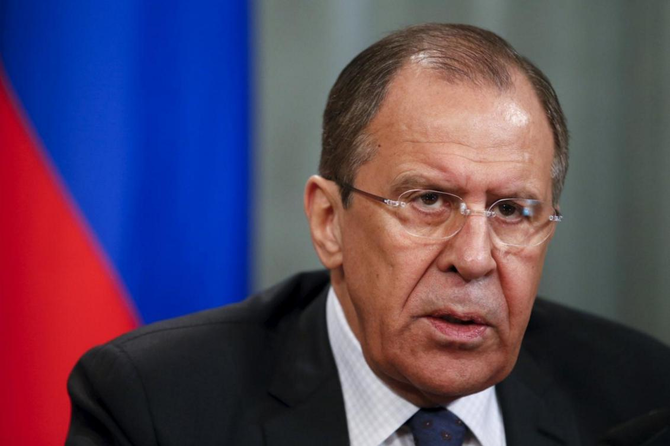
Russia warns US against using force over North Korea
Russia warns US against using force over North Korea
Latest updates


© 2026 SAUDI RESEARCH & PUBLISHING COMPANY, All Rights Reserved And subject to Terms of Use Agreement.