TRIPOLI: Libya’s crude production has fallen by 360,000 barrels per day (bpd) after armed brigades blockaded pipelines and closed three oilfields, state-run National Oil Corporation (NOC) said on Wednesday.
The shutdowns have so far cost $160 million in lost oil sales, the NOC said in a statement.
It said it would supply its Zawiya refinery by sea to keep the plant producing for domestic consumption after the Sharara, El Feel and Hamada oilfields were closed.
Libya’s oil infrastructure has been hit often by protests and fighting since Libya descended into chaos after the 2011 uprising that ousted long-term leader Muammar Qaddafi. A UN-backed government struggles to impose control over rival armed factions vying for power.
Production had recently edged back up to just over 1 million bpd after the NOC managed to negotiate the reopening of several fields through talks with local communities and tribal leaders. Major ports were also reopened.
“This is a national tragedy — our production was recovering, not enough to balance the budget, but it was enough to give us hope the financial situation could stabilize,” NOC chief Mustafa Sanalla said. “Now we are sliding backward.”
An armed group claiming to be part of the Petroleum Facilities Guard — a semi-official brigade protecting oilfields — shut down a pipeline to Sharara oilfield last week to demand more resources for the brigade’s home region of Zintan in western Libya.
The NOC said that on Aug. 19 the Reyayna patrol unit closed the Reyayan valve on the crude oil pipeline which links Sharara and the Zawiya refinery.
Sharara — Libya’s largest oilfield and which was producing around 280,000 bpd — had been shut a week ago. NOC declared force majeure on loadings of Sharara crude from the Zawiya oil terminal. It said it would now supply by sea instead.
The NOC said the group also closed pipeline No. 18, which produces 8,000 bpd linking the Hamada field and Zawiya, on Aug. 25 and a day later raided the control room of the El Feel oilfield and stopped 70,000 bpd of output there.
A force majeure is still in place on all three fields.
Hit by protests, militant violence and pipeline blockades, Libya’s crude production has at times fallen below 300,000 barrels per day, far from the 1.6 million bpd the North African state produced before the 2011 revolt.


Libya crude output down after armed brigades blockade oilfields
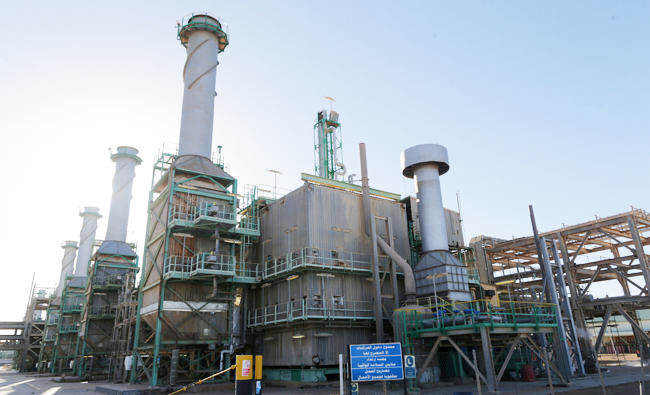
Libya crude output down after armed brigades blockade oilfields
Council of Economic and Development Affairs reviews budget performance report during virtual meeting
Council of Economic and Development Affairs reviews budget performance report during virtual meeting
JEDDAH: The Council of Economic and Development Affairs held a virtual meeting, the Saudi Press Agency has reported.
At the outset of the meeting, the council reviewed the quarterly report submitted by the Ministry of Economy and Planning, which included updates on the global economy and the impact of geopolitical challenges and volatility in global markets on growth prospects.
The report also addressed the latest developments related to the national economy and future projections through 2027, highlighting its high resilience in confronting global challenges and noting that various economic statistics and indicators point to remarkable growth that further cements the Kingdom’s position among the fastest-growing and most stable economies in the world.
The council reviewed the fourth-quarter performance report of the state’s general budget for fiscal year 2025, submitted by the Ministry of Finance, which provided a comprehensive overview of financial performance during the period, including developments in revenues and expenditures, public debt levels, and an analysis of local and global economic variables and their implications for financial indicators.
The report results showed the continued adoption of a balanced and flexible fiscal policy that supports economic growth and enhances financial sustainability over the medium and long terms, through the use of disciplined and efficient fiscal tools and the continuation of countercyclical spending, directed toward development programs and projects with economic and social impact, contributing to improving the quality of public services, stimulating investment, and strengthening the resilience of public finances.
The council discussed a number of procedural matters, including a draft Government Tenders and Procurement Law, a draft Space Law, and a briefing on steps taken regarding the assignment of the Council of University Affairs to update the regulations necessary for the governance of public and private universities and health colleges, supervise and follow up on them periodically, and update compliance processes in public and private universities and health colleges based on quality standards approved by the Council of University Affairs.
The council was also briefed on the results of the quarterly Real Estate Price Index report, along with two summaries of the monthly Consumer Price Index and Wholesale Price Index reports, and the underlying reports on which the summaries were based.
The council adopted the necessary decisions and recommendations regarding these matters.