TEHRAN: Iran on Tuesday dismissed US demands for the inspection of Iranian military sites by the UN nuclear watchdog, shrugging off a request by America’s ambassador to the UN as only a “dream.”
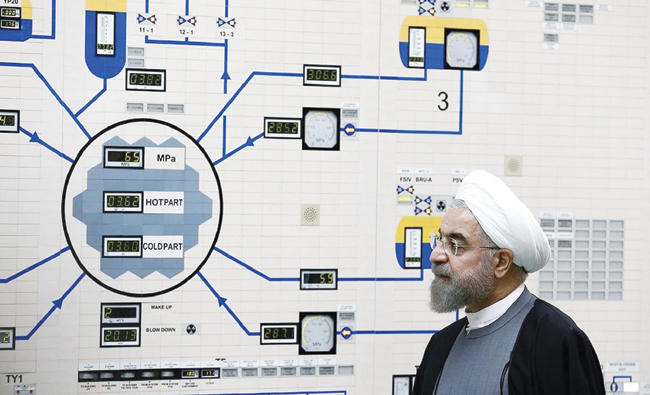
Iran’s President Hassan Rouhani on Tuesday dismissed the idea of inspections at its military sites, reportedly floated by the United States, saying they were not required under a nuclear deal with world powers.
“Our commitments to the world are clear... our relations with the IAEA (International Atomic Energy Association) are defined by rules, not by the US,” Rouhani said in a televised address.
He said Iran was still committed to the nuclear agreement, but “we do not accept bullying.
“I see it as unlikely that the IAEA will accept the request for inspections, but even if they do, we will not,” he said.
Iran’s government spokesman Mohammad Bagher Nobakht told reporters that the demand by Ambassador Nikki Haley wasn’t worth any attention. Iran will not accept any inspection of its sites and “especially our military sites.”
In remarks broadcast by state TV, he said the sites and all information about them are “classified.”
Haley last week met IAEA chief Yukiya Amano and discussed accessing Iranian military sites in order to ensure Iran’s compliance with the 2015 JCPOA deal that Iran forged with world powers.
The landmark accord saw international sanctions eased in exchange for stringent controls on Iran’s nuclear program and closer IAEA inspections.
The inspections are designed to prevent nuclear material being moved from nuclear centers to other areas, including military bases.
The IAEA has repeatedly reported that Iran is in compliance with the deal.
Rouhani said Iran had the support of Europe and other signatories, and added that US President Donald Trump would struggle to muster support for tearing it up.
“The US is in the most difficult situation in its history for creating unity against us and I think it’s not possible for it to do so now,” Rouhani said.
“Twenty-eight EU countries, which are America’s allies, clearly say we are committed to the JCPOA,” he added.
Earlier on Tuesday, French President Emmanuel Macron confirmed his commitment to the deal and said there was “no alternative.”
Ali Akbar Velayati, supreme leader Ayatollah Ali Khamenei’s foreign policy adviser, also dismissed the reported demand for inspections as “sloganeering by the new US administration for domestic consumption.”
“The Americans should take the dream of visiting our military sites, using the pretext of the JCPOA or any other pretext, to their graves,” he said.
Despite the pushback, the deal remains under threat.
The US has strongly criticized recent Iranian missile tests and imposed new, non-nuclear sanctions — prompting Rouhani to hint in mid-August that Iran could easily walk away from the deal “within hours” if forced to do so.
Haley responded that new US sanctions against Iran relate to Iran’s support for “worldwide terrorism” and other destabilising actions in the region, and said Tehran could not “use the nuclear deal to hold the world hostage.”
Trump is due to notify Congress in October about whether Iran is adhering to the deal.


![]()
Iran rejects US demand for UN inspection of its military sites
Iran rejects US demand for UN inspection of its military sites


Latest updates


Recommended


© 2026 SAUDI RESEARCH & PUBLISHING COMPANY, All Rights Reserved And subject to Terms of Use Agreement.