AMMAN: The visit by UN Secretary-General Antonio Guterres to Israel and Palestine brings little hope of a resolution of the conflict, local political figures told Arab News.
Guterres held talks with Israeli leaders Monday on his first visit since taking office, making a forceful argument for a two-state solution with the Palestinians and speaking of his “dream” for peace, AFP reported.
“I dream that I will have the chance to see in the Holy Land two states able to live together in mutual recognition, but also in peace and security,” Guterres reportedly said in remarks at the office of Israeli Prime Minister Benjamin Netanyahu.
Abbas Zaki, a senior member of Fatah’s Central Committee, told Arab News that Guterres’ visit is unlikely to produce any results. “The UN is not on our radar screen these days and our main goal today is to resolve our internal problems,” he said.
A Palestine Liberation Organization (PLO) official was also very pessimistic about the visit by the UN chief.
“We have no expectations from any international visitor no matter who it is ... so long as Trump is leading the US these are empty promises,” the official told Arab News.
Advocate Hussein Sheikh, who has been involved in cases involving Israeli settlements, was less pessimistic. Speaking to Arab News, he said the focus must be on ending the occupation.
“As a Palestinian, I welcome the visit but we don’t have high expectations from the UN despite the many resolutions, because Israel has always put the obstacles to implement these resolutions. All we want from the UN is to be fair and help us end occupation,” he told Arab News.
Khalil Asali, a reporter with Radio Sawa, said that the visit has generated very little media buzz. “No one is paying any attention to Guterres or his visit,” he told Arab News.
The UN secretary-general has asked to pay his respects by laying a wreath at the grave of former Israeli President Shimon Peres. He will also visit Ramallah Tuesday to meet with Palestinian leaders as well as civil society activists and technology entrepreneurs.
On Wednesday Guterres is expected to visit the Gaza Strip and he will meet officials from the UN refugee agency UNRWA and check the progress of the rebuilding process going on in Gaza.
On Guterres’ arrival, Israeli officials wasted little time to slam the international agency. Netanyahu criticized the UN, saying that it fails to check Palestinian hate speech, that it “absurdly denies” Jewish connections to Jerusalem, and has not stopped arms from reaching Hezbollah in Lebanon.
After arriving on Sunday evening, the UN chief met Jason Greenblatt, a top aide to US President Donald Trump charged with pursuing Israeli-Palestinian peace efforts, AFP reported.
Greenblatt was part of a US delegation — which also included Trump’s son-in-law Jared Kushner — which earlier this month held talks with Netanyahu and Palestinian President Mahmoud Abbas. He remained in the region for further discussions.
Guterres, a former Portuguese prime minister who took office in January, is likely to try to take steps to keep the two-state solution to the Israeli-Palestinian conflict a viable option at a time when it is under threat, AFP reported.


![]()
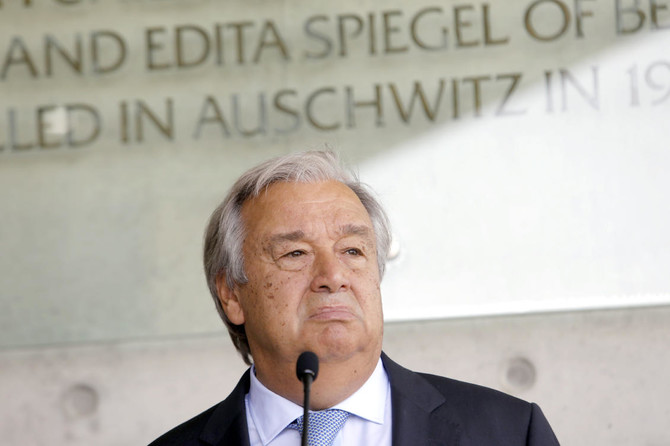
UN chief’s Israel-Palestine visit brings little hope of peace
UN chief’s Israel-Palestine visit brings little hope of peace
Latest updates


© 2026 SAUDI RESEARCH & PUBLISHING COMPANY, All Rights Reserved And subject to Terms of Use Agreement.