LONDON: Uber has launched a new version of its platform that targets business users in Saudi Arabia as the ride hailing app looks to boost its Gulf footprint.
It claims the new version of Uber for Business will save companies money by automating business travel.
The technology company’s original focus with the platform was to help Saudi firms' transportation costs and logistics, with features such as monthly billing.
But thanks to businesses experiences of using the platform Uber has updated it and released a new version, claiming it will, among other things, help employees stay safe when leaving the office at night and offer perks for efficient commuting.
An Uber spokesperson said: “Our customers were asking us to solve some of their most pressing business challenges. We are excited to introduce a new version of Uber for Business aimed at making it easier for organizations in Saudi Arabia to manage everything they need to do with Uber. “This means cost savings, because they can ensure that employees travel within company policy.”
Despite the relatively low cost of public taxis in the Gulf, companies such as Uber and regional rival Careem have rapidly expanded over the last two years.
Among the new features that Uber hopes will improve the lives of employees in the Kingdom and save costs for their companies are Set-and-Forget travel programs. This tool allows for managers to set up automated programs for business travel.
For example, the platform allows managers to set up a ‘late night rides’ policy that only works for trips taken between work and home after 8p.m.,” an Uber spokesperson said.
“The company can choose how much to fund per trip, and if employees need to take longer trips, it’s no problem, everything over the spend allowance will be charged to their payment method of choice.”
Another new tool allows companies to set rules for employees, clients and customers, deciding the type of car they can ride in or the time of day the trip has to take place.
“Businesses can provide customized levels of Uber access depending on each person’s needs,” the Uber spokesperson added.
“For example, you can give all of your employees $10 or more for their daily commute, while giving recruiters special access to call rides for candidates via Uber Central. By segmenting your organization by team, level, or location, you can take your transportation policies out of the back office and easily bring them to life.”
Uber generated $6.5 billion in revenue in 2016 after gross bookings doubled to more than $20 billion, the company said in April.
Still, it reported an adjusted net loss of $2.8 billion. The private company is thought to be worth about $68 billion.


![]()
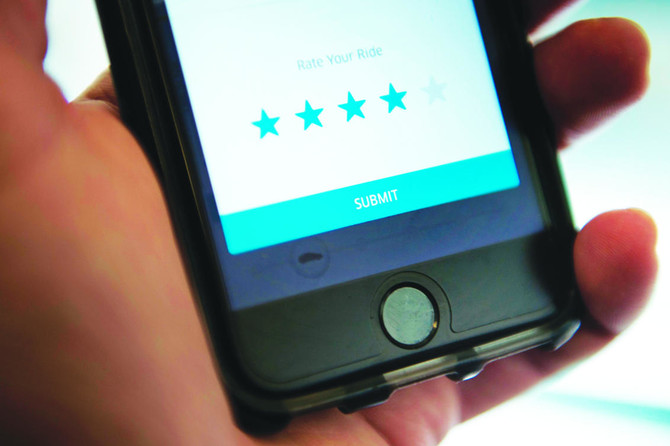
Uber targets business users in Saudi Arabia with new platform
Uber targets business users in Saudi Arabia with new platform
Latest updates





© 2026 SAUDI RESEARCH & PUBLISHING COMPANY, All Rights Reserved And subject to Terms of Use Agreement.