JEDDAH: According to the official Twitter account of Enter Animation Arabia, one MiSK event will provide a one-of-a-kind event when the Hakaya Theater screens an international movie (Bilal) for the first time.
#فيلم_بلال يصل السعودية !!!
يعرض الخميس القادم بشكل خاص جداً في مدينة الرياض ضمن فعاليات #حكايا_مسك ✨ pic.twitter.com/Ymswo6RvGJ— ENTER أنيميشن (@ENTERanimation) August 14, 2017
According to the MiSK media department manager, Nada Al-Twaijri, the giant display screen inside the large theater in downtown Riyadh’s Hakaya Theater will be used for the first time in the Kingdom’s history to display a full movie from Aug. 17 to 20 from 4:45 p.m. The theater has been used many times before for displaying short domestic films and plays, but never for a full-feature movie.
Displaying movies in public is not new in the Kingdom. In the past, movies were screened in hotel lobbies and embassies. However, cinemas have been banned in the Kingdom for the past few years.
In the same vein, a movie festival was in Jeddah this summer. The Saudi Arabian Society for Culture and Arts’ (SASCA) Jeddah branch screened two international movies for families last month for seven days. The movies included “Trolls,” a 2016 American 3D computer-animated comedy based on the troll dolls created by Thomas Dam, and “Robo-Dog,” a 2015 movie about robotic dogs designed to resemble real dogs in appearance and behavior.
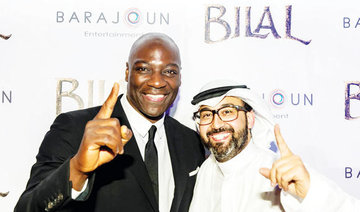
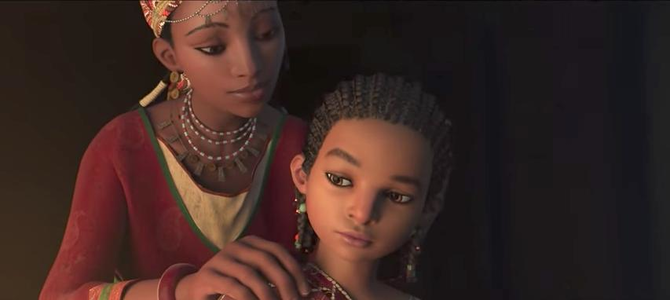
The movie “Bilal” is an Arabic 3D action-adventure film produced by Barajoun Entertainment. The story is by Ayman Jamal, with the screenplay by Alex Kronemer, Michael Wolfe, Yassin Kamel and Khurram H. Alavi. With this film, Jamal aimed to depict “real-life” heroes from the rich history of the Arabian Peninsula. He has pursued this project for over seven years.
“Bilal” premiered on December 9, 2015 at the 12th Annual International Dubai Film Festival, and was released later throughout the MENA region. It has received positive reviews and box office success.
“Bilal” was selected at the Annecy International Animated Film Festival as Best Feature Film. The film is also nominated for APSA, the region’s highest accolade in film for Best Animated Feature Film after winning “Best inspiring Movie” on Animation Day at the Cannes Festival, and “Best Innovative Movie” at the BroadCast Pro Middle East Award.
The Prince Mohammed bin Salman bin Abdul Aziz Foundation, “MiSK,” is a non-profit foundation devoted to cultivating learning and leadership in youth for the Saudi Arabia of tomorrow. To this end, MiSK focuses on the country’s youth and provides different means of fostering talent, creative potential, and innovation in a healthy environment that paves the way toward opportunities in the arts and sciences.