Saipem wins $850 million pipeline contract for Kuwait’s Al Zour refinery

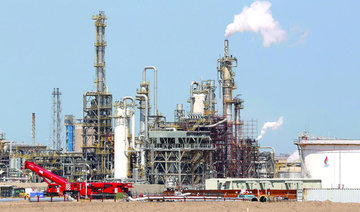
Kuwait’s oil complex at Al Zour includes a 615,000-barrel-per-day refinery. (Courtesy Amec Foster Wheeler)
Updated 17 August 2017
Follow

Saipem wins $850 million pipeline contract for Kuwait’s Al Zour refinery

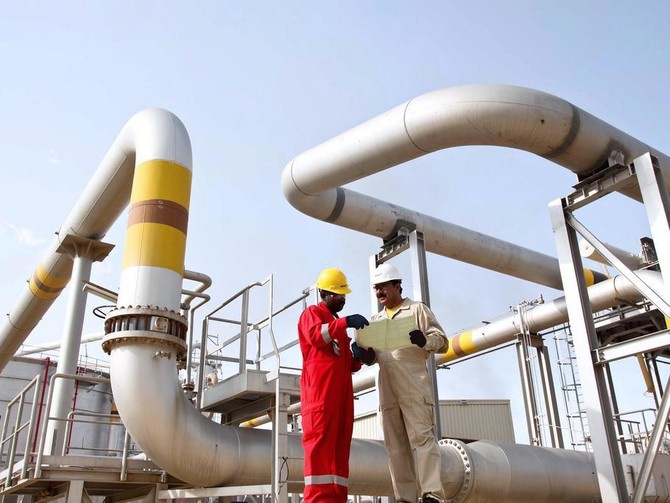
DUBAI: Kuwait Oil Company (KOC) has awarded Italian engineering firm Saipem a $850 million (SR3.18 billion) contract to build pipelines for the new Al Zour refinery.
The contract will involve the engineering, procurement, construction and commissioning of the pipeline located south of the country, Saipem said in a statement, where Kuwait is building a huge oil complex that includes a 615,000-barrel-per-day refinery.
The pipelines will be approximately 450 kilometers long and will be used to transport crude oil from KOC’s South Tank Farm manifolds to the new refinery, Saipe said. A new pipeline network will also constructed to deliver refined fuel to a storage area at the Mina Al Ahmadi refinery, which will be used to feed the northern power station.
“We welcome with particular satisfaction this new contract from such an important client as KOC, both because it marks a new milestone for the company in the onshore E&C sector and, above all, because it reinforces and consolidates Saipem’s presence in Kuwait, a country where we have been operating for over 30 years,” Stefano Cao, the chief executive of Saipem, said in the statement.
The Al Zour refinery is being built through five separate packages with the first one is being delivered by a joint venture between Techinicas, Hanwha and Sinopec. The second and third packages are being built by Fluor, Daewoo and Hyundai Heavy Industries; the fourth is being delivered by Saipem and Essar Oil while the fifth by Saipem, Hyundai Engineering and SK Holdings.


Education spending surges 251% as students return from autumn break: SAMA

Updated 12 December 2025
Follow

Education spending surges 251% as students return from autumn break: SAMA

RIYADH: Education spending in Saudi Arabia surged 251.3 percent in the week ending Dec. 6, reflecting the sharp uptick in purchases as students returned from the autumn break.

According to the latest data from the Saudi Central Bank, expenditure in the sector reached SR218.73 million ($58.2 million), with the number of transactions increasing by 61 percent to 233,000.

Despite this surge, overall point-of-sale spending fell 4.3 percent to SR14.45 billion, while the number of transactions dipped 1.7 percent to 236.18 million week on week.

The week saw mixed changes between the sectors. Spending on freight transport, postal and courier services saw the second-biggest uptick at 33.3 percent to SR60.93 million, followed by medical services, which saw an 8.1 percent increase to SR505.35 million.

Expenditure on apparel and clothing saw a decrease of 16.3 percent, followed by a 2 percent reduction in spending on telecommunication.

Jewelry outlays witnessed an 8.1 percent decline to reach SR325.90 million. Data revealed decreases across many other sectors, led by hotels, which saw the largest dip at 24.5 percent to reach SR335.98 million. 

Spending on car rentals in the Kingdom fell by 12.6 percent, while airlines saw a 3.7 percent increase to SR46.28 million.

Expenditure on food and beverages saw a 1.7 percent increase to SR2.35 billion, claiming the largest share of the POS. Restaurants and cafes retained the second position despite a 12.6 percent dip to SR1.66 billion.

Saudi Arabia’s key urban centers mirrored the national decline. Riyadh, which accounted for the largest share of total POS spending, saw a 3.9 percent dip to SR4.89 billion, down from SR5.08 billion the previous week.

The number of transactions in the capital settled at 74.16 million, down 1.4 percent week on week.

In Jeddah, transaction values decreased by 5.9 percent to SR1.91 billion, while Dammam reported a 0.8 percent surge to SR713.71 million.

POS data, tracked weekly by SAMA, provides an indicator of consumer spending trends and the ongoing growth of digital payments in Saudi Arabia. 

The data also highlights the expanding reach of POS infrastructure, extending beyond major retail hubs to smaller cities and service sectors, supporting broader digital inclusion initiatives. 

The growth of digital payment technologies aligns with the Kingdom’s Vision 2030 objectives, promoting electronic transactions and contributing to the nation’s broader digital economy.