KUWAIT CITY: Kuwait battled Sunday to control an oil spill off its southern coast that stained its beaches, threatened to damage power plants and water stations, and left long black slicks in the Arabian Gulf.
It remained unclear where the spill originated, though Kuwait said it didn't look like the spill came from its oil fields.
Authorities offered no estimate for the number of barrels of oil spilled, though footage from Kuwait's Environment Public Authority showed oil tarring the beaches and in the waters off the southern area of Ras al-Zour. Officials have opened an investigation into the spill.
"There will be severe consequences to those responsible for this incident, and we will prosecute them," Sheikh Abdullah al-Sabah, a member of the ruling family who is head of the Environment Public Authority, told The Associated Press.
He urged residents to keep away from affected areas, which lie north of a private beach and resort area called al-Khiran where many Kuwaitis spend most of the summer in beach houses.
Boats and crews have been putting booms into the water to try and contain the spill. Officials want to protect waterways, power plants and water facilities first, then clean surrounding beaches, according to a report on the state-run KUNA news agency.
Khaled al-Hajeri, the president of Kuwait's Green Line Society, said the environmental non-profit organization holds the government responsible for any damage or health effects of the spill.
"The government failed to issue a statement communicating the severity of this disaster. There was no warning people against fishing or entering the polluted area, even though it is close to some of the most popular summer destinations in Kuwait," he told the AP. "This is what happens when under-qualified individuals handle the government's most sensitive environment entity."
Al-Hajeri said the spill began days ago and that activists from his group informed authorities about it on August 10.
"This media blackout is intentional, and wrong. People have the right to know. This will have an impact on the fish, the food people consume, and it directly affects their health and safety," he added.
Authorities in neighboring Saudi Arabia confirmed the safety of their facilities and that they are free from any oil spill after reports of an oil spill from an oil tanker in the northeast of the Arabian Gulf, they also announced the activation of the crisis management plan and the conduct of an aerial survey of the submerged area to ensure the safety of installations and beaches., according to a statement carried by Saudi Press Agency.
The joint operations center in the Saudi border town of Khafji said facilities there have not been affected by the spill.
Kuwait said American oil firm Chevron Corp. and containment specialists Oil Spill Response Limited were helping in the cleanup. Chevron, based in San Ramon, California, operates fields on both sides of the border. They did not immediately respond to a request for comment.
The area in Kuwait is home to the oil and natural gas fields shared by Kuwait and Saudi Arabia. Some of those fields famously were set ablaze by Iraqi forces retreating from a U.S.-led coalition in the 1991 Gulf War that ended Saddam Hussein's occupation of the country.
Tiny Kuwait, an OPEC member nation, has the world's six-largest estimated oil reserves.


![]()
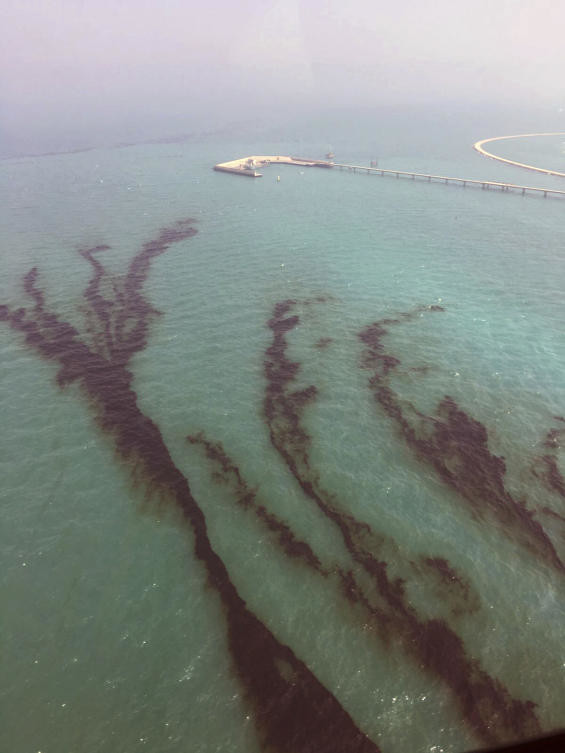
Kuwait battles oil spill in Arabian Gulf waters
Kuwait battles oil spill in Arabian Gulf waters


Latest updates


© 2026 SAUDI RESEARCH & PUBLISHING COMPANY, All Rights Reserved And subject to Terms of Use Agreement.