LUCKNOW: Monsoon flooding is easing in Nepal, but the water flowing downriver has worsened floods in northern India and marooned thousands of villagers across the border, officials said Thursday.
The existing flood situation was aggravated in Uttar Pradesh state after three rivers became swelled with the waters from Nepal, said disaster relief official Mohammad Zameer Ahmad. At least six deaths have occurred since Wednesday.
Ahmad said Thursday that over 300 villages were marooned in no time and thousands of people were forced to move to higher ground.
Floods and landslides have claimed more than 250 lives in India, southern Nepal and Bangladesh, while millions of others have been displaced since the start of the monsoon season in June, officials said.
Deadly landslides and flooding are common across South Asia during the summer monsoon season that stretches from June to September. Most people die because of drowning, or after being caught in collapsed houses or under toppled trees.
On Thursday, air force helicopters dropped food packets in flood-hit villages of eastern Bihar state where 78 people have died since June. Nearly 500 army soldiers have helped thousands of rescue workers in evacuating nearly 275,000 people from 14 of 28 state districts, said Arun Kumar Singh, a state government official.
Arvind Kumar, a neighboring Uttar Pradesh state government official, said that monsoon floods caused havoc in 22 of 75 state districts, killing at least 33 people since the start of monsoon rains.
At least 115 people have been killed in northeastern Assam state, mostly by drowning, where nearly 3,000 villages have come under water. More than 200,000 people have moved to relief camps set up by the state government.
In the Nepalese capital, the Home Ministry said that the flood waters were receding and no new casualties have been reported.
Authorities have rushed relief supplies to flood-hit areas in Nepal where incessant rain flooded hundreds of villages, killing 110 people since June. Security forces rescued people marooned on rooftops, while helicopters distributed food and drinking water packets in the worst-hit southern districts.
In Bangladesh, at least 18 major rivers were flowing at high levels. At least 27 people have died in the low-lying delta nation, while another 600,000 are marooned.
Bangladesh’s disaster management minister, Mofazzal Hossain Chowdhury, said nearly 368,000 people have taken refuge in more than 970 makeshift shelters.


![]()
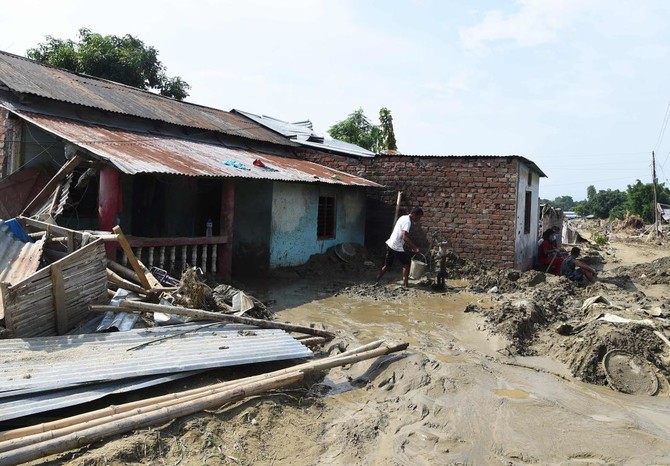
Flooding maroons people in Indian states, eases in Nepal
Flooding maroons people in Indian states, eases in Nepal
Latest updates


© 2026 SAUDI RESEARCH & PUBLISHING COMPANY, All Rights Reserved And subject to Terms of Use Agreement.