WASHINGTON: Premiums for a popular type of individual health care plan would rise sharply, and more people would be left with no insurance options if President Donald Trump makes good on his threat to stop “Obamacare” payments to insurers, the Congressional Budget Office says.
The nonpartisan number crunchers also estimated that cutting off payments that now reduce copays and deductibles for people of modest incomes would add $194 billion to federal deficits over a decade. That head-scratching outcome is because a different Affordable Care Act subsidy would automatically increase as premiums jump, more than wiping out any savings.
“Ending the payments to insurers would introduce more chaos into an unsettled market, and perversely end up costing the federal government more in the end,” said Larry Levitt of the Kaiser Family Foundation, a nonpartisan group that found similar results.
At issue are the ACA’s “cost-sharing” payments, totaling about $7 billion this year, which reimburse insurers for subsidizing out-of-pocket costs for people with modest incomes.
It’s a financial break that can cut a deductible of $3,500 down to a few hundred dollars. Nearly 3 in 5 HealthCare.gov customers qualify for cost-sharing help, an estimated 6 million people or more. But the money is under a legal cloud because of a dispute over whether the Obama-era law properly authorized the payments. Trump has been threatening to end the monthly payments.
The 14-page report released Tuesday lays out consequences if that happens, some counterintuitive:
— Consumers who now qualify for tax credits to offset their monthly premiums would be largely shielded from the estimated 20 percent jump in the cost of a standard “silver” plan, because of the automatic increase in the ACA’s premium subsidies. Solid middle-class households who make too much to receive help for premiums could avoid a big hit by looking for coverage outside the government marketplace.
— Depending on factors like their income and age, some subsidized customers would be able to take their higher premium tax credits and buy a generous “gold” level plan for about the same money, or a skimpy “bronze” plan for much less or nothing.
— Some insurers would decide to exit the market rather than re-jigger premiums for 2018 at the last minute. That would leave areas of the country that are home to about 16 million people with no insurers in the health care marketplace for individual policies. Rural communities are at greater risk.
— About 1 million people would become uninsured right away, but within a few years that slippage would reverse and more people would be covered.
The White House immediately dismissed the report, saying that the president is still weighing options. Insurance industry groups say they have seen no sign that payments due at the end of August will be halted.
“Regardless of what this flawed report says, Obamacare will continue to fail with or without a federal bailout,” White House spokesman Ninio Fetalvo said in a statement.
No final decisions have been made about the payments and “we continue to evaluate the issues,” he said.
Insurers say they need a decision from the government now, before they lock down their rates for 2018.
Leading Republican lawmakers have called for continuing the payments, at least temporarily, to ensure market stability. Senate Health, Education, Labor and Pensions Committee Chairman Lamar Alexander, R-Tennessee, is working on such legislation. He and the top Democrat on the committee, Sen. Patty Murray of Washington, plan bipartisan hearings.
Alexander said Tuesday the CBO report reveals “a real and immediate concern.”
“When the house is on fire, you put out the fire, and Congress should work quickly in September to pass limited, bipartisan legislation that funds cost-sharing payments for 2018 and gives states more flexibility to offer lower cost plans,” he said in a statement.
For months, Trump has been raising the prospect of terminating payments as a way to trigger a crisis and get Democrats to negotiate on a health care bill.
After the GOP drive to repeal “Obamacare” collapsed, the president tweeted: “As I said from the beginning, let ObamaCare implode, then deal. Watch!“
Trump elaborated in another tweet, “If a new HealthCare Bill is not approved quickly, BAILOUTS for Insurance Companies...will end very soon!“
The subsidies are snared in a legal dispute over whether the Obama health care law properly approved the payments to insurers. Adding to the confusion, other parts of the law clearly direct the government to reimburse the carriers.
The disagreement is over whether the law properly provided a congressional “appropriation,” similar to an instruction for the Treasury to pay the money. The Constitution says the government shall not spend money unless Congress appropriates it.
House Republicans trying to thwart the ACA sued the Obama administration in federal court in Washington, arguing that the law lacked specific language appropriating the cost-sharing subsidies.
A district court judge agreed with House Republicans, and the case has been on hold before the US appeals court in Washington.


![]()
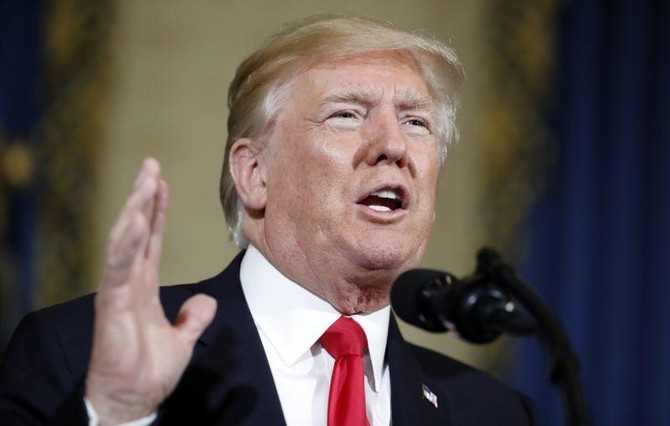
Report: Higher premiums if Trump halts ‘Obamacare’ subsidies
Report: Higher premiums if Trump halts ‘Obamacare’ subsidies


Latest updates


© 2026 SAUDI RESEARCH & PUBLISHING COMPANY, All Rights Reserved And subject to Terms of Use Agreement.