LONDON: Manchester, a city in the north of England, was put on the global map in May when it suffered a devastating suicide bombing at a packed pop concert with US singer Ariana Grande.
Since then, the first directly elected mayor of the Greater Manchester region has commissioned an independent review of the city’s response to the attack, and recently appointed a chairman, with interim findings due out early next year.
Another way Manchester aims to strengthen its planning for emergencies is by employing its first Chief Resilience Officer (CRO), under its participation in the 100 Resilient Cities (100RC) network, a global initiative set up by the Rockefeller Foundation to build urban resilience in cities around the world.
In Britain, the 100RC cities also include Belfast, Glasgow, London and Bristol.
“I think the city is still in mourning,” said Greater Manchester’s new CRO, Kathy Oldham, referring to the May attack by UK-born Salman Abedi, which killed 22 people and injured 116, one of a spate of attacks in Britain in recent months.
“We’re still coming to terms with what happened,” Oldham told the Thomson Reuters Foundation in a telephone interview.
Efforts to deal with the aftermath include supporting bereaved families, working with communities to prevent radicalization, and helping schools look after traumatized young people.
“It’s very important to us that we learn from what happened so that anything that happens in the future, we can deal with perhaps even better than we did at the time, but also that we can share that both with other cities in the UK and through the global network,” said Oldham.
The support Manchester received from other 100RC cities was “phenomenal,” she said.
Paris, in particular, was “incredibly generous” in sharing its knowledge and experience after suffering similar attacks on citizens in recent years, she noted.
Images of individuals offering cups of tea and spare beds to those caught up in the Manchester Arena bombing, as well as huge public gatherings to commemorate the victims in the days after the attack went viral on social media.
Oldham, who has lived in the city since arriving as a university student, said the community’s response “really stands out as something that makes Manchester very special.”
“It’s a huge privilege to work with communities that respond in that way,” she added.
GREEN INFRASTRUCTURE
Oldham trained as a doctor and worked on the 2012 London Olympics, besides leading Manchester’s participation in the United Nations’ “Making Cities Resilient” campaign which recognized the city as a role model in 2014.
She is no stranger to issues affecting resilience — from sudden shocks such as attacks and disease outbreaks, to slower-burning stresses like homelessness and unemployment.
“The UK has a very strong history of preparing for emergencies,” she said.
Having been in the CRO role for just a few weeks, Oldham’s first priority is to talk to communities, and analyze data and evidence to map out how resilience is developing in the city and how it can be improved, in order to craft a comprehensive strategy to make Manchester stronger.
It aims to become Britain’s foremost digital city, for example, and has said it will create a 2 million-pound ($2.6 million) fund to expand digital skills.
It is also planning a green summit on how to preserve the city’s environment, and has established a housing task-force to review high-rise blocks after the fatal Grenfell Tower fire in London, said Oldham.
The official is keen to find ways of adding value to existing initiatives, such as a flood-basin project in the Salford area by the River Irwell, which caused serious flooding in 2015.
In addition to building the basin to collect water from the river when it overflows, there will be green space for locals to use, including a wetland area where school children can plant trees and learn about nature, as well as sports pitches.
In this way, the basin becomes multi-purpose and serves as a hub for the community, said Oldham.
“We can really generate more value out of it, and more benefit and greater resilience — and that’s just one example,” she said. ($1 = 0.7712 pounds)


![]()
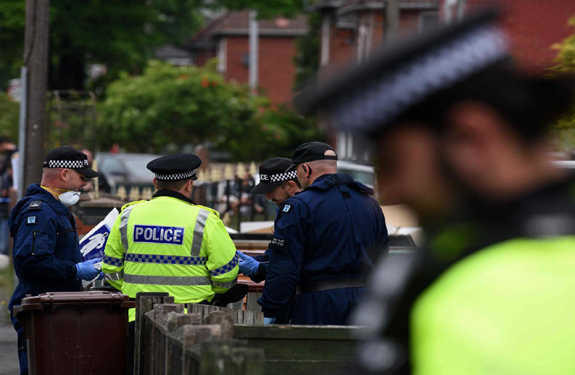

After suicide attack, Manchester learns lessons for future emergencies — official
After suicide attack, Manchester learns lessons for future emergencies — official

Hegseth says US ‘can’t stop everything’ that Iran fires even as he asserts air dominance
WASHINGTON (AP): Defense Secretary Pete Hegseth acknowledged Wednesday that some Iranian air attacks may still hit their targets even as he asserted that US military superiority is quickly giving it control of the Islamic Republic’s airspace.
The US has spared “no expense or capability” to enhance air defense systems to protect American forces and allies in the Middle East, Hegseth told reporters at the Pentagon days after the US and Israel attacked Iran in a war that has widened throughout the region.
“This does not mean we can stop everything, but we ensured that the maximum possible defense and maximum possible force protection was set up before we went on offense,” he said.
The acknowledgement that additional drone or missile strikes in the region could cause damage and harm to troops comes as President Donald Trump and top defense leaders have warned that additional American casualties were expected in a conflict that could last months.
US service members “remain in harm’s way, and we must be clear-eyed that the risk is still high,” Gen. Dan Caine, chairman of the Joint Chiefs of Staff, said at the same press conference.
Six soldiers were killed when an Iranian drone strike hit an operations center Sunday in the heart of a civilian port in Kuwait, miles away from the main Army base. The husband of one of the slain soldiers, who was part of a supply and logistics unit based in Iowa, says the center was a shipping container-style building and had no defenses.
Hegseth also signaled a possible longer time frame for the conflict than has previously been floated by the Trump administration, saying it could last eight weeks but that the US has the munitions and the equipment to beat Iran in a war of attrition. He declined to set a specific time range, saying the specific duration of the war would depend on how it unfolds.
“You can say four weeks, but it could be six, it could be eight, it could be three,” he said. “Ultimately, we set the pace and the tempo. The enemy is off balance, and we’re going to keep them off balance.”
More forces continue to arrive in the region, including jet fighters and bombers, Hegseth said, and the US “will take all the time we need to make sure that we succeed.”
Tehran has vowed to completely destroy the Middle East’s military and economic infrastructure — signaling the war was nowhere near over and could expand further.
President Donald Trump said this week the campaign are likely to last four to five weeks but that he was prepared “to go far longer than that.”
The US has spared “no expense or capability” to enhance air defense systems to protect American forces and allies in the Middle East, Hegseth told reporters at the Pentagon days after the US and Israel attacked Iran in a war that has widened throughout the region.
“This does not mean we can stop everything, but we ensured that the maximum possible defense and maximum possible force protection was set up before we went on offense,” he said.
The acknowledgement that additional drone or missile strikes in the region could cause damage and harm to troops comes as President Donald Trump and top defense leaders have warned that additional American casualties were expected in a conflict that could last months.
US service members “remain in harm’s way, and we must be clear-eyed that the risk is still high,” Gen. Dan Caine, chairman of the Joint Chiefs of Staff, said at the same press conference.
Six soldiers were killed when an Iranian drone strike hit an operations center Sunday in the heart of a civilian port in Kuwait, miles away from the main Army base. The husband of one of the slain soldiers, who was part of a supply and logistics unit based in Iowa, says the center was a shipping container-style building and had no defenses.
Hegseth also signaled a possible longer time frame for the conflict than has previously been floated by the Trump administration, saying it could last eight weeks but that the US has the munitions and the equipment to beat Iran in a war of attrition. He declined to set a specific time range, saying the specific duration of the war would depend on how it unfolds.
“You can say four weeks, but it could be six, it could be eight, it could be three,” he said. “Ultimately, we set the pace and the tempo. The enemy is off balance, and we’re going to keep them off balance.”
More forces continue to arrive in the region, including jet fighters and bombers, Hegseth said, and the US “will take all the time we need to make sure that we succeed.”
Tehran has vowed to completely destroy the Middle East’s military and economic infrastructure — signaling the war was nowhere near over and could expand further.
President Donald Trump said this week the campaign are likely to last four to five weeks but that he was prepared “to go far longer than that.”
Latest updates


© 2026 SAUDI RESEARCH & PUBLISHING COMPANY, All Rights Reserved And subject to Terms of Use Agreement.