

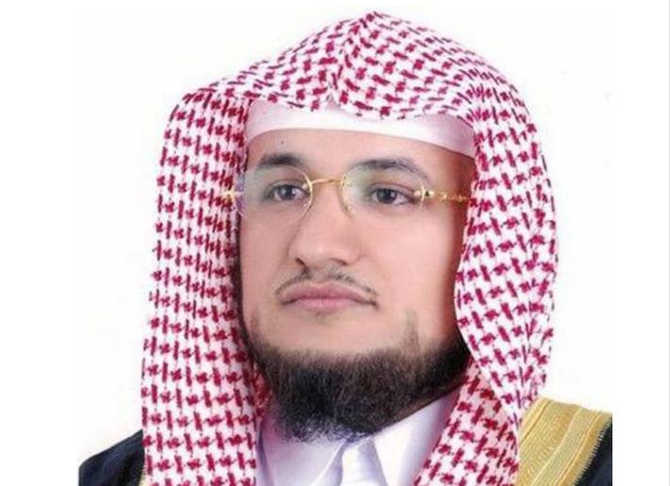
JEDDAH: Saudi authorities have opened an investigation into a preacher who has been referred to the public prosecution for a tweet about the late Kuwaiti comedy actor, Abdulhussain Abdulredha. The actor died on Friday evening in London and the preacher said the actor should not be prayed for because he was an “Iranian Shiite.”
Sheikh Ali Al-Rabieei’s tweet sparked a wave of anger on social media in Saudi Arabia and neighboring Gulf states. The tweet said: “It is not permissible for a Muslim to pray for Abdulhussain Abdulredha as he is an Iranian Shiite who died misguided. God forbade Muslims to wish mercy and forgiveness for polytheists.”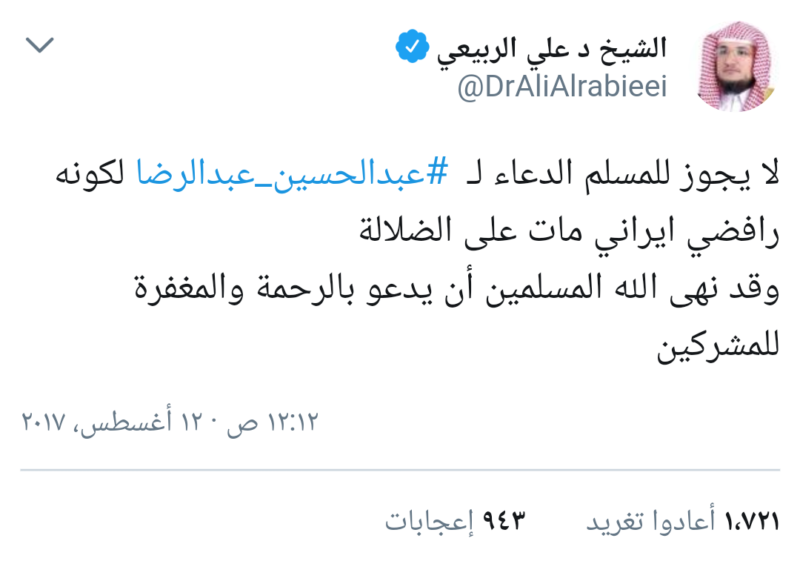
Hani Al-Ghufaili, the official spokesman at Saudi Arabia’s Ministry of Culture and Information, immediately reacted, saying: “The Ministry of Culture and Information has referred Al-Rabieei to the Copyright Infractions Committee for violating the press and publications law.”
#وزارة_الثقافة_والإعلام تحيل @DrAliAlrabieei إلى لجنة مخالفات النشر بسبب مخالفته نظام المطبوعات والنشر.
— هاني الغفيلي (@haniws) August 12, 2017
Earlier, Public Prosecutor Sheikh Saud bin Abdullah Al-Mua’jab affirmed that any post that includes harmful content to society, regardless of its material, pretexts and means of publication (media publications, social media, lectures, speeches and books), was the direct responsibility of the public prosecution in accordance with legitimate and systemic requirements.
Al-Mua’jab said action was also being taken against other tweeps who made similar offensive comments. The Public Prosecutor’s Office on Sunday issued an order summoning a group of tweeps. They have been charged with criminal offenses for comments deemed offensive against the late actor.
Al-Mua’jab, the public prosecutor, asserted that those who have been summoned will face the full force of law.
Al-Rabieei, the preacher, deleted the controversial tweet after a flood of angry reactions that demanded punishment and accountability for his inflammatory comment.
Local media reported that the Ministry of Culture and Information had blocked Al-Rabieei’s official website.
In response, Al-Rabieei said: “I declare my commitment to the press and publications law if it doesn’t contradict the Qur’an and Sunnah (Prophet Muhammad’s teachings) and what was decreed by our senior scholars.”
أعلن عن التزامي بقانون النشر والصحافة
إذا كان لا يتعارض مع القرآن والسنة وما أفتى به كبار العلماء ابن باز وابن عثيمين وهيئة كبار العلماء
— الشيخ د علي الربيعي (@DrAliAlrabieei) August 13, 2017
Al-Rabieei, who some Saudis claim is a Yemeni expat, resides in the Kingdom and addresses religious topics related to Sunnis and Shiites on his Twitter account. He has a history of posting previous fatwas issued by leading Saudi scholars.
The preacher later apologized in a series of tweets, saying: “I apologize to my fellow Kuwaiti brothers for the misunderstanding because of the previous tweet and may God grant him mercy.”
أعتذر لإخواني شعب #الكويت عن سوء الفهم الذي وصلهم بسبب التغريدة السابقة
وأسأل الله أن يرحم أموات المسلمين الموحدين وأن يتغمدهم برحمته
— الشيخ د علي الربيعي (@DrAliAlrabieei) August 13, 2017
He also said that he intends to sue journalists and individuals who accused him of engaging in hate speech, asking all those concerned to contact him, “particularly lawyers and judges.”
هام
أنوي رفع قضايا تشهير ضد الصحافة والأفراد الذين وجهوا لي إساءات وقذف وتهم باطلة
وأطلب من الأخوة الأفاضل التواصل وخاصة المحامين والقضاة— الشيخ د علي الربيعي (@DrAliAlrabieei) August 13, 2017
Al-Rabieei has 289,000 followers on his verified Twitter account.
Abdulredha was admired for his acting skills and his ability to enact social and political commentary with a satirical twist.
He gained fans across the Arab world and was known as the “artist of Arabs.” He managed to unite his fans despite cultural and religious differences.
In a similar incident, Saudi cleric Saeed bin Farwah was convicted in a defamation case and sentenced to 45 days in prison for verbally assaulting Saudi actor Nasser Al-Qassabi in Ramadan of 2016, after Al-Qassabi sued the cleric for accusing him of being an “infidel.”


