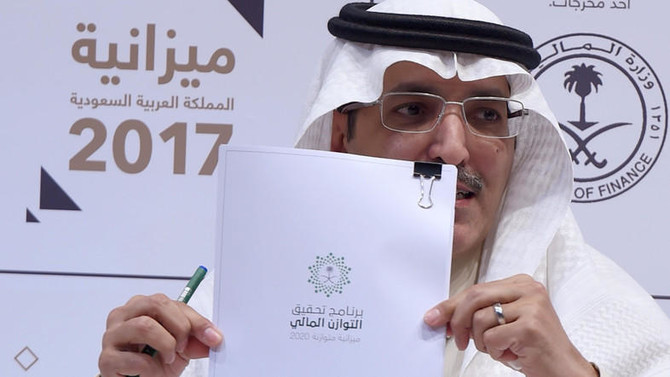
LONDON: Saudi Arabia’s budget deficit halved in the first six months of the year following sweeping spending cuts that form part of an ambitious economic reform plan.
The deficit shrank by 51 percent to SR72.73 billion ($19.38 billion) which officials said reflected progress made in improving state finances, which were hit by the dramatic decline in oil prices from mid-2014.
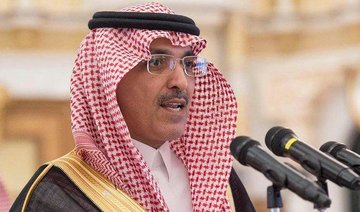
“The second quarterly report shows the effectiveness of economic reforms and measures in the National Transformation Program within the Kingdom’s Vision 2030,” said Finance Minister Mohammed Al-Jadaan.
“Although the economic challenges are still existing, we are confident that we can meet our expectations for the fiscal deficit for 2017.”
Saudi Arabia has slashed government spending, rolled back subsidies and ushered in a slew of other economic reforms under Saudi Vision 2030, a plan driven by Crown Prince Mohammed bin Salman, deputy premier and minister of defense.
The plan aims to cut the Kingdom’s reliance on oil and gas by investing heavily in sectors that create economically productive jobs from finance to manufacturing.
As part of a drive to boost revenues, the government will also introduce value-added tax (VAT) next year along with its Gulf Cooperation Council (GCC) oil-exporting neighbors, which are also responding to weaker hydrocarbon prices.
Saudi Arabia’s Ministry of Finance said total revenues in the first half rose to SR307.98 billion, a 29 percent increase on the same period last year. Spending fell 2 percent compared to the same period a year earlier to SR380.71 billion, according to a statement published by the Saudi Press Agency (SPA).
Revenues for the second quarter rose 6 percent to SR163.91 billion.
About SR100.9 billion of that came from oil – a 28 percent increase on the same quarter a year ago, due to recovering prices.
Mazen Al-Sudairi, the head of research at Al-Rajhi Capital said in a note to clients that compared to other commodity-based economies, Saudi Arabia debt levels remained “very healthy.”
Al-Rajhi Capital estimates that oil would need to trade at an average of $61 per barrel in the second half of this year for the government to meet its full-year oil-revenue target.
Brent crude fell by about 0.6 percent last week to close at $52.10 per barrel.
The International Monetary Fund (IMF) last month welcomed the economic reforms introduced by the Saudi government including the planned rollout of VAT, removing obstacles to private growth and boosting bank regulation.
The IMF also cautioned that the government should closely monitor the pace of fiscal reforms and make adjustments where necessary.
“Fiscal consolidation efforts are beginning to bear fruit, progress with reforms to improve the business environment are gaining momentum, and a framework to increase the transparency and accountability of government is largely in place,” the IMF said in a summary. “Effective prioritization, sequencing, and coordination of the reforms is essential, and they need to be well-communicated and equitable to gain social buy-in and ensure their success.”
John Sfakianakis, director of economic research at the Gulf Research Center in Riyadh, said that the recovery in oil prices this year had been a key factor behind the reduced deficit.
“Higher budgetary revenues and a narrower deficit is clearly the result of a jump in oil revenues during the second quarter,” he told Arab News.
“The decline in non-oil revenues is the result of slower economic activity, which could show signs of recovery in the second half of the year.”