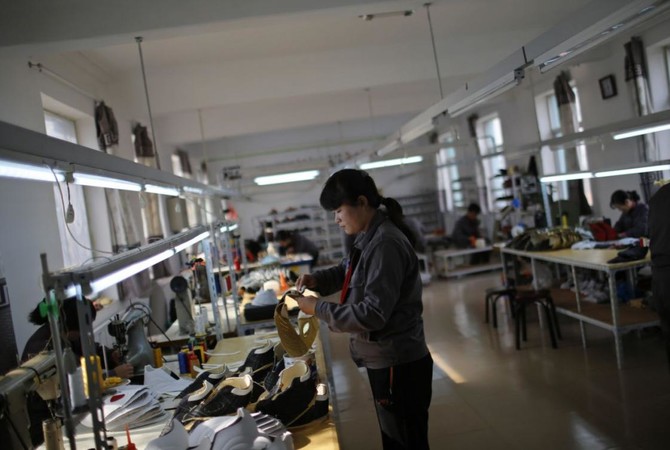
DANDONG, China: Chinese textile firms are increasingly using North Korean factories to take advantage of cheaper labor across the border, traders and businesses in the border city of Dandong said.
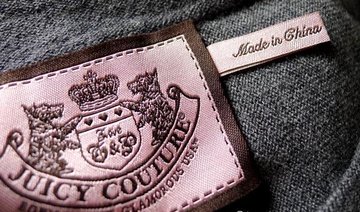
The clothes made in North Korea are labeled “Made in China” and exported across the world, they said.
Using North Korea to produce cheap clothes for sale around the globe shows that for every door that is closed by ever-tightening UN sanctions another one may open. The UN sanctions, introduced to punish North Korea for its missile and nuclear programs, do not include any bans on textile exports.
“We take orders from all over the world,” said one Korean-Chinese businessman in Dandong, the Chinese border city where the majority of North Korea trade passes through, who spoke on condition of anonymity because of the sensitivity of the issue.
Dozens of clothing agents operate in Dandong, acting as go-betweens for Chinese clothing suppliers and buyers from the US, Europe, Japan, South Korea, Canada and Russia, the businessman said.
“We will ask the Chinese suppliers who work with us if they plan on being open with their client — sometimes the final buyer won’t realize their clothes are being made in North Korea. It’s extremely sensitive,” he said.
Textiles were North Korea’s second-biggest export after coal and other minerals in 2016, totaling $752 million (SR2.8 billion), according to data from the Korea Trade-Investment Promotion Agency (KOTRA). Total exports from North Korea in 2016 rose 4.6 percent to $2.82 billion.
The latest UN sanctions, agreed earlier this month, have completely banned coal exports now.
Its flourishing textiles industry shows how impoverished North Korea has adapted, with a limited embrace of market reforms, to sanctions since 2006 when it first tested a nuclear device. The industry also shows the extent to which North Korea relies on China as an economic lifeline, even as US President Donald Trump piles pressure on Beijing to do more to rein in its neighbor’s weapons programs.
Chinese exports to North Korea rose almost 30 percent to $1.67 billion in the first half of the year, largely driven by textile materials and other traditional labor-intensive goods not included on the UN embargo list, Chinese customs spokesman Huang Songping said.
Chinese suppliers send fabrics and other raw materials required for manufacturing clothing to North Korean factories across the border where garments are assembled and exported.
Australian sportswear brand Rip Curl publicly apologized last year when it was discovered that some of its ski gear, labeled “Made in China”, had been made in one of North Korea’s garment factories. Rip Curl blamed a rogue supplier for outsourcing to “an unauthorized subcontractor”.
But traders and agents in Dandong say it’s a widespread practice.
Manufacturers can save up to 75 percent by making their clothes in North Korea, said a Chinese trader who has lived in Pyongyang.
North Korea has about 15 large garment exporting enterprises, each operating several factories spread around the country, and dozens of medium sized companies, according to GPI Consultancy of the Netherlands, which helps foreign companies do business in North Korea.

North Korean factories humming with ‘Made in China’ clothes
Mapping Saudi soils to grow better crops
- Palm trees, root crops, and coastal plants reveal the land’s story
RIYADH: Saudi Arabia’s land tells stories written beneath the feet. From fertile plains and rugged highlands to vast deserts, the Kingdom’s diverse landscapes shape what can grow, where it grows, and how agriculture can thrive.
Alongside geography and climate, soil conditions play a decisive role in agricultural success. Understanding soil types across the Kingdom helps determine which crops can flourish and what interventions may be needed to sustain them.
In an interview with Arab News, Turki Almutairi, a senior environmental specialist at the National Afforestation Center under the National Center for Vegetation Cover Development and Combating Desertification, outlined the main soil types found across Saudi Arabia.
“The dominant soil in the Kingdom are sandy desert soils, alongside calcareous soils in the central region. Rocky and stony soils are present along mountainous and hilly landscapes,” he said.
“Alluvial soils are common in wadies (valleys), while saline and sodic soils are located in depressions (Sabkhas) and along coastlines. Pockets of clayed soils can be also found around few sites along the Kingdom.”
The Kingdom’s vast territory gives rise to unique soil characteristics in each region, enabling different crops to grow depending on local conditions.
“Soil is the growing medium for plants. The role of soil includes structural stabilization, providing nutrients and a communication medium for plants,” Basil Nasir, soil lead at engineering consultancy William Sale Partnership, told Arab News.
According to Nasir, assessing soil use is essential before determining whether it is fertile or infertile, as different soils support different plant types.
“The soil used for trees differs from the soil used for ornamental plants and from the soil used for aquatic plants. It varies according to the specific needs of each plant, and based on this, we determine what the soil requires and assess its fertility,” he said.
Nasir explained that soil characteristics are shaped by both physical and chemical components. In addition to water and air, mineral particles such as sand, silt and clay are key indicators of soil health. Organic matter, derived from plant and animal remains, forms the fourth major component.
The balance between these elements determines soil behavior. One important physical trait is water-holding capacity, which influences what types of plants a soil can support.
Opinion
This section contains relevant reference points, placed in (Opinion field)
“If the soil is like dunes, adding water will cause it to run off, but if the soil is clay, its ability to retain water will be very high. If you add water and return the next day, you will find that the water is still there,” said Nasir.
Chemical properties, such as whether soil is alkaline or acidic, are equally important. Understanding both physical and chemical traits allows for proper assessment and treatment when needed.
“What determines whether a plant is suitable for a particular environment is primarily the plant's nature. For example, some plants have fibrous roots and therefore do not require well-draining soil,” Nasir added.
“A palm tree, for example, does not care whether it was planted in one soil or the other because its roots are fibrous. Therefore, palm trees are strong plants and are suitable to grow in both dry and wetlands, while preferring sandy areas.”
Crops such as potatoes, onions, carrots and beetroots — where the edible part grows underground — typically thrive in sandy soils. As a result, plantations of these crops are commonly found in northern regions such as Hail and in Wadi Ad-Dawasir.
In the eastern region, including Al-Ahsa, wetlands are more common due to climatic conditions. Growing plants in such environments often requires human intervention.
“Plants that are coastal or could be found in lagoons or lakes must have some sort of soil around them, like lotus flowers and mangrove trees.”
“An important parameter to keep in mind is that there is no air in its soil, and they are adapted to this condition. However, the lack of air, along with the presence of organic matter, will create a situation where anaerobic bacteria react with the soil, potentially causing diseases we can easily avoid,” said Nasir.
He emphasized that removing organic matter from such soils is essential to ensure plant survival in aquatic environments.
Mountainous and rocky regions in Saudi Arabia are generally volcanic, resulting in low water-holding capacity and challenging growing conditions. However, volcanic ash contributes to high fertility, allowing certain crops to flourish.
As a result, western regions support tree crops such as coffee, mangoes, some banana varieties and pomegranates.
As development accelerates across the Kingdom, soil improvement efforts are expanding under the National Greening Program.
“Soil is considered fundamental for the National Greening Program’s objectives. Understanding the soil variability along the Kingdom is a precondition for fostering sustainable soil management,” Almutairi told Arab News.
Adding, “In this line, the NGP is working towards the establishment of the Saudi Soil Information System (TURBA-KSA), which consists of mapping soils and its functional properties in the Kingdom using state-of-the-art technology.”
He also noted the creation of the “Land Rehabilitation Watch” to report, verify and monitor land rehabilitation nationwide.
“This milestone allows the Kingdom to understand how soil and land health are progressing against national and international targets of land degradation neutrality. Documenting good soil and land management practices is also important, so that those successful practices could be scaled up along the Kingdom, which is a priority task for NGP,” he said.
Raising public awareness is another key pillar of the program.
“Assessing different emerging technologies and soil amendments is a daily activity of NGP, as it then provides technical support to partners on the selection and application of these technologies.”
DID YOU KNOW?
• Saudi Arabia cultivates around 1 million hectares, mainly in Riyadh, Qassim, Hail, and Jouf.
• Farming follows the seasons: winter brings onions, garlic, and carrots, while summer yields watermelon, tomatoes, and cucumbers.
• The Kingdom is a top date producer, with over 31 million palm trees generating nearly 1.54 million tons, especially in Riyadh and Qassim.
Almutairi stressed that soil is often overlooked because it lies unseen beneath the surface, despite its critical role.
Yet soil produces 95 percent of food, stores water, holds more carbon than vegetation and the atmosphere, suppresses contaminants, regulates water, carbon and nutrient cycles, and hosts microorganisms linked to the human microbiome.
He emphasized the need to engage the general public, particularly urban communities disconnected from nature. Education helps people understand where food comes from and how contact with soil — such as walking barefoot — can support well-being. Healthy soils also contribute to cleaner water and air, he added.
Almutairi also called for stronger advocacy among decision-makers, noting that investment in healthy soils supports climate action, food security and sustainable development.
He concluded that key strategies include officially observing UN World Soil Day on Dec. 5, integrating soil education into curricula, launching annual social media campaigns, using art to raise awareness, and organizing public events that connect soils to everyday life.