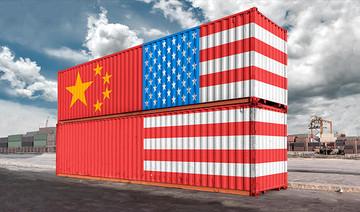
WASHINGTON: US President Donald Trump will call on Monday for his chief trade adviser to investigate China’s intellectual property practices, website Politico reported, citing an unnamed administration official.
Trump had been expected to order a so-called Section 301 investigation under the 1974 Trade Act earlier this month, but action had been postponed as the White House pressed for China’s cooperation in reining in North Korea’s nuclear program.
Politico said it was not clear how much detail Trump would provide in his announcement, but that administration officials expected US Trade Representative Robert Lighthizer to open a Section 301 probe.
Officials at the White House and US Trade Representative’s office were not immediately available for comment.
Trump has suggested he would go easier on China if it were more forceful in getting North Korea to rein in its nuclear weapons program.
While China joined in a unanimous UN Security Council decision to tighten economic sanctions on Pyongyang over its long-range missile tests, it is not clear whether Trump thinks Beijing is doing enough.
“We lose hundreds of billions of dollars a year on trade with China. They know how I feel,” he told reporters on Thursday. “If China helps us, I feel a lot different toward trade.”
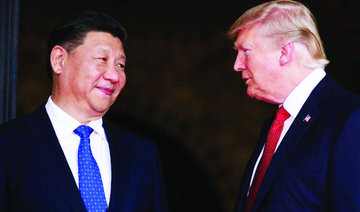
Trump and Chinese President Xi Jinping spoke by phone on Friday night. They reiterated their mutual commitment to denuclearize the Korean peninsula, the White House said in a statement.
“President Trump and President Xi agreed North Korea must stop its provocative and escalatory behavior,” the statement said.
The White House said the “relationship between the two presidents is an extremely close one, and will hopefully lead to a peaceful resolution of the North Korea problem.”
Trump will make a day trip to Washington, D.C., on Monday, briefly interrupting his 17-day August working vacation, a White House official said on Friday.
Politico said the investigation would not mean immediate sanctions, but could ultimately lead to steep tariffs on Chinese goods.
In addition to the US, the EU, Japan, Germany and Canada have all expressed concern about China’s behavior on intellectual property theft. The technology sector has been especially hard hit in IP disputes.
Trump’s threat to investigate China’s intellectual property and trade practices is valid, but his administration may not be up to the delicate task of carrying out a new China probe without sparking a damaging trade war, US business lobbyists said last week.


![]()

Trump said to call for China intellectual property trade probe on Monday
Trump said to call for China intellectual property trade probe on Monday

Latest updates


Recommended


© 2026 SAUDI RESEARCH & PUBLISHING COMPANY, All Rights Reserved And subject to Terms of Use Agreement.