Xi urges Trump to avoid exacerbating N. Korea tensions

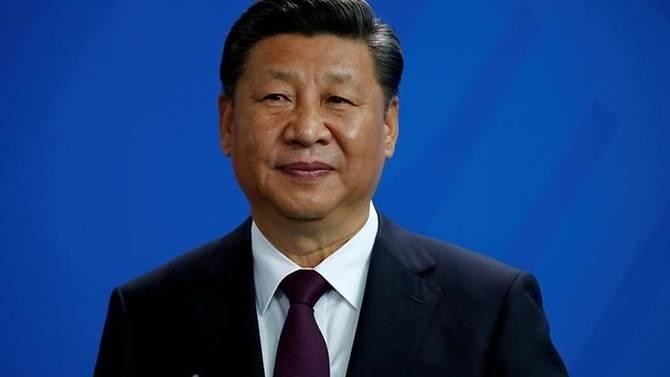
Chinese President Xi Jinping attends a news conference at the Chancellery in Berlin, Germany, July 5, 2017. (File photo by REUTERS)
Updated 12 August 2017
Follow

Xi urges Trump to avoid exacerbating N. Korea tensions

BEIJING: Chinese leader Xi Jinping urged US President Donald Trump on Saturday to avoid rhetoric that could inflame tensions with North Korea as an escalating war of words raised global alarm.
Xi made the plea in a phone call hours after Trump ramped up his warnings to Pyongyang, saying the Stalinist regime would “truly regret” taking hostile action against the United States.
The White House said in a statement that the two leaders “agreed North Korea must stop provocative and escalatory behavior” and that they are both committed to the denuclearization of the peninsula.
But the Chinese foreign ministry said Xi urged Trump to avoid “words and deeds” that would “exacerbate” the already-tense situation, exercise restraint and seek a political settlement.
Trump has been engaged all week in verbal sparring with the North over its weapons and missile programs, as US media reported Pyongyang has successfully miniaturised a nuclear warhead.
The Republican billionaire has progressively ramped up the tone throughout the week and on Friday declared that the US military is “locked and loaded.”
In a call with Guam Governor Eddie Calvo on Friday, Trump said the US military is prepared to “ensure the safety and security of the people of Guam” in response to Pyongyang’s plans to launch missiles toward the Pacific territory.
Japanese media said Tokyo was deploying its Patriot missile defense system following Pyongyang’s threat to fire ballistic missiles over the country toward Guam.
In another move that could further fan the flames, satellite photos posted by defense expert Joseph Bermudez suggested that North Korea could be preparing for fresh submarine-based ballistic missile tests.
Trump had earlier brandished a threat of unleashing “fire and fury” on Pyongyang, then noted Thursday maybe that statement “wasn’t tough enough.”
China, North Korea’s biggest ally and trade partner, has been voicing concern at the mounting exchanges and a state-run newspaper suggested that Beijing should stay neutral if Pyongyang struck the US first.
Previously accused by Trump of not doing enough to rein in the authoritarian regime, China voted in favor of a series of wide-sweeping UN Security Council sanctions against North Korea last weekend.
According to the Chinese foreign ministry, Trump told Xi over the phone that he “fully understands China’s role in the nuclear issue in the Korean Peninsula.” Trump is expected to visit China later this year.
The North’s official KCNA news service in an editorial blamed Trump for “driving the situation on the Korean peninsula to the brink of a nuclear war,” calling the US “the heinous nuclear war fanatic.”
The sabre-rattling has sparked worldwide concerns that a miscalculation by either side could trigger a catastrophic conflict on the Korean Peninsula.
Russia and Germany have also urged both sides to tone down the rhetoric.
“Military solutions are now fully in place, locked and loaded, should North Korea act unwisely. Hopefully Kim Jong Un will find another path!” Trump wrote Friday from his golf club retreat in New Jersey, where he is on a working vacation.
Russia’s Foreign Minister Sergei Lavrov said Moscow was “very alarmed” at Trump’s tough talk, and said Washington should take the first step toward cooling tensions.
“When a fight has nearly broken out, the first step away from the dangerous threshold should be taken by the side that is stronger and smarter,” Lavrov said.
German Chancellor Angela Merkel said diplomacy was the answer.
“Germany will very intensively take part in the options for resolution that are not military but I consider a verbal escalation to be the wrong response,” she said.
Nearly a week ago, the UN Security Council unanimously passed fresh sanctions against Pyongyang over its weapons program, including export bans, a new punishment that could cost North Korea $1 billion a year.
“This is clearly a time for all the parties to focus on how to de-escalate and lower the tensions,” said the spokesman for UN Secretary General Antonio Guterres.
Tensions on the peninsula tend to increase when Seoul and Washington launch major military joint exercises, and the next, Ulchi Freedom Guardian, is set to kick off around August 21.
US Defense Secretary Jim Mattis appeared intent Thursday on easing the tension, describing the prospect of war as “catastrophic” and saying diplomacy remained the priority.
Asked Friday if Mattis was aware of Trump’s latest tweet, spokesman Col. Rob Manning simply said the Pentagon chief was “in close and constant contact with the president.”
A White House official noted: “There are military plans for just about any crisis we may face in the world. (...) This isn’t anything new.”
Relations between Washington and Pyongyang have been tense for months, in the wake of the North’s repeated missile tests, including two successful intercontinental ballistic missile (ICBM) test launches in July that are believed to have brought much of the US mainland within range.
North Korea raised hackles in the United States when it announced a detailed plan to send four missiles over Japan and toward Guam, an island territory of some 165,000 people, where some 6,000 US soldiers are based.


Israel is risking global security, warns Somali Information Minister

Updated 6 sec ago
Follow

Israel is risking global security, warns Somali Information Minister

  • Tel Aviv’s actions boost terror groups he tells Arab News in exclusive interview
  • Jama accuses Tel Aviv of wanting to relocate Palestinians from Gaza to region

RIYADH: Israel’s recognition of Somaliland and its presence in the region risks inflaming the situation there, allowing terrorist groups to undermine regional security and stability, according to Somali Information, Culture and Tourism Minister Daud Aweis Jama.

In a special interview with Arab News, Jama insisted that Israel’s unprecedented Dec. 26 move to recognize Somaliland as a sovereign state represents a major setback for Mogadishu’s fight against terrorist organizations like Al-Shabab and Daesh.

“The presence of Israel will be used by the terrorist groups to expand their operations in the region. (They will) have a pretext to spread their ideologies in the region,” he said.

“That is another factor that is also risking global security and regional stability, because we have been in the last stage of overcoming the challenges of the terrorist groups Al-Shabab and ISIS,” he added, using another term for Daesh.

Jama added: “We have been putting all our resources and all our time into making sure that we finalize the final stages of the fight against Al-Shabab. So, if something else interrupts us, that means that we are not going to focus fully on the operations against Al-Shabab. And that means we are giving more opportunities to Al-Shabab or other organizations.”

The consequences of this hit to Somalia’s ability to fight terror will not be restricted to the country’s borders, according to Jama, but will spread across the region and beyond.

“This might invite other, external terrorist groups to the region, because they will take advantage of this crisis and will make sure that they take over all the areas that have been defeated before,” the minister said.

“We believe this has come at a time that is going to affect our security as a Somali government, the security of the Horn of Africa, the security of the Gulf of Aden, the security of the Red Sea, the security of the Middle East and global stability. This is a very important location that holds the trade of the world.”

The minister underlined that Israel’s recognition and larger presence in the region are leading to more challenges, “putting more fuel on the ongoing challenges that exist in the region, especially in Somalia.” He added: “And at this time, it is not only limited to Somalia, but it’s going to be a challenge that is going to spread like a fire all over the region and all over the world.”

Jama told Arab News that Israel has other strategic motives for its recognition of Somaliland — including the forced resettlement of Palestinians from Gaza.

“According to reliable sources that our intelligence gathered, one of the conditions that Israel put forward (for recognizing Somaliland) was to have a place that they can settle the people from Gaza,” he said.

“We find that it is a violation also of the people of Palestine, because we believe that the people of Palestine have the right to self-determination. The two-state solution that has been the call of the international community has to be adhered to and implemented.”

Israel’s coalition government, the most right-wing ‌and religiously conservative in its history, includes far-right politicians who advocate the ‍annexation of both Gaza and the West ‍Bank and encouraging Palestinians to leave their homeland.

Somalia’s UN Ambassador Abukar Dahir Osman said ‍Security Council members Algeria, Guyana, Sierra Leone and Somalia “unequivocally reject any steps aimed at advancing this objective, including any attempt by Israel to relocate the Palestinian population from Gaza to the northwestern region of Somalia.”

Israel last month became the first country to recognize Somaliland as an independent nation. In the three-plus decades since its self-declaration of independence in 1991, no state had recognized the northwestern territory as being separate from Somalia.

Mogadishu immediately rejected the Israeli move, alongside countries all over the world.

Saudi Arabia affirmed its rejection of any attempts to impose parallel entities that conflict with the unity of Somalia. It also affirmed its support for the legitimate institutions of the Somali state and its keenness to preserve the stability of Somalia and its people.

A group of foreign ministers from Arab and Islamic countries, alongside the Organization of Islamic Cooperation, also firmly rejected Israel’s announcement. In a joint statement, the ministers warned that the move carries “serious repercussions for peace and security in the Horn of Africa and the Red Sea region” and undermines international peace and security.

The 22-member Arab League rejected “any measures arising from this illegitimate recognition aimed at facilitating forced displacement of the Palestinian people or exploiting northern Somali ports to establish military bases,” the organization’s UN Ambassador Maged Abdelfattah Abdelaziz told the UN Security Council.

In the most recent development in Israel-Somaliland relations, less than two weeks after Tel Aviv’s recognition, Israeli Foreign Minister Gideon Saar visited the region on Tuesday to publicly formalize diplomatic relations.

“It was a blatant violation of Somalia’s sovereignty that Israel recognized a region within the Somali Federal Republic as an independent state,” Jama underlined. “That was a total violation of international laws. It was a violation of the territorial integrity and sovereignty of Somalia.

“From the beginning, our path was to follow diplomatic efforts. And we kind of started with a successful UN Security Council meeting that supported Somalia’s territorial integrity and sovereignty. (This was) followed by other international actors like the Arab League, the Organization of Islamic Cooperation, the African Union and regional bodies like the East African Community and IGAD.

“Also, the Peace and Security Council of the African Union has reiterated the importance of supporting Somali sovereignty and territorial integrity.”