ANKARA: Turkey closed a vital border crossing with Syria to all but humanitarian aid on Thursday because terrorists control the area on the Syrian side.
The Bab Al-Hawa crossing on the main road between Iskenderun and Aleppo is a key route for smuggling fuel and weapons. It links Reyhaniye in Turkey with Atarib in western Aleppo, which is dominated by Hayat Tahrir Al-Sham, an opposition alliance led by the former Al-Qaeda offshoot Jabhat Fateh Al-Sham.
Hayat Tahrir Al-Sham has also gained control of a significant part of Idlib province after days of heavy fighting with Ahrar Al-Sham, its main rival.
“Until that group’s control ends, or at least weakens, there will be tight control and slowing down of the passage of all products other than humanitarian aid and food,” Customs and Trade Minister Bulent Tufenkci told Turkish TV.
“We have no imports from Syria, we only export there, so we don’t have any issues in that regard.”
Ankara expects the issue to be resolved within two weeks, he said.
Mete Sohtaoglu, a researcher in Istanbul who studies militant groups, said Turkey had been stopping construction materials crossing the border for some time. “With the decrease in the conflict in Idlib, the construction of buildings is on the rise, which strengthens the military headquarters of the armed groups there,” he said.
Sohtaoglu said closing the border was probably a precautionary measure, but it might also indicate an imminent aerial bombardment in the region. He predicted “new surprising developments in Syria” next month.
Ahmet K. Han, international relations professor at Kadir Has University in Istanbul, said two routes were open to the militants: “Northwest to Turkey, or north to Afrin, creating disturbances in both Afrin and the Azez-Jarablus-Al-Bab triangle,” he said.
“An uncontrolled refugee flow to Turkey’s border would be worse than closing the border. From a purely strategic/security perspective, humanitarian considerations aside, the flight of groups in Idlib, including Jabhat Fateh Al-Sham, toward Afrin would be the most manageable result for Turkey.”
However, he said, much depended on who won the internal conflict in Idlib. “The Idlib factions might overrun the Syrian Kurdish YPG (People’s Protection Units) militia in Afrin, and this might be considered in Turkey’s interests.”
He said it was also possible that the US would move to strengthen its YPG allies in Afrin, and “Turkey cannot concur with that. Whatever may have happened in the past, Turkey cannot be held responsible for problems that may occur in the future.”


![]()

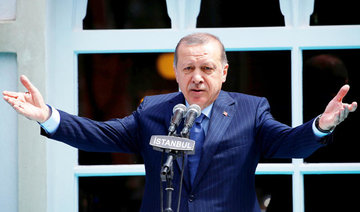
Turkey closes Syria border crossing
Turkey closes Syria border crossing


Latest updates


Recommended


© 2026 SAUDI RESEARCH & PUBLISHING COMPANY, All Rights Reserved And subject to Terms of Use Agreement.