BEIRUT: Houthi militia and forces loyal to deposed President Ali Abdullah Saleh repeatedly and indiscriminately shelled populated neighborhoods of Taiz, Yemen’s third largest city, in violation of the laws of war, a rights group said on Wednesday.
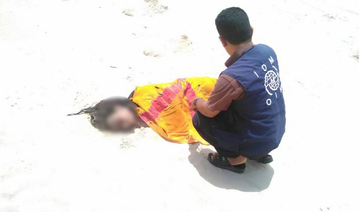
At least 30 civilians died and more than 160 were injured in the artillery bombardment over a 10-day period in May.
“Houthi-Saleh forces’ shelling of populated areas of Taiz has taken a terrible toll on civilians,” said Sarah Leah Whitson, the group’s Middle East director. “Their commanders should immediately halt these indiscriminate attacks.”
Houthi-Saleh forces have repeatedly fired mortar bombs and artillery shells from an elevated area in Al-Hawban district indiscriminately into populated areas in Taiz over the past two years, Human Rights Watch said.
The government-affiliated forces of internationally recognized President Abed Rabbo Mansour Hadi have controlled most of Taiz since March 2016. Local monitors, including one in Al-Hawban district, have reported numerous indiscriminate attacks by Houthi-Saleh forces into the city.
Mwatana, a leading Yemeni human rights organization, said Houthi-Saleh forces were responsible for most of the dozens of indiscriminate shelling incidents they documented in Taiz between April 2015 and March 2016.
A local activist, Faris Al-Obidi, prepared a list of casualties from attacks over the three days in May when shelling in Taiz was particularly heavy, after speaking with witnesses and survivors and consulting logs at Taiz’s three hospitals. The list, which he shared with Human Rights Watch, had the names, ages and dates of injuries for 54 civilians. Among the 14 dead were three children and two women.
Dr. Ahmad Al-Dumaini, technical director at Al-Thawra, Taiz city’s main hospital, said the hospital received 58 war-wounded civilians between May 20 and 26, including 20 children, plus three people who died before arrival, including a child. He said the vast majority of these casualties were from shelling.
Dr. Walid Al-Watiri, the laboratory chief at Al-Safwa Hospital, said Al-Safwa, Al-Thawra, and Al-Rawda hospitals received the bodies of 31 people, including six children, and another 167 wounded, including 60 children, over a 10-day period.
The renewed shelling occurred after local government-affiliated forces pushed Houthi-Saleh forces back from several locations east of the city, said a local activist, Maher Al-Absi.
The areas hit on May 21 were about 800 meters from the front lines while those hit on May 22 and 23 were in the middle of the city, far from the front lines, in “very crowded civilian places,” Al-Absi said.
Witnesses to the six attacks in Taiz that Human Rights Watch documented said no government-aligned military forces were in those areas at the time of the attacks.
Human Rights Watch has previously documented Houthi-Saleh indiscriminate shelling in Taiz. In June 2016, shelling killed at least 18 civilians and wounded 68 others over three days, hitting markets crowded with people shopping for Ramadan, according to the UN.
In August 2015, three Houthi-Saleh attacks on Taiz killed at least 14 civilians, including five women and five children. In February 2017, activists in Taiz provided the rights group with a list of dozens of attacks on Taiz since March 2015 that had resulted in scores of civilian casualties.

Houthi-Saleh forces ‘killed 30 in illegal Yemen shelling’
Hezbollah chief accuses Israel of ignoring ceasefire agreement
- Naim Qassem says moves to disarm his group in Lebanon are an 'Israeli-American plan'
- Lebanese military is expected to complete Hezbollah’s disarmament south of Litani River as oart of ceasefire
BEIRUT: Hezbollah leader Naim Qassem on Sunday said moves to disarm the group in Lebanon are an “Israeli-American plan,” accusing Israel of failing to abide by a ceasefire agreement sealed last year.
Under heavy US pressure and fears of expanded Israeli strikes, the Lebanese military is expected to complete Hezbollah’s disarmament south of the Litani River — located about 30 kilometers (19 miles) from the border with Israel — by the end of the year.
It will then tackle disarming the Iran-backed movement in the rest of the country.
“Disarmament is an Israeli-American plan,” Qassem said.
“To demand exclusive arms control while Israel is committing aggression and America is imposing its will on Lebanon, stripping it of its power, means that you are not working in Lebanon’s interest, but rather in the interest of what Israel wants.”
Despite a November 2024 ceasefire that was supposed to end more than a year of hostilities between Israel and the Iran-backed Hezbollah group, Israel has kept up strikes on Lebanon and has maintained troops in five areas it deems strategic.
According to the agreement, Hezbollah was required to pull its forces north of the Litani River and have its military infrastructure in the vacated area dismantled.
Israel has questioned the Lebanese military’s effectiveness and has accused Hezbollah of rearming, while the group itself has rejected calls to surrender its weapons.
“The deployment of the Lebanese army south of the Litani River was required only if Israel had adhered to its commitments... to halting the aggression, withdrawing, releasing prisoners, and having reconstruction commence,” Qassem said in a televised address.
“With the Israeli enemy not implementing any of the steps of the agreement... Lebanon is no longer required to take any action on any level before the Israelis commit to what they are obligated to do.”
Lebanese army chief Rodolphe Haykal told a military meeting on Tuesday “the army is in the process of finishing the first phase of its plan.”
He said the army is carefully planning “for the subsequent phases” of disarmament.
Under heavy US pressure and fears of expanded Israeli strikes, the Lebanese military is expected to complete Hezbollah’s disarmament south of the Litani River — located about 30 kilometers (19 miles) from the border with Israel — by the end of the year.
It will then tackle disarming the Iran-backed movement in the rest of the country.
“Disarmament is an Israeli-American plan,” Qassem said.
“To demand exclusive arms control while Israel is committing aggression and America is imposing its will on Lebanon, stripping it of its power, means that you are not working in Lebanon’s interest, but rather in the interest of what Israel wants.”
Despite a November 2024 ceasefire that was supposed to end more than a year of hostilities between Israel and the Iran-backed Hezbollah group, Israel has kept up strikes on Lebanon and has maintained troops in five areas it deems strategic.
According to the agreement, Hezbollah was required to pull its forces north of the Litani River and have its military infrastructure in the vacated area dismantled.
Israel has questioned the Lebanese military’s effectiveness and has accused Hezbollah of rearming, while the group itself has rejected calls to surrender its weapons.
“The deployment of the Lebanese army south of the Litani River was required only if Israel had adhered to its commitments... to halting the aggression, withdrawing, releasing prisoners, and having reconstruction commence,” Qassem said in a televised address.
“With the Israeli enemy not implementing any of the steps of the agreement... Lebanon is no longer required to take any action on any level before the Israelis commit to what they are obligated to do.”
Lebanese army chief Rodolphe Haykal told a military meeting on Tuesday “the army is in the process of finishing the first phase of its plan.”
He said the army is carefully planning “for the subsequent phases” of disarmament.
© 2025 SAUDI RESEARCH & PUBLISHING COMPANY, All Rights Reserved And subject to Terms of Use Agreement.